




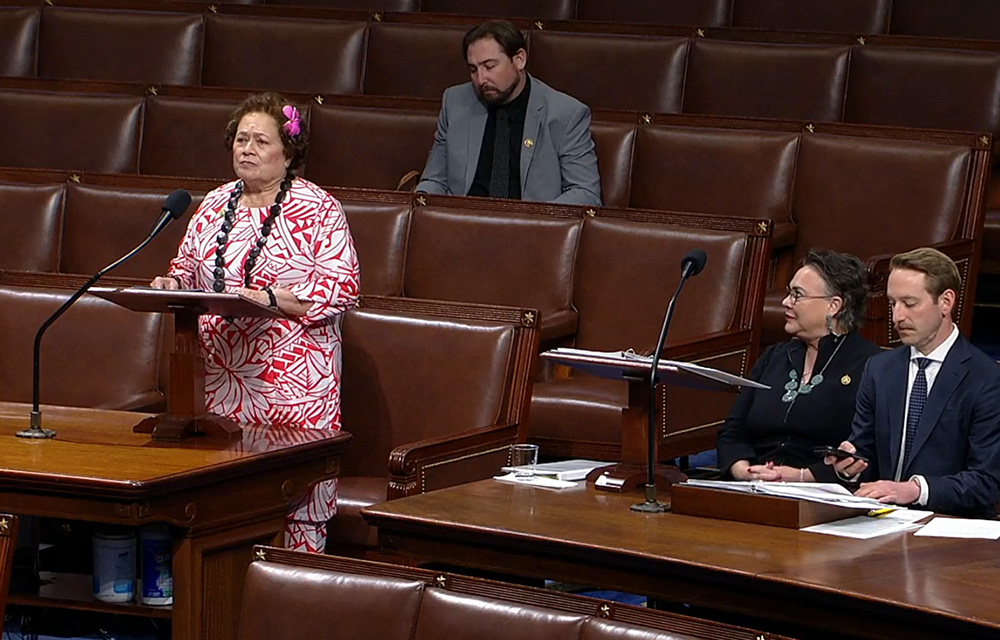
American Samoa Representative Uifa’atali Amata has asked the Trump administration to ensure a 19 percent reciprocal tariff applies to tuna from Thailand, protecting American fishers in the South Pacific from foreign competition.
“Eliminating the 19 percent tariff on Thai tuna would further disadvantage U.S. producers, incentivize additional offshoring, and run counter to the goals outlined in President Trump’s April 17, 2025, Executive Order on Restoring American Seafood Competitiveness,” Amata said.
In a letter to United State Trade Representative Ambassador Jamieson Greer, Amata said that while she supported U.S. President Donald Trump’s trade agenda, trade negotiators should work to ensure tuna is not awarded an exemption from the current 19 percent reciprocal tariff on goods from Thailand.
“The administration’s commitment to rebalancing trade relationships, defending American workers, and strengthening the competitiveness of U.S. industries is clearly reflected in this achievement. Your work underscores a vital principle: that trade policy must reinforce – rather than undermine – the economic foundations of our nation,” Amata said in a release.
The letter comes shortly after the U.S. and Thailand announced a new trade agreement, with Thailand eliminating tariffs on “99 percent of goods” and the U.S. maintaining a 19 percent reciprocal tariff. However, the U.S. is putting together a list of goods originating from Thailand that will be exempt from the tariff, and Amata wants trade representatives to make sure tuna isn’t on that list.
“American Samoa is dependent on its tuna canning industry, the territory’s largest private employer and economic driver,” she noted. “With roughly 2,300 workers, the tuna cannery in Pago Pago is the largest private sector employer in American Samoa. The presence of the cannery is crucial to the vitality of American fishing in the Western Pacific, as countries such as China and Thailand look to expand their operations in the region."
Amata said Thailand has become the world’s largest processor and exporter of canned tuna in part thanks to lower labor costs which the U.S. industry can’t compete with.
“Over the past two decades, these advantages have driven much of the global industry offshore, resulting in the closure of U.S. facilities, the loss of American jobs, and a diminished domestic fishing fleet,” she said. “This trend has weakened our nation’s seafood production capacity, undermined food security, and resulted in tuna companies leaving American Samoa.”
