






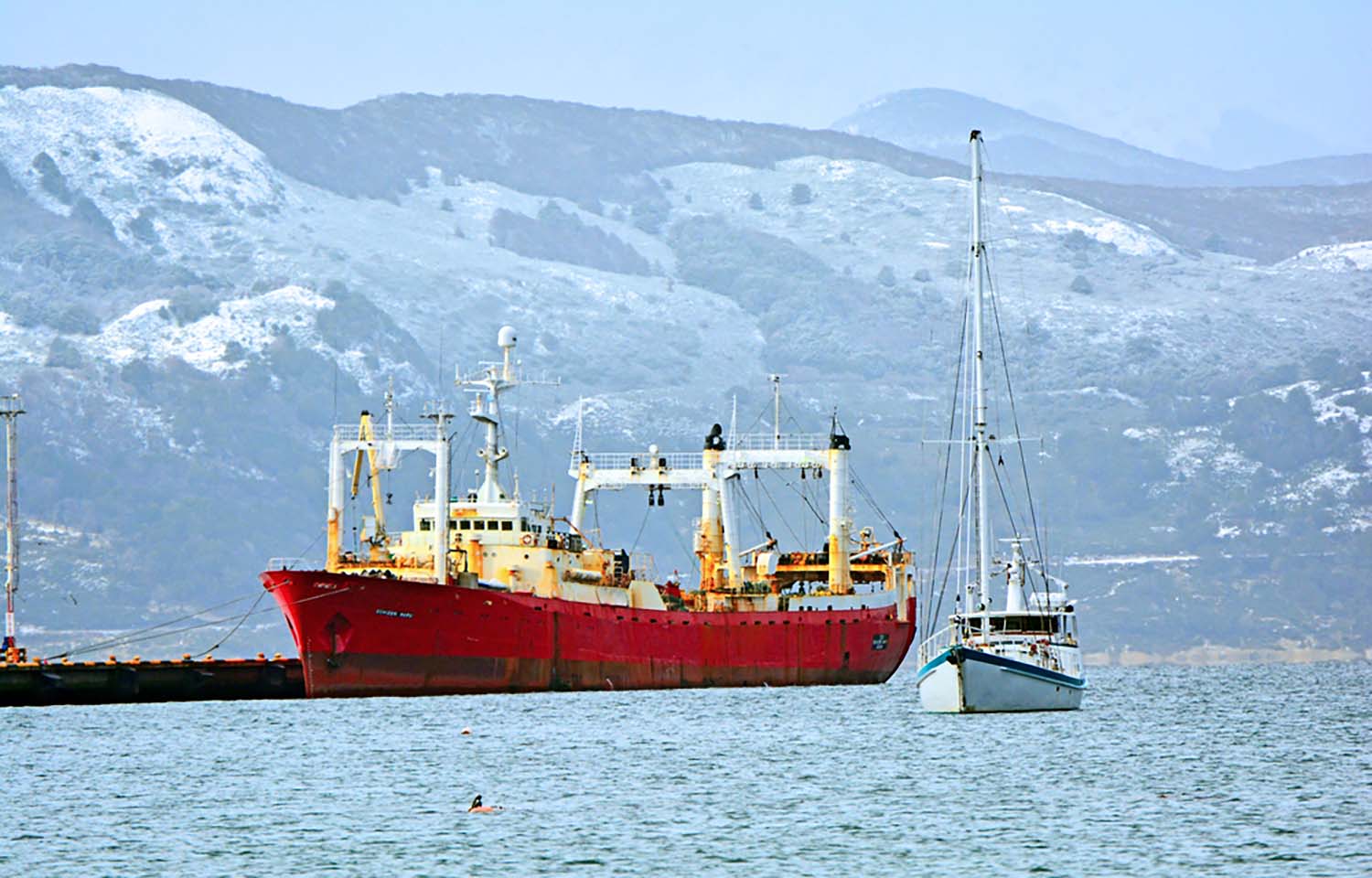
CeDePesca, a Buenos Aires, Argentina-headquartered NGO that aims to help fisheries in Latin America work toward implementing more sustainable practices, has raised concerns over the sustainability of Argentina’s fisheries sector.
One of the main reasons CeDePesca has sounded the alarm is that the national government has recently implemented deep cuts to the country’s public sector.
Argentine President Javier Milei took office in December 2023, promising to privatize many state-run sectors and apply “a chainsaw” to public spending in an attempt to bring the country’s rampant inflation and high public expenditures under control.
In the first three months of 2024, Milei’s efforts seem to have taken effect. Argentina had a positive fiscal balance equivalent to 0.2 percent of GDP in Q1 2024, complemented by a favorable trade balance. The Central Bank's reserves, meanwhile, increased by USD 6.5 billion (EUR 6.1 billion), putting the country on track to meet the goals it agreed upon with the International Monetary Fund to reach a primary surplus equivalent to 2 percent of GDP.
However, the cuts have resulted in heavy layoffs at government institutions. Specifically, CeDePesca decried massive layoffs at the Undersecretariat of Fisheries and the National Fisheries Research and Development Institute (INIDEP), where over 30 scientific, technical, and administrative personnel did not have their contracts renewed.
Public management has been key to fisheries recovery and sustainability in Argentina, according to CeDePesca, which now worries that both of those goals will quickly fall to the wayside without the proper personnel in place.
“If the research system that provides key information for the adoption of decisions on permissible catches is relaxed and the system of surveillance, control, enforcement of regulations, and sanctions is relaxed, they will revert to times when resources were overexploited,” CeDePesca said in a statement.
Elsewhere, the NGO has also raised concerns over Argentina’s unofficial Omnibus Law, in which the government is looking to install deep reforms to what it calls the “public emergency in economic, financial, fiscal, social, pension, security, defense, tariff, energy, health, and social issues” from which the country is suffering.
Under the Omnibus Law, the government attempted to reform Argentina’s Fisheries Law, which “would have eliminated the current fishing rights with a stroke of a pen,” CeDePesca said. The attempted reform, instead, was rejected, but the NGO believes the government could step in and alter fisheries regulations in the future in a similar manner.
Some erosion of fisheries sustainability is already taking place, according to CeDePesca, which called into question “a severe case of illegal toothfish fishing” under violations from the Tai An vessel, owned by Argentinian fishing firm Prodesur.
As reported by local newspaper Infobae, during the month of February, the Tai An illegally caught 163 metric tons (MT) of toothfish, of which about 90 MT, or 55 percent, of the total were juveniles.
Toothfish have a fragile reproduction cycle and, therefore, are very vulnerable to sustainability issues and have difficulties rebuilding their stocks.
Neither the Tai An nor Prodesur have permission to capture toothfish. The three fishing firms that partake in the capture quota of the species must fish at depths of at least 800 meters to avoid juvenile capture; however, crew on the Tai An reportedly fished at 450 meters.
The three companies allowed to capture toothfish filed a complaint on 8 March with the then National Director of Fisheries Coordination and Supervision Julián Suárez. However, he was unable to proceed with sanctions, as a foreign ministry official interceded on behalf of Prodesur. Suárez later resigned in protest.
Tai An and Prodesur are owned by Liu Zhijiang, a Chinese businessman based in Ushuaia, which is the capital of Argentina’s Tierra del Fuego province. Liu reportedly has close ties with the provincial governor in the region.
Representing the stark difference between previous governments and Milei’s administration, the Argentine government itself called for several U.K. vessels that engaged in toothfish fishing off the coast of the South Georgia islands to be placed on the Conservation of Antarctic Marine Living Resources’ list of vessels that engage in illegal, unreported, and unregulated fishing in 2022.
This, among many other conservation issues, seems to be much less of a governmental concern now, according to CeDePesca.
“These situations that have occurred so far in 2024 have led to concern about the future of fishing activity in Argentina,” CeDePesca said.
To alleviate some of the issues cropping up in the country, CeDePesca has advocated for the normalization of government operations, calling for recognition and maintenance of proper fishing management practices.
