

Seafood processed by Chinese companies using labor from North Korea has made its way into international seafood supply chains, according to a new Outlaw Ocean report published in The New Yorker magazine.
The latest story builds on previous work by the Outlaw Ocean Project that discovered evidence of Uyghur labor in the supply chains of prominent seafood companies, retailers, and distributors. The new report details evidence gathered over several months suggesting Chinese seafood processors use North Korean labor to cut costs. That seafood has entered the supply chains of seafood companies in the U.S., Canada, and Europe, in violation of United Nations sanctions and laws in the respective countries.
The Outlaw Ocean Project said it assembled a team of investigators to obtain evidence of North Korean workers – primarily women – being forced to work long hours for little pay in long-term contracts. Additionally, it conducted interviews with North Koreans, kept anonymous out of fear of persecution, who detailed the coercion they faced, including threats against their family members if they refused to work, as well as sexual and physical assaults by managers and staff.
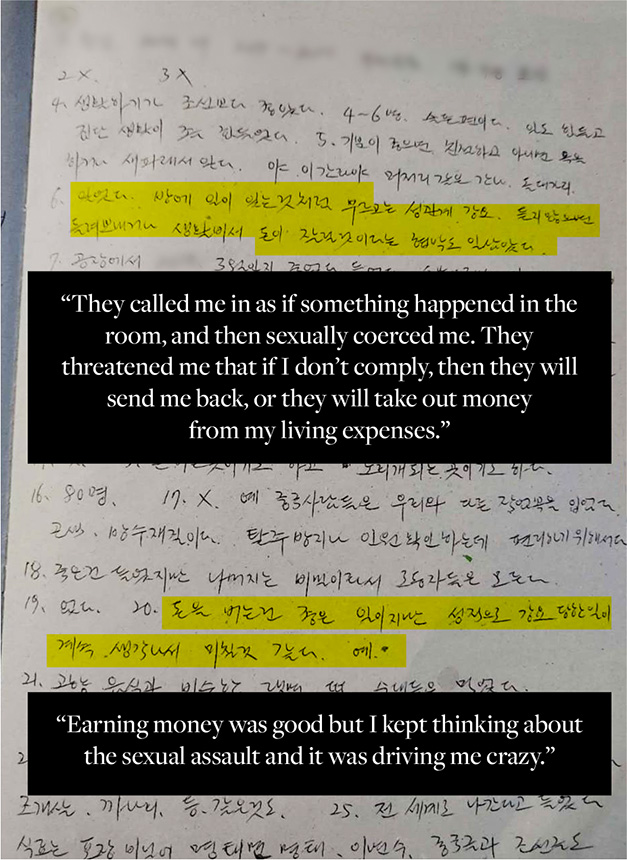
“They called me in as if something happened in the room, and then coerced me into sex. They threatened me that, if I don’t comply, then they will send me back, or they will take out money from my living expenses,” one woman told the Outlaw Ocean Project.
The report named multiple Chinese processing companies as using North Korean labor: Dalian Haiqing Food, Dandong Galicia Seafood, Dandong Hailong Foodstuff, Dandong Omeca Food, Dandong Taifeng Foodstuff, Dandong Taihua Foodstuff, Dandong Yuanyi Refined Seafoods, Donggang Haimeng Foodstuff, Donggang Jinhui Foodstuff, and Donggang Luyuan Food. Most of the companies are located in Dandong, which borders North Korea and is connected to the country by the “Sino-Korean Friendship Bridge,” one of the few land links to North Korea.
Those companies are, in turn, linked to over 100 companies and agencies in the U.S., Canada, and Europe – from seafood companies like High Liner Foods - which cut ties to a Chinese company after the earlier Outlaw Ocean report - and Trident Seafoods, to retailers including Albertsons and Walmart.
Outlaw Ocean said it discovered the violations through interviews with North Koreans who worked in China, conducted in places like open fields to avoid government detection. The interview questions were written out by hand, and encrypted phones were used to send photos of the answers to Outlaw Ocean researchers to further avoid detection. Other information was collected through Douyin, the Chinese version of TikTok, where videos of North Korean laborers were posted openly.
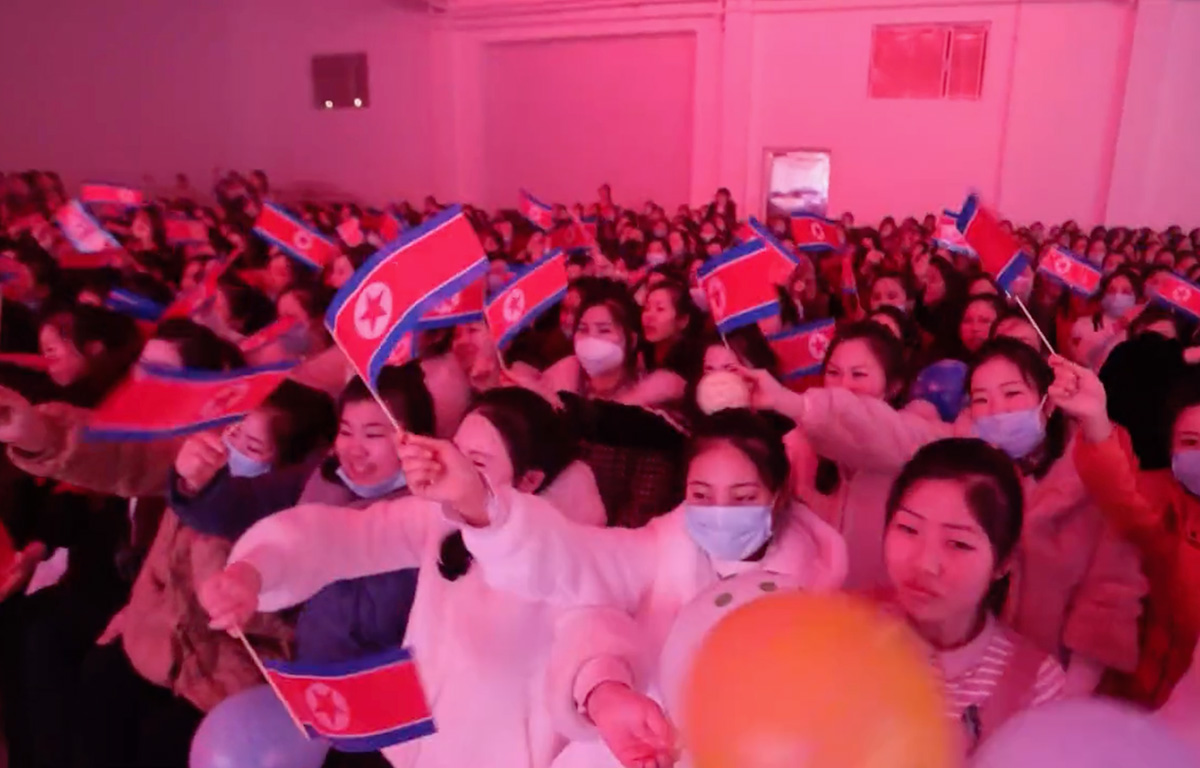
One video, posted of Donggang Jinhui Foodstuff, had drone footage of a celebration showcasing North Korean laborers and songs and flags.
The Chinese companies, Outlaw Ocean said, have “significant incentives” to use North Korean workers, as they are usually only paid a quarter of what local workers earn. They are also excluded from mandatory social welfare programs, further reducing costs.
According to the report, North Korea has engaged in programs to send its laborers to other countries in state-sanctioned groups. In return, the North Korean government receives some of the workers' pay as compensation, potentially adding up to the equivalent of billions of U.S. dollars annually.
Workers from North Korea are screened by the government, and applicants to the program are required to either have a living parent or be married, so that the person still in North Korea can “be punished if they try to defect,” according to a report from the South Korean government. Applicants selected for the programs are then sent through “pre-departure training” which could last up to a year to ensure compliance.
According to Outlaw Ocean, workers sign up for the programs because they offer significantly more pay than what they would receive working in North Korea – some offer salaries of up to USD 270 (EUR 248) a month, compared to similar work in North Korea paying USD 3.00 (EUR 2.76) per month. When the workers, almost all women, arrive in China to carry out their two- or three-year contracts, managers confiscate their passports so they cannot leave, force them to work shifts as long as 16 hours with as few as one day off a month, and require them to sleep in bunk beds in locked dormitories with as many as 30 women per room.
“At first, I almost vomited at how bad it was, and, just when I got used to it, the supervisors would tell us to shut up, and curse if we talked,” an anonymous North Korean worker said.
The presence of North Korean laborers, despite violating international laws, has remained undetected even by companies using third-party social audits, Outlaw Ocean said. Half of the companies listed by Outlaw Ocean are Marine Stewardship Council-certified, which includes a labor component, and several had other third-party labor certifications.
Previous Outlaw Ocean reporting revealing the use of Uyghur labor in Chinese seafood processing led U.S. lawmakers to call for sanctions against the companies named in the report, and resulted in a filing of a withhold-release order petition with U.S. Customs and Border Protection.
