




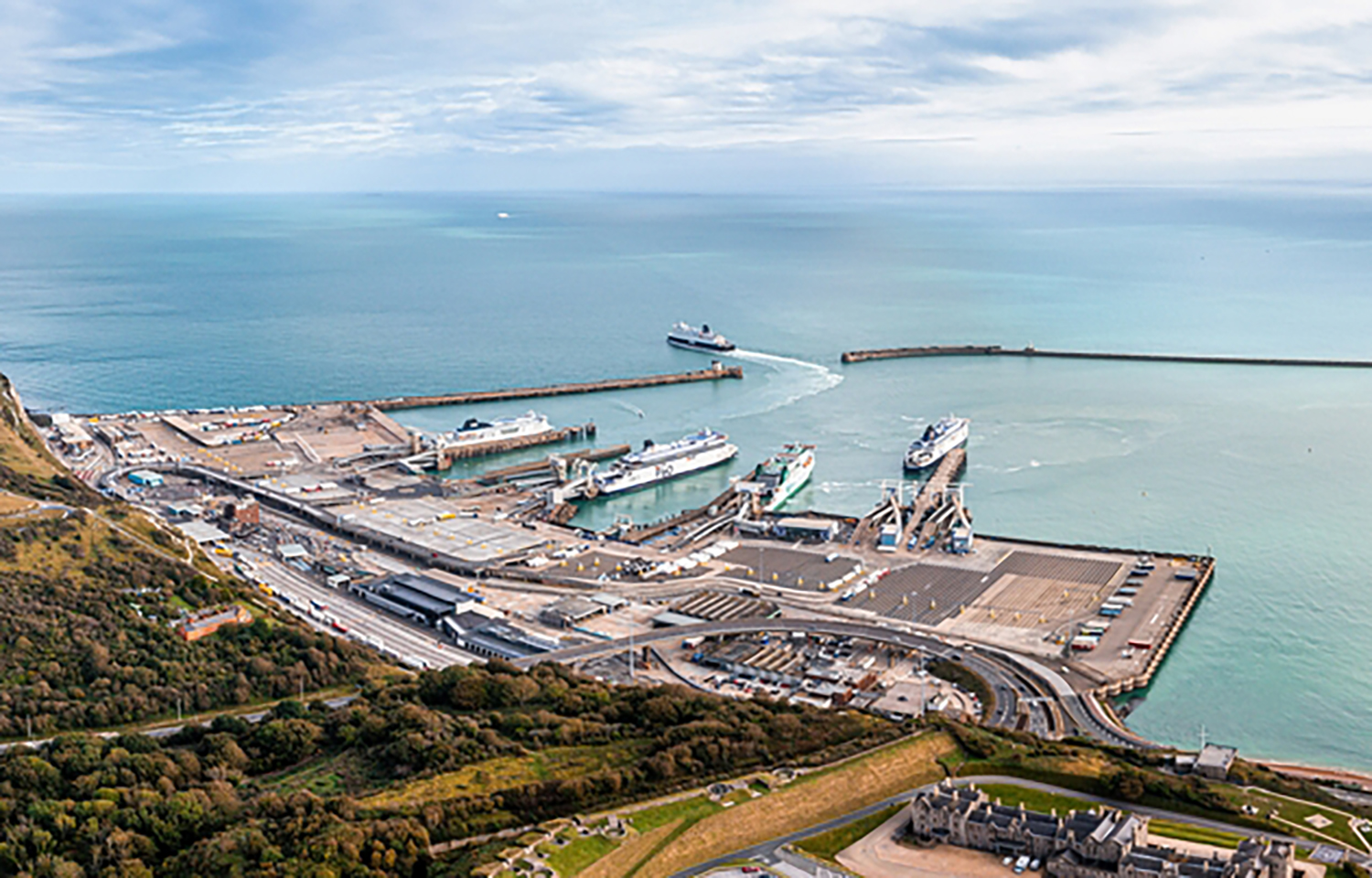
The price of importing seafood products into the U.K. from the E.U. will become more expensive from 30 April onward, following the U.K. government’s confirmation of new charges for goods entering the country through the Port of Dover and the Eurotunnel at Folkstone – two of the main entry points for European goods.
According to the new regulation, businesses importing consignments of animal and plant products that are eligible for sanitary and phytosanitary (SPS) checks at government-run border control posts (BCPs) in England will have to pay “common user charges,” which will apply even if authorities do not select consignments for SPS checks.
These charges will be based on the “commodity line” of the goods being imported and will be capped at GBP 145 (USD 184, EUR 169) for mixed consignments. Individual products will face charges of up to GBP 29 (USD 37, EUR 34). These BCP checks have been expected for some time, but the cost associated with those checks had not been revealed until now.
The latest changes follow shortly after import controls entered into effect on 31 January, with imports of fish and fishery products categorized into high-, medium-, and low-risk categories that help determine which SPS check needs to be followed.
Additionally, importers of most fish and fishery products from E.U. countries need to submit illegal, unreported, and unregulated (IUU) fishing documents to the relevant port health authority before consignments arrive.
The common user charges aim to recover the costs of operating border facilities where biosecurity checks will protect the food supply, farmers, and environment against costly disease outbreaks from entering the country, a U.K. government spokesperson said. The spokesperson said the charges were “within and at the bottom end of the range which we consulted with industry on."
“The charges follow extensive consultation with industry, and a cap has been set specifically to help smaller businesses," the spokesperson said. "We are committed to supporting businesses of all sizes and across all sectors as they adapt to new border checks and maintaining the smooth flow of imported goods."
In March 2024, the United Kingdom’s Cold Chain Federation warned the government the new charges could jeopardize the country’s food supply chain and increase food prices for consumers.
CCF CEO Phil Pluck said beginning in May 2024, many E.U. food businesses supplying the U.K. are going to have a substantial new administrative burden and considerably higher costs to send temperature-controlled products to the market.
“We can expect many [food businesses] to stop exporting to the U.K. at all, particularly small artisan producers,” he said. “Those that do continue may see up to GBP 1,000 [USD 1,267, EUR 1,166] added to the cost of one multi-consignment lorry entering the U.K. and will likely need to pass on a significant portion of those costs with higher prices.”
Pluck said cost increases and more food wastage could be expected as a result of unnecessary delays, disruption, and paperwork confusion.
Post-Brexit red tape and higher costs have been a focal point of many import-export business in both the U.K. and E.U. Salmon Scotland CEO Tavish Scott has specifically called on the next U.K. government, which will be elected no later than January 2025, to ensure the challenges facing businesses in both blocs eventually abate.
“We need the next U.K. government – whatever formation it is – to ease the burden on exporters so that sectors like ours can sell more Scottish produce, delivering economic growth and creating jobs here at home,” he said.
