






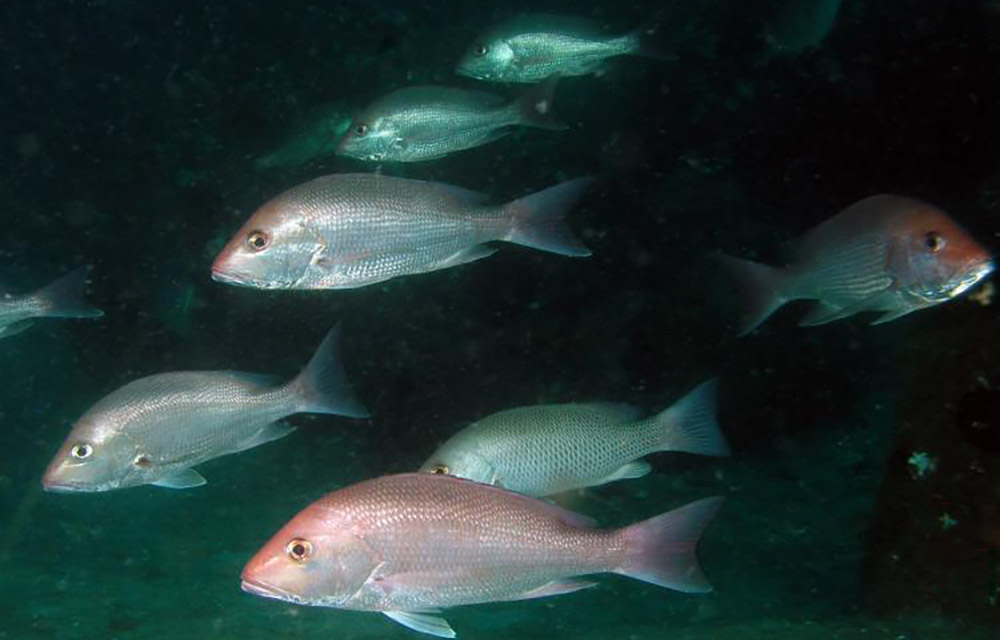
Legislation introduced in the U.S. House of Representatives would ban commercial fishing for and sale of red snapper from the South Atlantic when the recreational fishery is closed, effectively limiting commercial fishing to two days per year.
The bill is being backed by the recreational fishing industry, which claims it’s unfair for angling to be limited while commercial fishers are allowed to catch and sell red snapper.
“For years, recreational anglers, for-hire operators, tackle shops, marinas and coastal communities have been forced to accept one- and two-day seasons for a fishery that is showing substantial rebuilding progress and historically high abundance on the water,” American Sportfishing Association Vice President of Government Affair Mike Leonards said in a release. “The South Atlantic Red Snapper Fair Access Act is based on a simple and reasonable premise: if the public is not allowed to fish for South Atlantic red snapper, then commercial sale of that public resource should not continue during the same closure.”
The bill comes shortly after a lawsuit filed on behalf of commercial fishers blocked expanded, state-managed recreational seasons that were supposed to take place over the summer.
Recreational anglers and government officials from the states of Florida, Georgia, South Carolina, and North Carolina have long called for longer recreational seasons and higher catch limits, arguing that the species is far more populous than official estimates suggest. Southeast Atlantic red snapper was first listed as subject to overfishing in 2021, and regulators have limited both commercial and recreational fishing since then to allow the species to recover.
Last year, the four states asked NOAA Fisheries for exempting fishing permits (EFP) that would allow the states to individually manage the recreational red snapper fishery in federal waters. Under the permits, the states would operate pilot programs ostensibly for data collection which they believed would, subsequently, demonstrate that the population was large enough to support higher fishing levels. On 1 May, the federal government approved the EFPs and the states quickly announced expanded recreational seasons.
The Southeastern Fisheries Association quickly sued to block the EFPs, arguing that the increased fishing pressure on the Southeast Atlantic red snapper population would damage the fishery’s recovery. Conservation groups also signed onto the lawsuit.
“Opening the red snapper season for two months – when last year it was two days – is fast-tracking the crash of this species,” Ocean Conservancy Senior Director of Fish Conservation Meredith Moore said previously. “There’s just no way the stock can endure this level of fishing pressure so we can continue to fish for red snapper in the long term.”
On 21 May, a federal judge blocked the EFPs while it worked through the lawsuit. In response, the states cancelled their seasons, announcing their intent to submit for new EFPs for the fall.
In response to the lawsuit, the recreational sector is now pushing to limit commercial fishing; this month, U.S. Representative Austin Scott (R-Georgia) introduced the South Atlantic Red Snapper Fair Access Act of 2026. If passed, the legislation would ban commercial harvest and sale of South Atlantic red snapper from federal waters when recreational angling is prohibited.
“South Atlantic red snapper is an important public resource, and access to that resource should be managed fairly,” Scott said in a release. “If commercial fishing interests are concerned enough about the current condition of the red snapper fishery to support shutting down recreational access, then commercial harvest and sale of that same stock, from federal waters, should be limited during the same closure. This bill is not about attacking commercial fishing. It is about making sure conservation burdens are shared fairly.”
The coalition behind the bill includes the American Sportfishing Association, the Center for Sportfishing Policy, Coastal Conservation Association, and the Congressional Sportsmen’s Foundation.
