
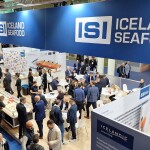
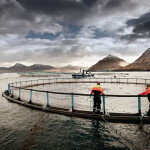

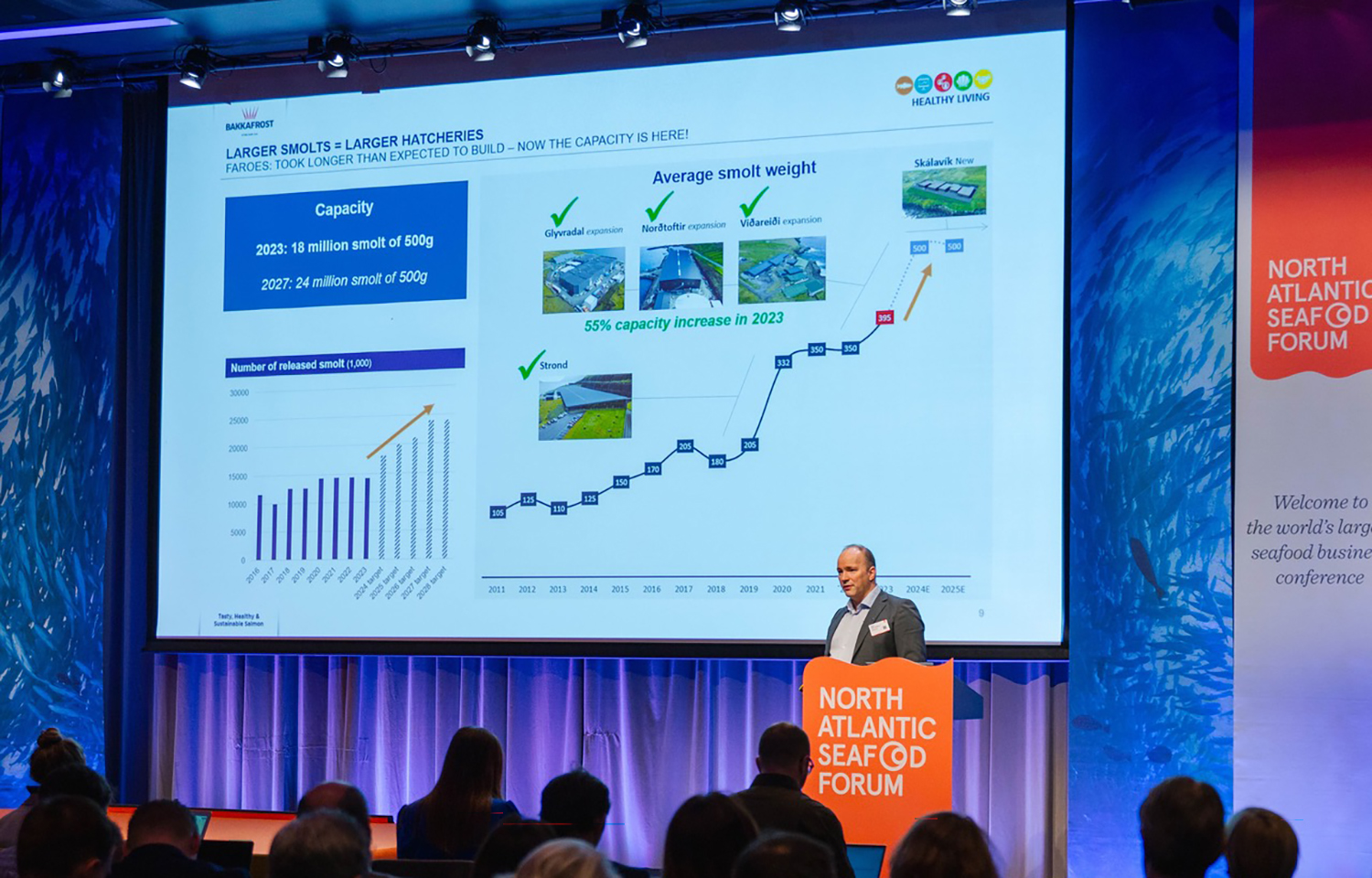
Faroe Islands-headquartered salmon farmer Bakkafrost Group has had to contend with several issues in its bid to turn its Scottish operations around, and while these operations are still “in red numbers,” there are strong indications that the future is bright in Scotland, Bakkafrost CFO Høgni Dahl Jacobsen recently said at the 2024 North Atlantic Seafood Forum (NASF) in Bergen, Norway.
“In the Faroes, we have a very strong operation, high-quality assets, and the longest integrated value chain in the industry. We are the only producer of fish oil and meal that we use for our own production of fish feed. [We have] highly efficient, strong margins and strong farming KPIs,” Jacobsen said. “This is the operation that we wanted to copy to Scotland.”
Bakkafrost moved into Scotland with the 2019 acquisition of the Scottish Salmon Company. Jacobsen acknowledged the company has found Scotland to be much more challenging environment to farm in than the Faroes, with greater biological threats.
“[Scottish Salmon Company] was also heavily under-resourced,” he said.
Since then, Bakkafrost has made a lot of changes to these operations, Jacobsen said. In addition to introducing its own feed, which has improved the quality and price of its fish, it has upgraded some of its technology, including the introduction of predator-proof nets and better vaccines, while also implementing a “massive upscale” of the operations’ freshwater treatment capacity, he said.
“The results are quite clear; if we go back two years to 2021 and compare with where we are today, we have an 80 percent reduction on the parasite load, so there’s much improved gill health. Also, 98 percent of our losses to seal attacks have gone, and there’s been a 68 percent reduction in sea lice levels, and if we look at our share of the total mortality in the industry in Scotland, it has dropped from 46 percent in 2021 to 20 percent last year,” Jacobsen said. “There are positive signs from the operations in Scotland. Even though we still make negative numbers, we believe we’re on the right path, and many of the challenges that we saw when we acquired the company have been dealt with efficiently.”
The main challenge that still exists for all Scottish salmon farmers is micro-jellyfish blooms, and Jacobsen admitted the industry has especially struggled to deal with this over the past three years, particularly during third quarters, when waters are warmer.
Part of Bakkafrost Scotland’s jellyfish risk management strategy will see it harvest 70 percent of its volume ahead of Q3 2024. These operations will also become increasingly reliant on the group’s own higher-quality smolt.
Further down the line, Bakkafrost Scotland will start introducing very large smolt, which will spend just one year in sea sites, Jacobsen said. To this end, expansion is continuing at Bakkafrost’s Applecross hatchery at Wester Ross, which will see it become self-sufficient with a supply of 300- to 350-gram smolts by 2025. A new hatchery at Fairlie will enable Bakkafrost to grow smolt up to 500 grams.
“Normally, it takes 30 months to produce a salmon. It would normally spend approximately one year in a hatchery if you do it the old way: producing 100-gram smolts and then the remaining 18 months in the marine environment,” Jacobsen said. “We’re flipping that around with our large smolt strategy, so when we go for 500-gram smolts, they’re spending 18 months on land and 12 months in the sea. This means we utilize our licenses more efficiently and can grow [more] in the Faroes. In Scotland, we benefit from the other aspect of this, which is a reduced biological risk.”
Bakkafrost has made “significant advancements” in the quality of its smolts, Jacobsen said. The new generation of smolts it’s producing are larger, healthier, and more robust; they also grow much faster and have a 54 percent lower mortality than its previous generation.
Overall, this strategy will look to more than double Bakkafrost's 2023 harvest to a level of around 165,000 MT in 2028 and increase its value-chain capacity to 200,000 MT.
“The quality of the smolt is at least as important as the size, and, actually, if you have high-quality smolt of 100 grams, you can outgrow a poor-quality 300-gram smolt. So, achieving both high-quality and size is the goal for us,” he said.
Also in the Faroes, the introduction of a new 10,000-cubic-meter wellboat has helped improve biology, particularly with the more “gentle, fish-welfare-friendly” treatment of sea lice. Jacobsen said sea lice levels have been driven down to all-time lows for the company.
As a result, growth rates are back to the levels seen “in the good old days,” he said.
“We are harvesting large fish again in the Faroes of around 5.5 kilos. We have been able to increase our biomass – it's 26 percent up – and we have 55 percent more fish in the water now weighing about 4 kilos. So, we’re in a really, really good position.”
In other company news, Bakkafrost's lawsuit against anti-aquaculture activist Don Staniford will be adjudicated in coming weeks. Bakkafrost, Mowi, and Scottish Sea Farms have each pursued legal action against Staniford demanding he cease interfering with their operations.
In January 2024, Bakkafrost commenced flying its salmon to Europe and the U.S. via its FarCargo subsidiary. It acquired a Boeing 757-200 from American Airlines in 2022.
"The route will start up slow, but will gradually expand to multiple departures every week," the company said in a press release. "The purpose for the aircraft is to deliver ... salmon to distant markets, where food waste is a critical element, in perishable foods such as fresh salmon. The Faroe Islands are located remotely in the North Atlantic, and with a large export of fresh seafood, market access and efficient logistics are crucial to maintaining the competitive advantage of and the ability to deliver the best quality to the customers."
And on 13 March, European Commission President Ursula von der Leyen visited Bakkafrost's headquarters in the Faroe Islands. Bakkafrost said the visit "signals a new chapter of collaboration and progress between the Faroese government and the European Union."
