






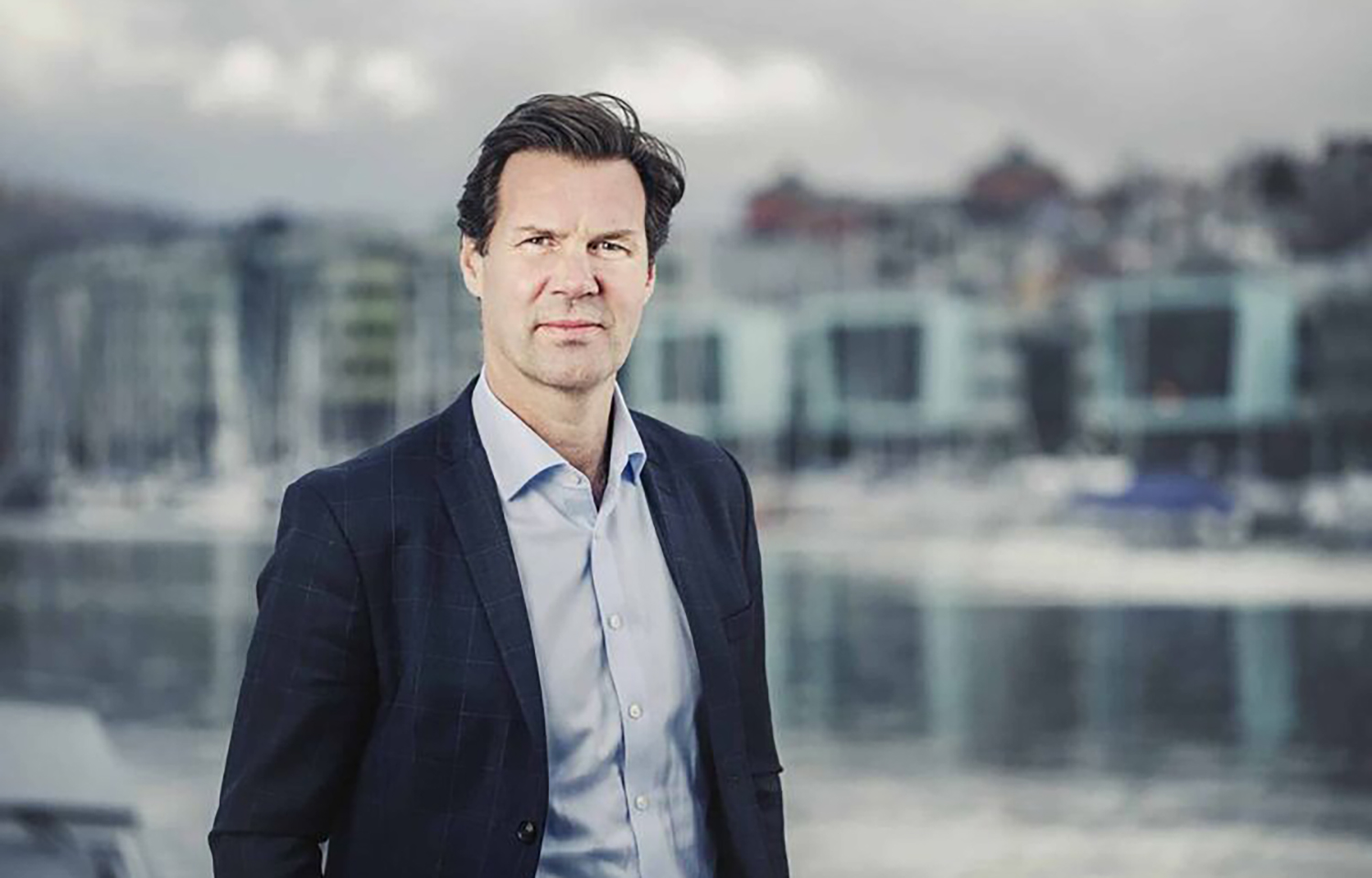
Due to a solid fourth quarter in 2023 and a strong financial year overall, Bergen, Norway-headquartered Lerøy Seafood Group (LSG) is making steady progress toward meeting most of its 2025 strategic targets originally set in mid-2022, according to the company's CEO, Henning Beltestad.
These objectives include an EBIT of NOK 1.25 billion (USD 118 million, EUR 109.1 million) for its downstream Value-Added Processing, Sales, and Distribution (VAPS&D) segment, an annual salmonid harvest of 205,000 gutted-weight tons (GWT), and a wild-catch EBIT of NOK 500 million (USD 47.2 million, EUR 43.6 million).
Delivering the seafood group’s Q4 and FY 2023 results on 28 February, Beltestad confirmed the company hauled in NOK 30 billion (USD 2.8 billion, EUR 2.6 billion) in revenue for the first time in its history in 2023, which included “significant improvement” in the earnings of its VAPS&D segment.
Lerøy’s VAPS&D segment achieved higher profitability in 2023, which Beltestad largely attributed to operational improvements, increased capacity utilization, and rising product prices that reflected increased raw material costs.
As for meeting the segment’s 2025 VAPS&D EBIT target, Beltestad said this is a “stretch goal” but that the company believes it’s “reachable” with its current setup, specifically pointing toward improved profitability and solid development in key global markets. The segment operates in 14 different countries around the globe.
Lerøy’s Q4 operational EBIT overall, meanwhile, amounted to NOK 643 million (USD 60.7 million, EUR 56.1 million), which was up from the NOK 502 million (USD 47.4 million, EUR 43.8 million) the company reported a year previously.
Elsewhere, Beltestad described Lerøy’s 2025 target for its Farming segment of harvesting 205,000 GWT as more of a “hairy goal” but said it’s also achievable.
The company, like other Norwegian salmon-farming operations, reported suffering losses related to string jellyfish swarms in 2023 that led to lost feeding days in Lerøy Aurora and an accelerated harvest in Lerøy Sjøtroll. But largely, LSG’s Farming segment recorded “satisfactory” performance to end the year, Beltestad said.
Lerøy harvested 47,500 GWT of farmed salmon and trout in Q4 2023, marking a decrease of 5,800 MT compared to Q4 2022 and contributing to a total for the full year of 160,000 GWT. Including the company’s 50 percent share in Scottish Seafarms, its annual total was 172,000 GWT.
Lerøy has posted a harvest guidance of 175,000 GWT for its Norwegian operations in 2024 and 37,000 GWT for its Scottish operations, which have struggled in recent years.
Looking ahead, a low Norwegian harvest volume expected in Q1 2024 will result in higher farming costs in the period, but investments in new technology are contributing to elevated biological performance, Beltestad said. The company plans to invest a further NOK 500 million (USD 47.2 million, EUR 43.6 million) in new technology in 2024, together with NOK 200 million (USD 18.9 million, EUR 17.5 million) in ensuring better-quality smolt. The overall estimated capex for the year is NOK 1.8 billion (USD 169.9 million, EUR 157.1 million).
One goal that Beltestad has acknowledged is “not within reach” is its wild-catch EBIT goal. With a current EBIT in the segment of around NOK 277 million (USD 26.2 million, EUR 24.2 million), the NOK 500 million objective is becoming less and less feasible, mainly because of decreasing quotas year over year, Beltestad said.
“We need to be smarter in everything we do in this segment,” Beltestad said.
Another 2025 goal is for Lerøy to be the top salmonid-farming company in terms of EBIT per kilogram.
“In some regions, we are very close, and in some regions, we have a longer way to go,” Beltestad said. “But, we believe that all the strategic initiatives that we have going forward and that we have been working on for the last couple of years will drive us in the right direction for this target. It will require focus and hard work going forward.”
