





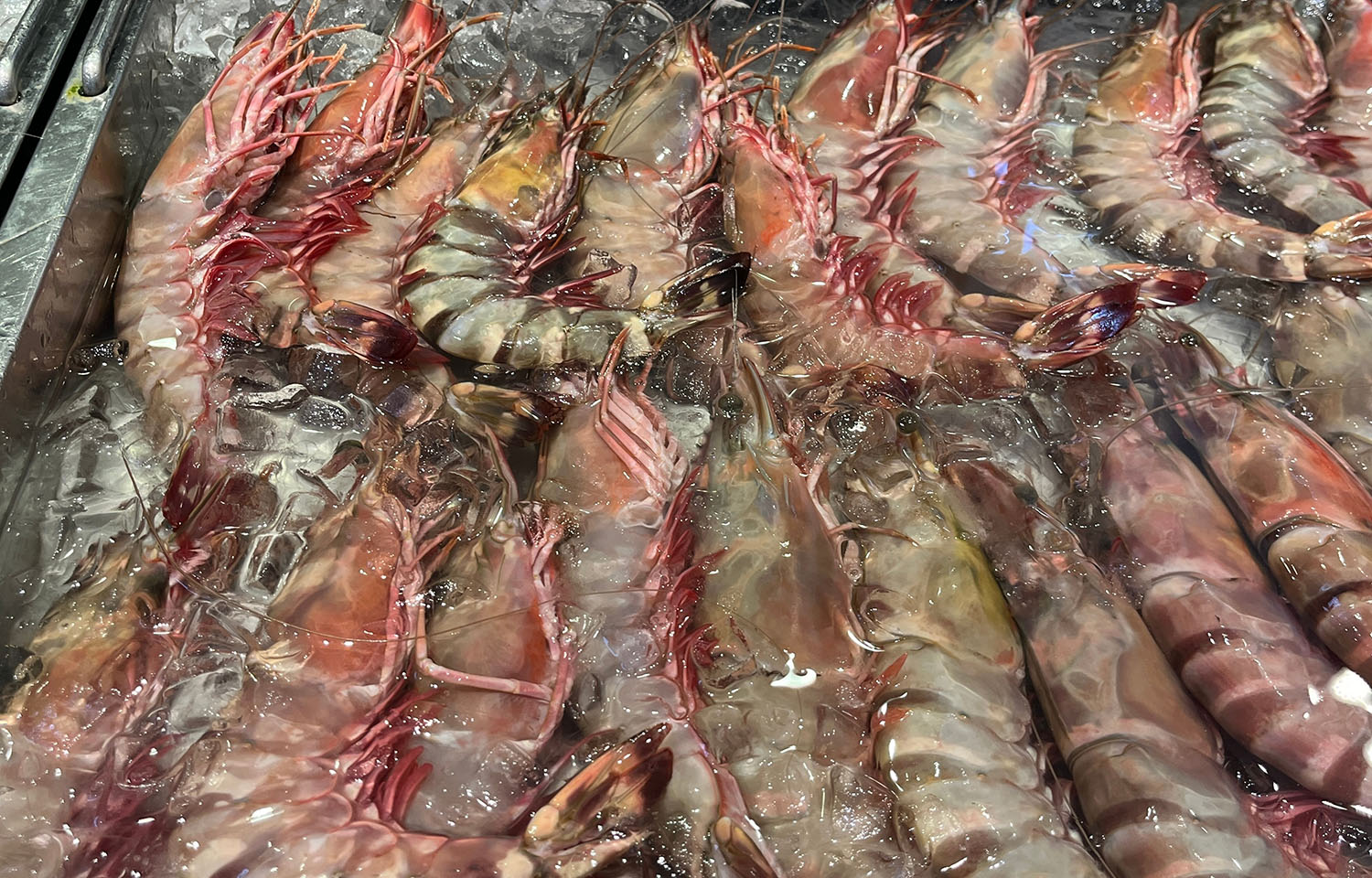
Hagerstown, Maryland, U.S.A.-based nonprofit Mercy for Animals has called out leading U.K. supermarkets, including Asda, Lidl, Aldi, Morrisons, Co-op, Iceland, and Waitrose, for sourcing prawns from farms using practices considered to be inhumane, including eyestalk ablation and ice-slurry slaughter.
Eyestalk ablation involves removing one or two of the eyes of a female shrimp, which encourages her to lay eggs faster than she would otherwise. The practice has come under increased scrutiny, with recent research suggesting that the aquaculture industry can function successfully without ablation.
Ice-slurry slaughter immobilizes shrimp in freezing temperatures before harvesting. Though eyestalk ablation has received more press attention, both practices may be questionable under the UK’s Animal Welfare (Sentience) Act of 2022, which officially recognizes prawns as capable of feeling and suffering pain, the nonprofit said.
A number of U.K. supermarkets contacted by SeafoodSource said they were looking into the issue.
“Animal welfare is very important to us, and we are actively working with our suppliers to reduce, and ultimately abolish, eyestalk ablation in our supply chain," a Co-op spokesperson told SeafoodSource.
A spokesperson for Waitrose said the company has already emphasized animal welfare in its supply chain, including for its farmed prawns.
"In 2023, Crustacean Compassion ranked Waitrose in second place across all sectors for decapod crustacean welfare," the spokesperson said. "We're already 100 percent free of eyestalk ablation, and are also already trialing electric stunning for our prawns. We'll continue to pilot this until we're confident it is an effective and humane method."
Mercy for Animals said it was encouraged by the recent successes activism had acheived with other brands, including major U.K. brand Tesco adopting a comprehensive plan to remove shrimp that are raised via the practice from its chain.
“Sainsbury’s and Tesco’s recent prawn-welfare commitments were not just a huge milestone for animal protection, but proof of the powerful impact we can have when we come together and speak out against cruelty. Concerted efforts across organizations can help drive meaningful change in the seafood industry, sparing billions of prawns from cruel practices globally,” Mercy for Animals Global Campaigns Specialist Paul Cichy said.
The UK’s Animal Welfare (Sentience) Act is based on growing scientific evidence that shrimp, prawns, and other crustaceans feel pain. They possess nociceptors, specialized nerve cells that detect harmful stimuli, and demonstrate behavioral responses, like rubbing injured areas of their bodies or showing other distress symptoms when they are exposed to noxious stimuli. Studies have also shown that they release stress hormones in response to certain conditions, another sign that they are experiencing distress, pain, or suffering.
