



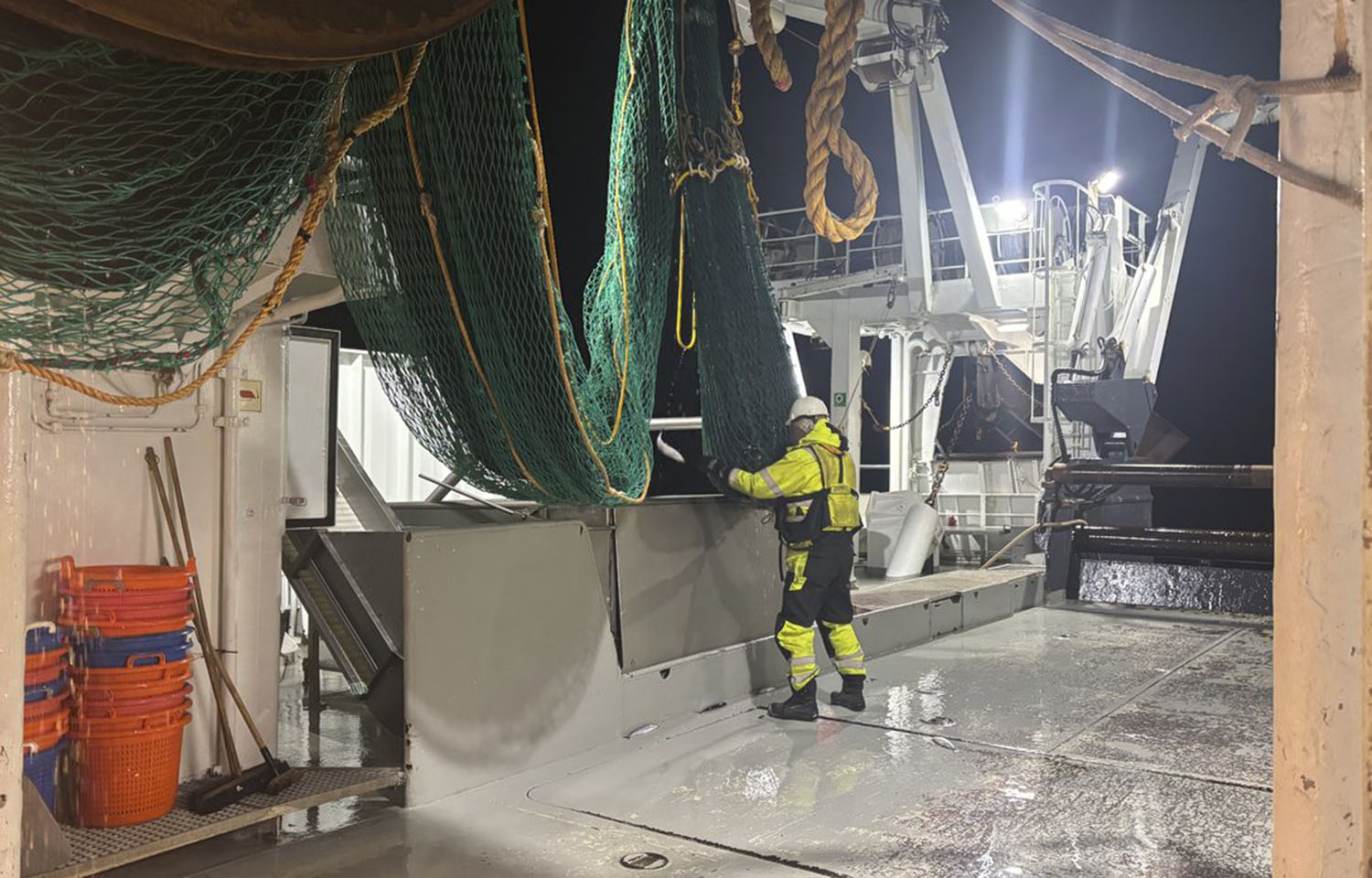
Northeast Atlantic coastal nations have once again agreed to abide by International Council for the Exploration of the Seas (ICES) scientific advice on the blue whiting and Atlanto-Scandian herring quotas but have yet to reach a quota-sharing agreement.
ICES released its advice on multiple Northeast Atlantic pelagic species in early October, bumping up the blue whiting advice for 2027 to 1,064,191 metric tons (MT), up from the 851,344 MT it advised in 2026; herring was increased to 588,004 MT, up 10 percent over its advice for the prior year. Coastal states including Norway, the E.U., the U.K., the Faroe Islands, and Iceland then met in London and agreed that those numbers should be the unilateral quota for 2027.
“When the coastal states have now agreed on quotas in line with the management plan and scientific advice, it provides a good basis for sustainable management and for further work on putting in place comprehensive agreements on the distribution of stocks,” Norway Minister of Fisheries and Oceans Marianne Sivertsen Næss said in a release.
According to the Norwegian government, coastal states also agreed to “continue work on comprehensive coastal state agreements” on the distribution of those stocks; however, the states have not, as of yet, agreed on how it will be distributed, according to the agreed record of conclusions on the meeting.
That agreed upon record of the meeting makes it clear that the delegations “also agreed that the establishing of unilateral quotas for 2027 does not in any way imply the acceptance of the level of these quotas by any Party.”
“The delegations agreed that Parties will reconvene to address the issue of a sharing arrangement as soon as possible,” the record of the meeting states. “All delegations stressed the importance of maintaining the focus on concluding a comprehensive sharing arrangement as soon as possible.”
Nailing down a sharing agreement is the issue that has plagued fisheries in the region for years, as coastal states have repeatedly agreed to unilaterally abide by ICES advice and then have gone on to fail at securing a comprehensive sharing arrangement. While the countries have managed to adopt measures limiting Russia’s catch of certain species in international waters, they have frequently met for extended periods of time only to set no agreement on sharing blue whiting, herring, or mackerel.
The North Atlantic Pelagic Advocacy Group (NAPA) has, at this point, discontinued its fisheries improvement projects covering blue whiting and herring after determining the overfishing issues aren’t a fisheries problem but, instead, are a political problem.
“NAPA’s coalition of over 50 global leaders in retail, aquafeed, food service, and seafood processing is calling more urgently than ever for long-term, science-based management agreements – the only path forward to ensure these waters remain a source of life and prosperity for generations,” NAPA Project Lead Rob Blyth-Skyrme said in a release.
Factions of the coastal states have reached sharing agreements in the past.
In 2024, for instance, the U.K., Norway, and the Faroe Islands all agreed to a set of fisheries arrangements but left out the E.U.
Blyth-Skyrme said that agreement is a clear sign compromise is possible, but a trilateral agreement that doesn’t include all the states that fish for the species doesn’t go far enough.
“It is vitally important that all parties engaged in negotiations for these pelagic stocks stay the course and pursue comprehensive, multilateral agreements that significantly reduce fishing pressure,” Blyth-Skyrme said. “Ultimately, the ability to cooperate and work toward a collective vision for the future is what will ensure that our region’s pelagic stocks and the businesses that depend on them can continue to thrive.”
