




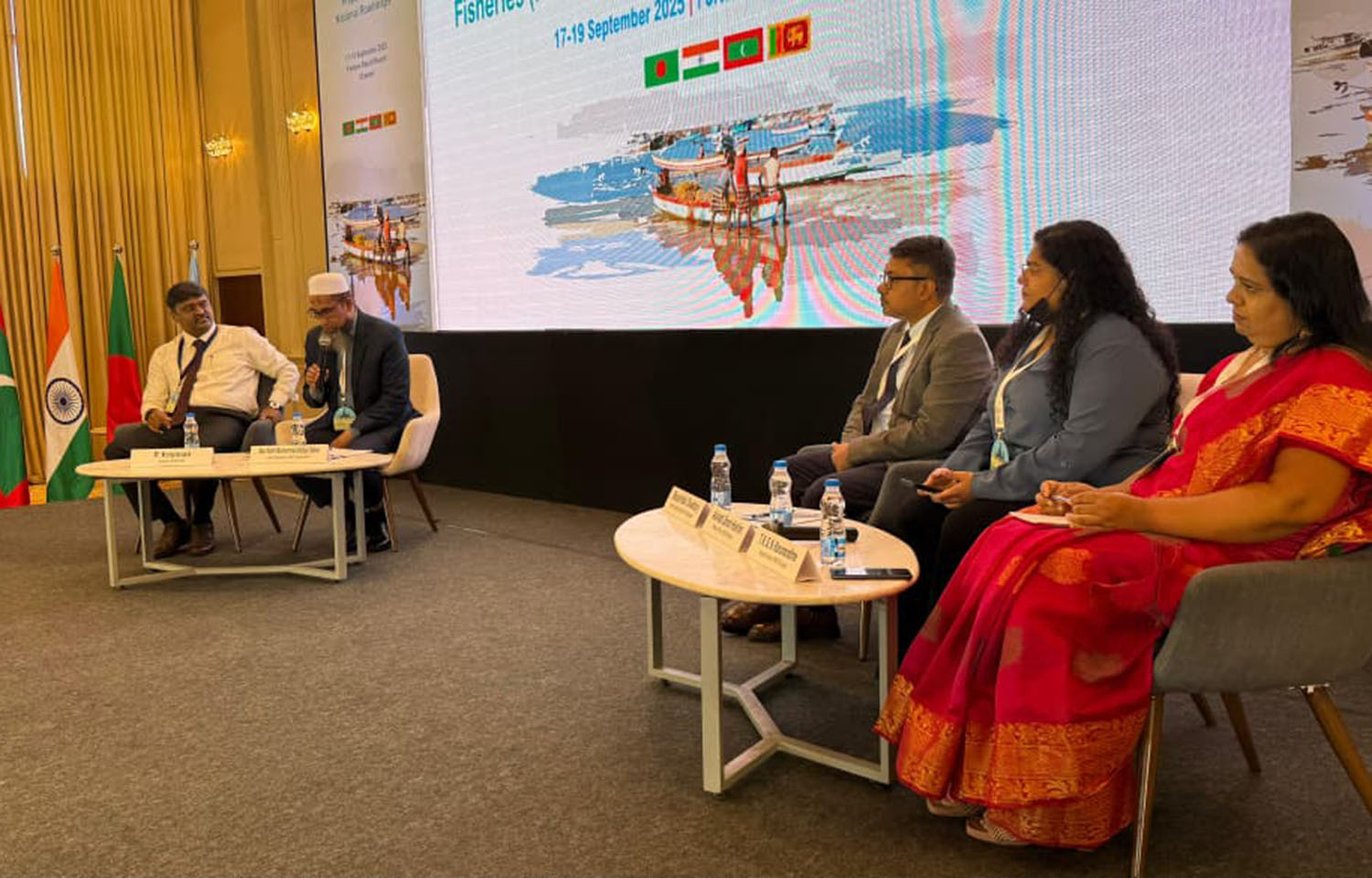
The Bay of Bengal Program Intergovernmental Organization (BOBP-IGO) is calling for support from the Food and Agriculture Organization (FAO) of the United Nations on climate justice related to fisheries governance.
The BOBP-IGO is a regional fisheries advisory body made up of four countries bordering the Bay of Bengal region – Bangladesh, India, Maldives, and Sri Lanka. The organization – at a meeting organized by FAO and featuring stakeholders in fisheries in the region – said the countries want justice for fisheries in the countries that are bearing the brunt of the impacts of climate change despite contributing little to the issue.
“The principles of climate justice must apply. Those who contributed least to the problem should not be asked to pay the greatest price,” Union Fisheries Secretary Abhilaksh Likhi said.
Likhi said extreme weather, coastal erosion, and warming seas are impacting fish stocks and the safety of fishing communities in the Bay of Bengal, impacting small-scale fisheries the most.
“In India, the fisheries sector is driven by small-scale fishers who are the defenders of local economy, food security, nutrition and culture,” Likhi said. “Small-scale fisheries in developing countries are the hardest hit, as the sector is under severe pressure from global crises, market forces and competition.”
Likhi said support from the UN, as well as regional support, is required for the small-scale fisheries and that FAO guidelines will be important to create roadmaps toward those ends to ensure protections for the communities such as early warning systems, climate adaptation strategies, and research programs.
“India is considering [National Plans of Action] for small-scale inland and marine fisheries, with FAO and BOBP-IGO expected to play key roles in shaping and implementing these plans,” Likhi said. “The country stands committed to inclusive and sustainable growth in fisheries through collaborative and coordinated efforts and climate-resilient fisheries in the Bay of Bengal.”
