




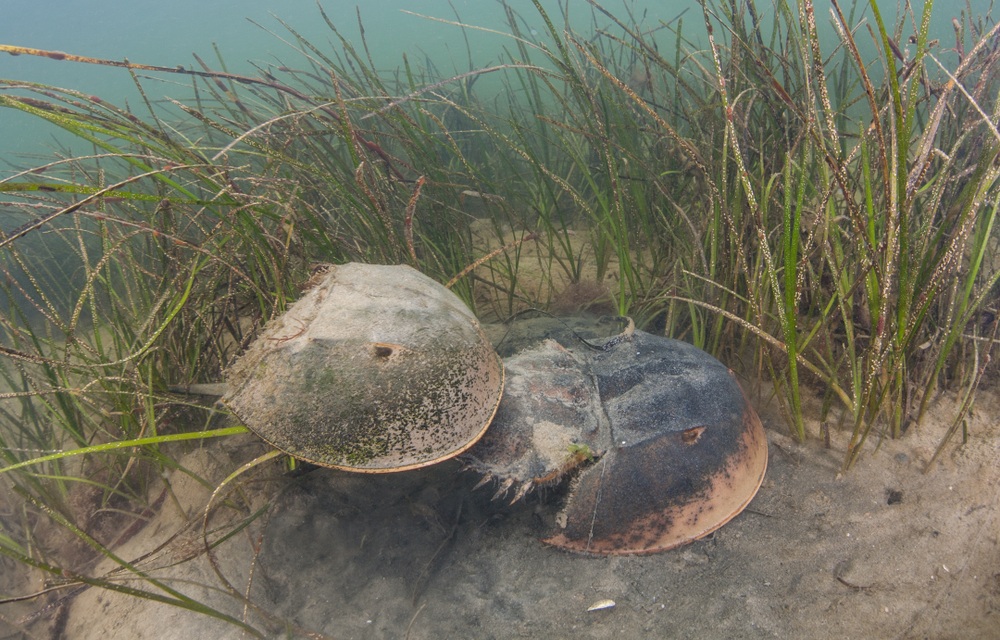
NOAA Fisheries has determined that horseshoe crabs do not warrant listing under the Endangered Species Act (ESA), finding that the petitions to do so lacked the necessary evidence that the species is at risk.
“Based on our synthesis and integration of the foregoing information and the effects on the status of the species throughout all or in a significant portion of the species' range, we determined that the petition does not present substantial scientific or commercial information indicating that the petitioned action may be warranted,” the agency said in a Federal Register post announcing its findings.
Horseshoe crabs are harvested for use as bait and drained for their highly valued blue blood, which is utilized for testing in the biomedical industry. Two petitions were submitted to consider ESA protections for horseshoe crabs: a first from Friends of Animals in 2023 and a second from the Center for Biological Diversity in 2024.
“We’re wiping out one of the world’s oldest and toughest creatures,” Center for Biological Diversity Senior Scientist Will Harlan said at the time. “These living fossils urgently need ESA protection. Horseshoe crabs have saved countless human lives, and now, we should return the favor.”
However, NOAA Fisheries blew past their 12-month deadline for issuing a final determination on the petitions, and in January 2026, the Center for Biological Diversity sued the agency, asking a federal court to force the government to complete and issue its findings.
While the Center for Biological Diversity claims that horseshoe crab populations have declined by 70 percent “in recent decades,” NOAA Fisheries found that today’s populations remain stable.
“Overall, across the species' range, most regional populations are considered to be stable or increasing with the exception of the New York regional population,” NOAA Fisheries stated while noting that “estimates of total Atlantic [horseshoe crab] abundance regionally or range-wide do not exist.”
The states of Connecticut and New York have moved to ban horseshoe crab harvesting.
Ultimately, the agency concluded that the petitions failed to make the case that horseshoe crabs are at risk.
“We conclude the petitions do not present substantial scientific or commercial information indicating that the petitioned action to list [horseshoe crab] as a threatened or endangered species may be warranted,” NOAA Fisheries said.
