


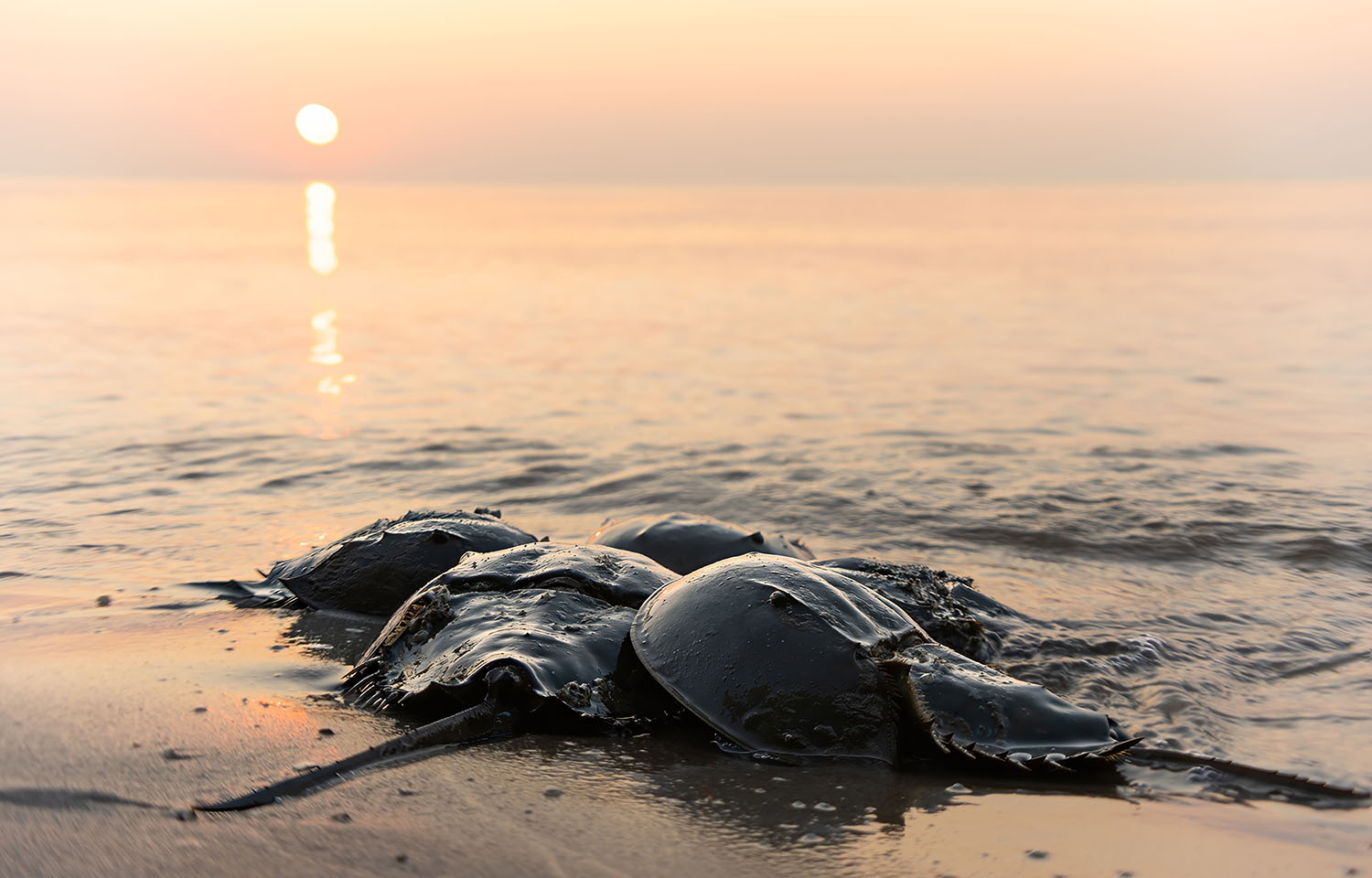
Researchers at Norwalk, Connecticut, U.S.A.-based The Maritime Aquarium claim new studies show a “troubling decline” in the horseshoe crab population within Long Island Sound.
“Horseshoe crabs are a cornerstone of estuarine ecosystems, and their decline is alarming in its own right but also has cascading consequences for other animals and ecological processes,” Maritime Aquarium Vice President of Conservation Sarah Crosby said in a release.
Though also caught as baitfish, horseshoe crabs are primarily harvested and bled for their unique blood, which clots when exposed to bacterial toxins. That quality has made their blood highly prized for biomedical testing within the pharmaceutical industry, but conservation groups have pressured the industry to switch to synthetic alternatives.
A new study completed by members of The Maritime Aquarium found consistent annual declines between 2 percent and 9 percent of horseshoe crabs in Long Island Sound. The research also found that a larger number of females and larger body sizes could reflect stress on the population.
“This research exemplifies The Maritime Aquarium’s commitment to science-driven conservation and regional leadership in protecting Long Island Sound,” The Maritime Aquarium President and CEO Jason Patlis said in a release “It also underscores the need for more action to protect this important species. While the State of Connecticut has led the way with strong protections for horseshoe crabs, we would like to see New York State follow suit with similar protections for the species in their waters, and we need more protections throughout the range of the species along the eastern seaboard of the U.S.”
The state of Connecticut enacted a ban on horseshoe crab harvesting in 2023, but the practice is allowed in other states. The Atlantic States Marine Fisheries Commission has banned the harvest of female crabs as a conservation measure and is currently working to update the model it uses to manage the fishery.
A separate study completed by The Maritime Aquarium researchers reviewed 326 studies on horseshoe crab conservation, finding that overharvest, bycatch, habitat degradation, climate change, and insufficient management are key threats to the crabs. The publication also includes multiple recommendations for helping the species recover, such as encouraging blood alternatives, protecting spawning and juvenile habitats, and expanding public education. The researchers also suggest that captive breeding and new programs could be helpful.
“The future of horseshoe crabs in Long Island Sound depends upon the strength of our conservation approaches,” Project Manager Rebha Raviraj said in a statement. “Our review synthesizes the work of hundreds of scientists worldwide to understand major threats and explore key gaps in our knowledge of their ecology and behavior. These are important puzzle pieces to create clear and effective strategies to protect this ancient species.”
