




The Woods Hole Oceanographic Institution (WHOI), based in Cape Cod, Massachusetts, U.S.A., and the University of Rhode Island (URI) recently published research on the economic damage caused by recurring sargassum seaweed inundation events in various U.S. coastal regions, with a focus on Puerto Rico, the U.S. Virgin Islands (USVI), and Florida’s Atlantic coast.
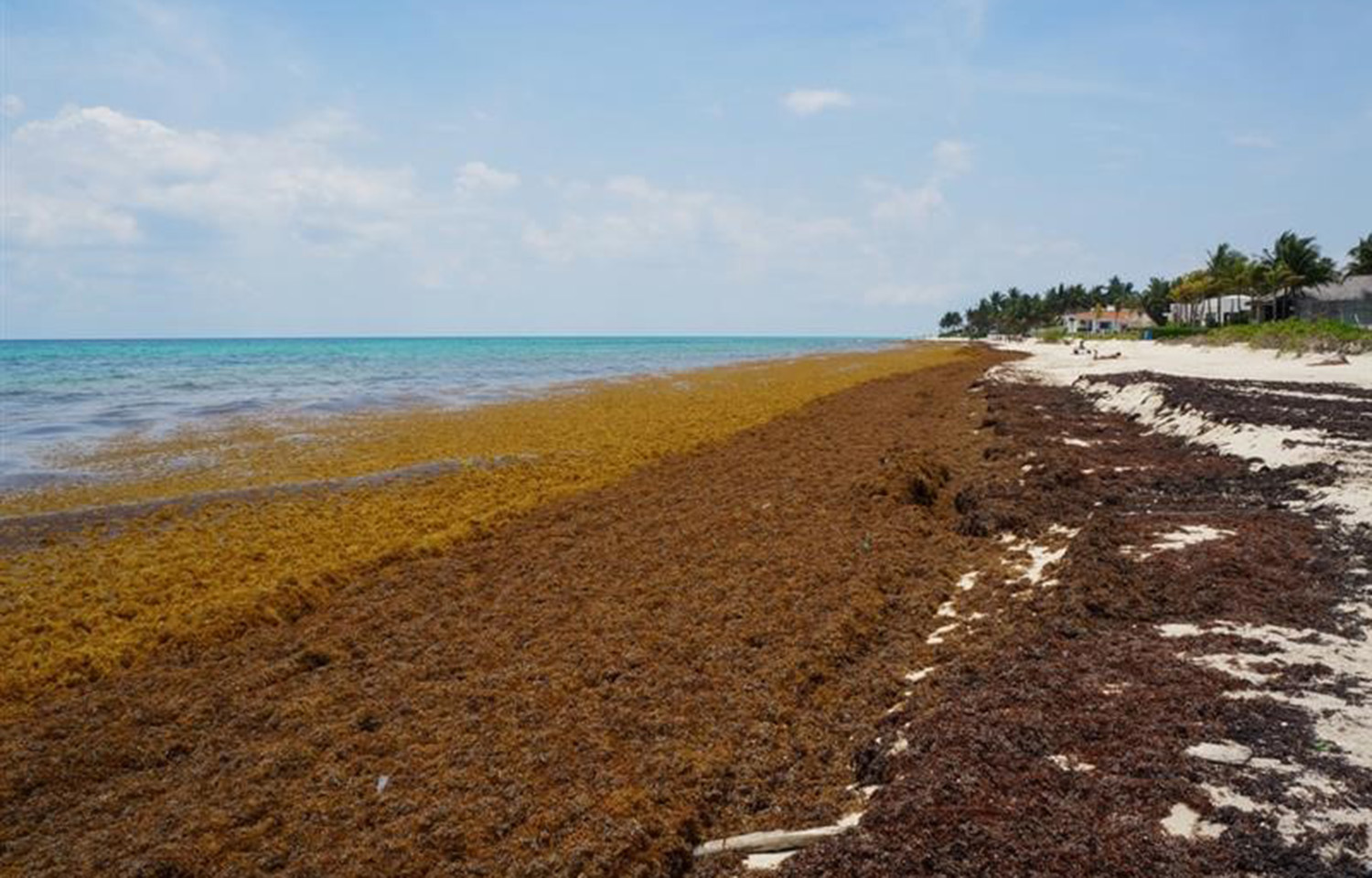
According to NOAA, sargassum is “a type of floating brown algae that provides food, protection, and habitat for many marine species.” Though it has several environmental benefits, it can also become disruptive when “sargassum rafts” are washed close to or on shore.
These disruptive incidents are known as sargassum inundation events and occur when rafts are carried to shore by winds and currents. These can cause harmful algae blooms and brown tides, which smother fauna and flora. The influx can also clog water intake pipes and contain high levels of arsenic and heavy metals, organic contaminants, and marine debris. Once the algae decomposition process begins, it produces hydrogen sulfide and can cause respiratory irritation.
“Massive sargassum blooms – now forming what researchers refer to as the ‘Great Atlantic Sargassum Belt’ – stretch thousands of miles from West Africa to the Caribbean, Gulf of Mexico, and U.S. Atlantic coastline,” the WHOI said in a release. “The Great Atlantic Sargassum belt appears to have been initiated by unusual wind and circulation patterns in the winter of 2009-10, subsequently fueled by high nutrient availability in the tropical Atlantic.”
In 2025, nearly 38 million metric tons of sargassum have been observed in the Caribbean, the Atlantic, and the Gulf of Mexico, breaking historical records. The research found sargassum resulted in "annual economic losses already reaching multi-million-dollar levels in Puerto Rico and the USVI and potentially rising to billion-dollar impacts along Florida’s Atlantic coast."
WHOI and URI’s study examined three sectors of coastal economies – tourism, recreation, and fisheries – that are often highly affected by sargassum accumulation. Their research “integrated economic modeling satellite observations, tourism and fisheries data, and long-term sargassum monitoring to translate environmental disruption into actionable economic evidence.”
“Understanding the economic scale of sargassum impacts is essential for informed decision-making,” WHOI Marine Policy Center Senior Scientist Di Jin, who was the lead author of the study, said. “Our findings provide resource managers with evidence-based estimates that can guide investments in forecasting, response, and long-term mitigation strategies.”
The study further found that sargassum seasons are beginning earlier and lasting longer across the Caribbean and Western Atlantic, increasing the frequency and severity of coastal impacts. However, sargassum forecasting tools are becoming increasingly effective resources for improving pre-event planning, preparedness, and post-inundation response efforts.
“These results highlight the urgency of sustained investment in sargassum monitoring, forecasting, and cleanup infrastructure,” URI Professor of Marine Affairs Tracey Dalton said. “Without proactive management, the economic consequences for coastal communities will continue to escalate.”
