






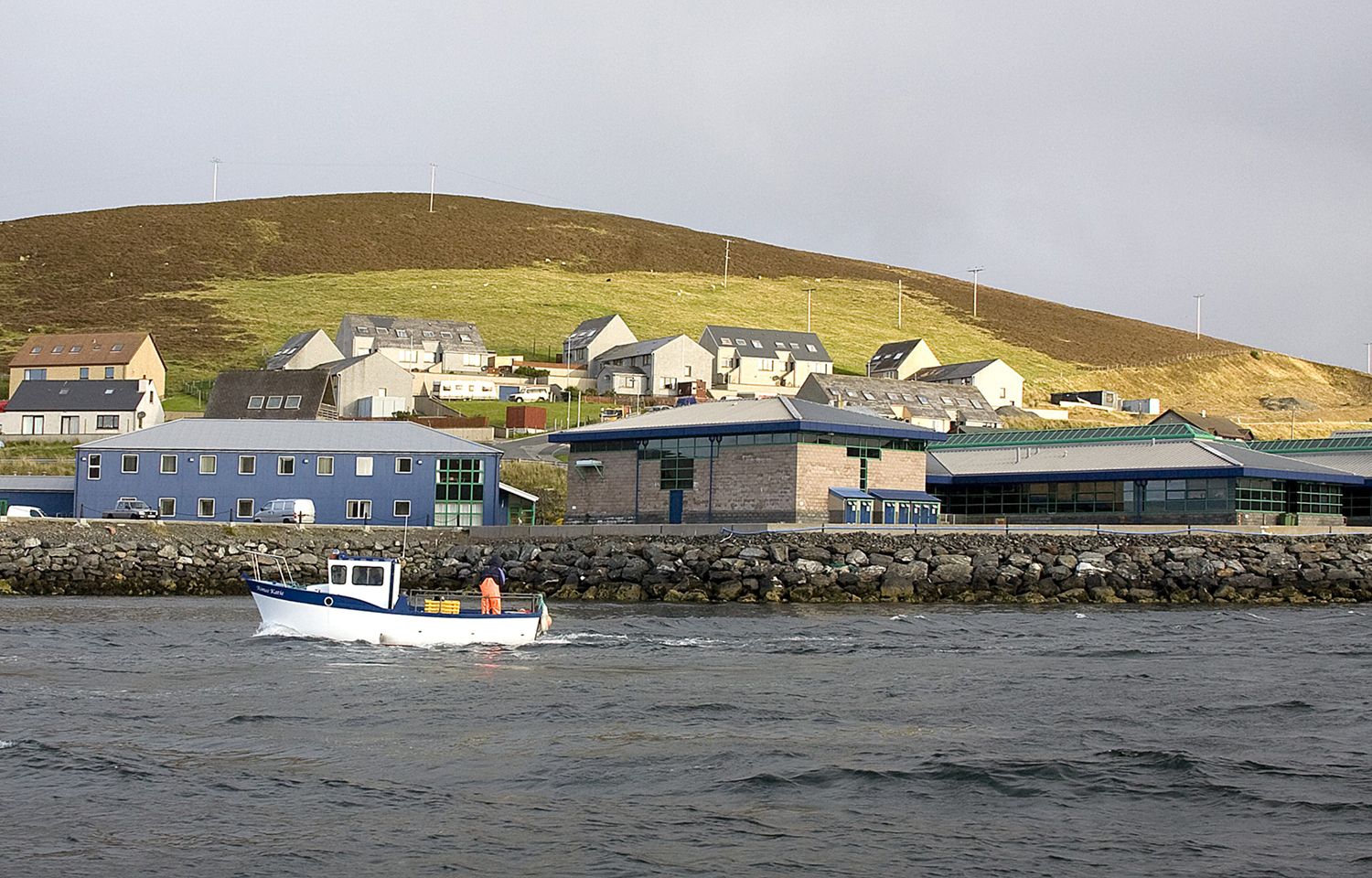
The Shetland Islands, situated off the northwestern coast of the U.K., boasts major annual landings of pelagic and whitefish species, as well as thriving salmon- and shellfish-farming operations.
To facilitate further growth on the isles, the University of the Highlands and Islands’ (UHI) campus in the Shetland Islands town of Scalloway has rebranded as the Centre for Sustainable Seafood, with the aim of reshaping the campus as a focal point for scientific excellence in seafood industry research.
“The center will provide credible, robust, and targeted science, as well as education and training, to meet the needs of a modern, sustainable seafood sector,” UHI Shetland Principal Jane Lewis said. “It will collaborate on research projects, gather independent data to inform policy, and work with industry partners to develop educational courses and tools to address skills and knowledge gaps. A main aim is to advance the understanding of sustainability within the seafood context.”
The center also plans to clearly communicate with the public on its findings, identify gaps in seafood education, and facilitate research and guidance that helps the seafood sector meet sustainability targets.
John Goodlad, who is on the board of management at UHI Shetland and is an advisor to the Sustainable Ocean Fund, welcomed around 60 guests to the opening event of the center in early May.
He told attendees that the seafood industry has been caught on the backfoot by environmental campaigners on too many occasions and hopes that a new focus will help to catalyze a seismic shift in attitudes across the industry. That new focus, he said, should be aided by independent research put forth by the center, which will play a major part in promoting the sustainability that is crucial for the future of fishing and fish farming.
"This center is designed to enable the fishing and fish farming industries to be at the heart of the sustainability narrative,” Goodlad told SeafoodSource. “This will allow the seafood industry to become far more proactive in this space than it has been in the past. Although located in Shetland and part of UHI, the vision is that we will fast become a center of excellence for the European seafood industry as a whole.”
Ray Hilborn, a marine biologist and fisheries scientist, as well as a professor at the University of Washington’s School of Aquatic and Fishery Sciences, attended the ceremony and spoke about the environmental damage that fishery and aquaculture output generates – and how research centers like UHI’s new venture can help alleviate and understand these issues.
“There is no question that producing blue foods in the ocean causes changes, many of which we would like to avoid, particularly overfishing, bycatch, and habitat alteration,” he said. “The role of scientists at UHI and elsewhere is to use evidence-based research to evaluate the impact of blue foods and to find ways to reduce undesirable consequences wherever possible.”
The center has plenty of industry backing, sporting a stakeholder group that includes the Scottish Fishermen’s Federation, the National Federation of Fishermen’s Organizations (NFFO), Salmon Scotland, the Aquaculture Stewardship Council, the Marine Stewardship Council, the Fishmongers’ Company, the World Wildlife Fund, and NatureScot.
Tavish Scott, the CEO of Salmon Scotland, praised the new institute for its unique approach and outlook, highlighting the importance of sustainable seafood when it comes to food security, economic growth, and low carbon impact. He also emphasized the need to better articulate and back up sustainability claims with heavily researched facts, evidence, and data.
“Sustainable seafood is the blue economy, and salmon from Shetland and Scotland is both the U.K.’s [top] food export and the most popular fish with domestic consumers” Scott said. “In helping to protect the reputation and future of aquaculture, the Center for Sustainable Seafood will be a valuable mechanism in bringing industry together with UHI, allowing the argument to be made to government and other external audiences as to why feeding the world from the sea has never been more important. The sooner the Center is up and running, the better.”
Speaking for the fishing community, NFFO CEO Mike Cohen praised UHI’s reputation for intellectual independence and academic rigor, which he hopes will provide greater clarity in the typically opaque field of seafood sustainability.
“There could be nowhere better for this endeavor than Shetland.," he said. "This is a place central to the U.K.’s seafood story – both steeped in fishing heritage and proudly possessing a vital, modern fleet and a thriving aquaculture sector. I hope that it will inspire the work of this new center for many years to come.”
