






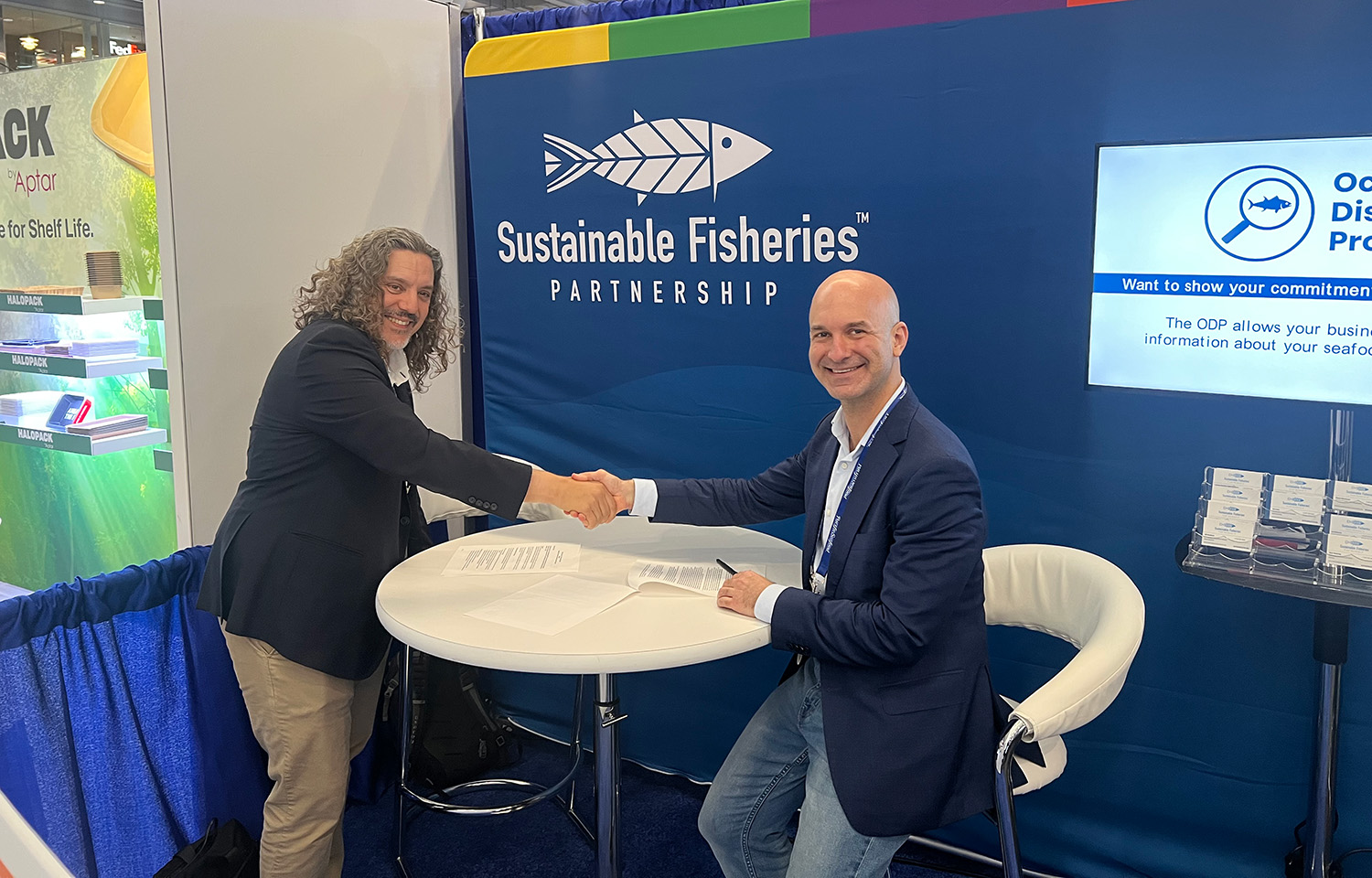
The Sustainable Fisheries Partnership (SFP) has signed a memorandum of understanding (MoU) with Wholechain to collaborate on traceability and analytics solutions, integrating SFP’s Seafood Metrics system into Wholechain’s traceability software.
Honolulu, Hawaii, U.S.A.-based NGO SFP and Bloomfield Hills, Michigan, U.S.A.-based traceability software firm Wholechain signed the MoU on 15 March at the 2026 Seafood Expo North America, aiming to “provide customers with end-to-end source information on seafood, backed by a trusted decision-support tool.”
SFP’s Seafood Metrics tool is a data-driven system that aims to help seafood companies better understand the level of sustainability risk present in their supply chains. By leveraging data from SFP’s FishSource database, as well as the Food and Agriculture Organization’s (FAO) global production data, the tool allows firms to “not only meet regulatory requirements and consumer expectations but also drive continuous improvement in environmental performance and overall business success,” according to SFP.
“Our Seafood Metrics tool applies sustainability insights and risk ratings to wild and farmed sources of seafood from around the world,” SFP Advisory Services Director Mercedes Mendoza said in a release.
Meanwhile, Wholechain’s proprietary traceability software tracks seafood across its entire supply chain journey by documenting key data elements at each critical tracking event along its path.
Through the MoU, the two organizations aim to connect their offerings based on Global Dialogue on Seafood Traceability (GDST) standards.
“Through this integration, users can now directly access the standardized Fishery IDs maintained within SFP’s FishSource and Seafood Metrics system, providing a definitive link between Wholechain’s traceability events and the specific, managed source fishery,” Mendoza said.
Wholechain Chief Sustainability Officer and Co-Founder Mark Kaplan told SeafoodSource that the agreement continues and strengthens a relationship between the two organizations.
“There has always been a lot of synergy between traceability and metrics, and there was always a vision for what’s possible with an integrated solution since we started collaborating – just to make the process more seamless for everybody,” Kaplan said. “Now, once we fully integrate metrics … we are offering a much more holistic view for a consumer. It enables consumers to purchase [seafood] with confidence.”
SFP CEO and Founder Jim Cannon added that his organization’s aim in the partnership is to bring the work of companies in responsibly managing resources to light and ensure that it’s visible throughout the supply chain.
“What we’re bringing to the table is a lot of good data on the underlying sustainability of the different fisheries and fish-farming regions, but we’re also aspiring to bring more data on what individual companies are doing in their work to help manage resources. When you combine that with what Wholechain brings, you get the ability to get that information reliably to end customers,” he said.
Kaplan explained that the combined offering will roll out gradually and said that the firm already has a few interested parties on both the supplier and buyer sides who want to integrate the strengthened tool.
“I really think this is a watershed moment for the industry because it fuses buyer requirements together instead of a supplier needing to gather their metrics and then do their traceability and then the next thing and the next thing,” he said. “You can get the traceability, but companies still have to take care of their sustainability requirements; now, it takes that step and makes it one seamless experience.”
