





An already known virus found across global aquaculture species has been associated with a human eye disease for the first time, adding new concerns around raw seafood handling, aquaculture disease control, and how such viruses are monitored, according to a new study.
The study, published in Nature Microbiology, found a correlation between covert mortality nodavirus (CMNV) and ocular hypertension viral anterior uveitis (POH-VAU), the latter of which causes unusually high pressure inside a human eye, inflammation in the middle of the eyeball, and damage to the optic nerve over time, potentially leading to permanent vision loss.
CMNV has been detected in 49 different aquatic species globally and was first identified in China’s farmed shrimp in 2014.
The virus is also detected in Antarctic krill, which is used in oil for direct human consumption and as a feed source in shrimp aquaculture, with previous studies confirming transmission of CMNV from krill-based feed to shrimp.
In fish and shrimp, CMNV can cause severe tissue and cell damage in the eyes and visual systems, consistent with the idea that this virus causes ocular disease in infected hosts.
Before the recent study, the World Organization for Animal Health labeled CMNV as having no known zoonotic importance, meaning the risk of disease transmission between non-human animals and humans had no evidence.
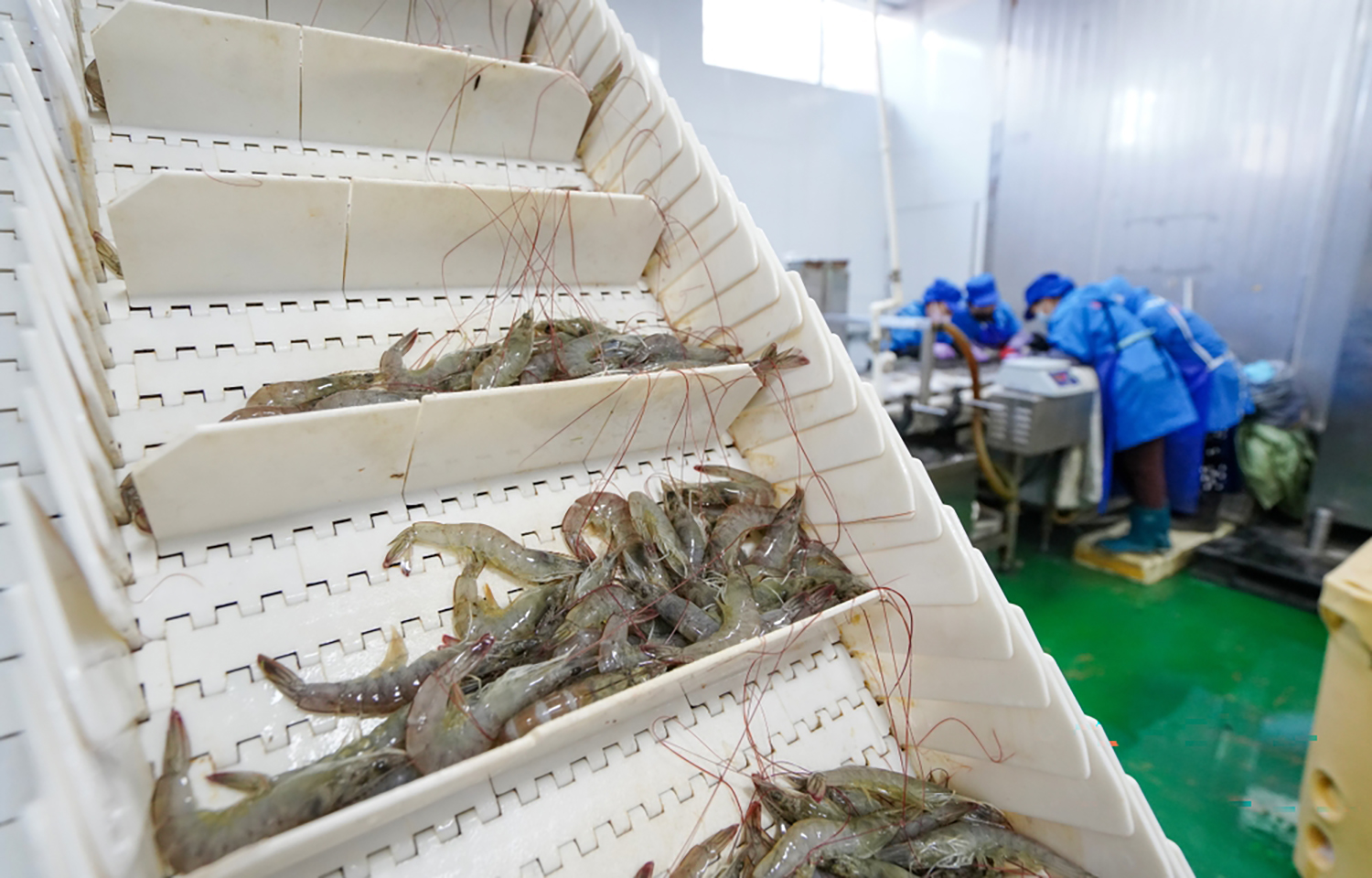
Although the recent study did not prove CMNV directly causes POH-VAU in humans, the strongest exposure signal was linked to raw seafood and aquatic animal handling, raising concerns for seafood handlers, processors, and aquaculture operators around hygiene practices, wound protection, eye protection, feed sources, infected stock, and disease surveillance.
The study included 70 patients from China diagnosed with POH-VAU from January 2022 to April 2025. Several patients required glaucoma surgery, allowing researchers to study the surgically removed eye tissue.
After testing, the particles from the tissue samples were a nearly 99 percent match to CMNV strains from aquatic animals. Patients also tested positive for antibodies linked to CMNV.
Approximately 71 percent of the patients reported recent contact with raw shrimp or other seafood, including from frequent unprotected processing of aquatic animals and consumption of raw aquatic animals. About 82.8 percent of the surveyed cases involved home-based aquatic animal handlers, consumers of raw aquatic products, or close contact with those high-risk groups.
Researchers also found that healthy mice sharing water sources with CMNV-infected mice could become infected, raising concerns about possible secondary forms of transmission.
Researchers cautioned that the findings remain preliminary, warning the study was broad and could not fully quantify every risky behavior among participants. It was also limited by possible recall bias, meaning patients may not accurately or completely remember past exposures.
They emphasized that further research is needed to confirm whether CMNV directly causes disease in humans, whether it can spread between people, and how much risk is tied to seafood handling compared with raw seafood consumption.
Nevertheless, the study suggests aquatic animal viruses may not only present a production-loss issue for aquaculture operations but also be something worth monitoring in feed sourcing, infected stock, handling practices, disease monitoring, and worker safety protocols for those regularly exposed to raw seafood.
In particular, for processors and seafood handlers, the findings point to the importance of basic protective measures, especially around open cuts.
