




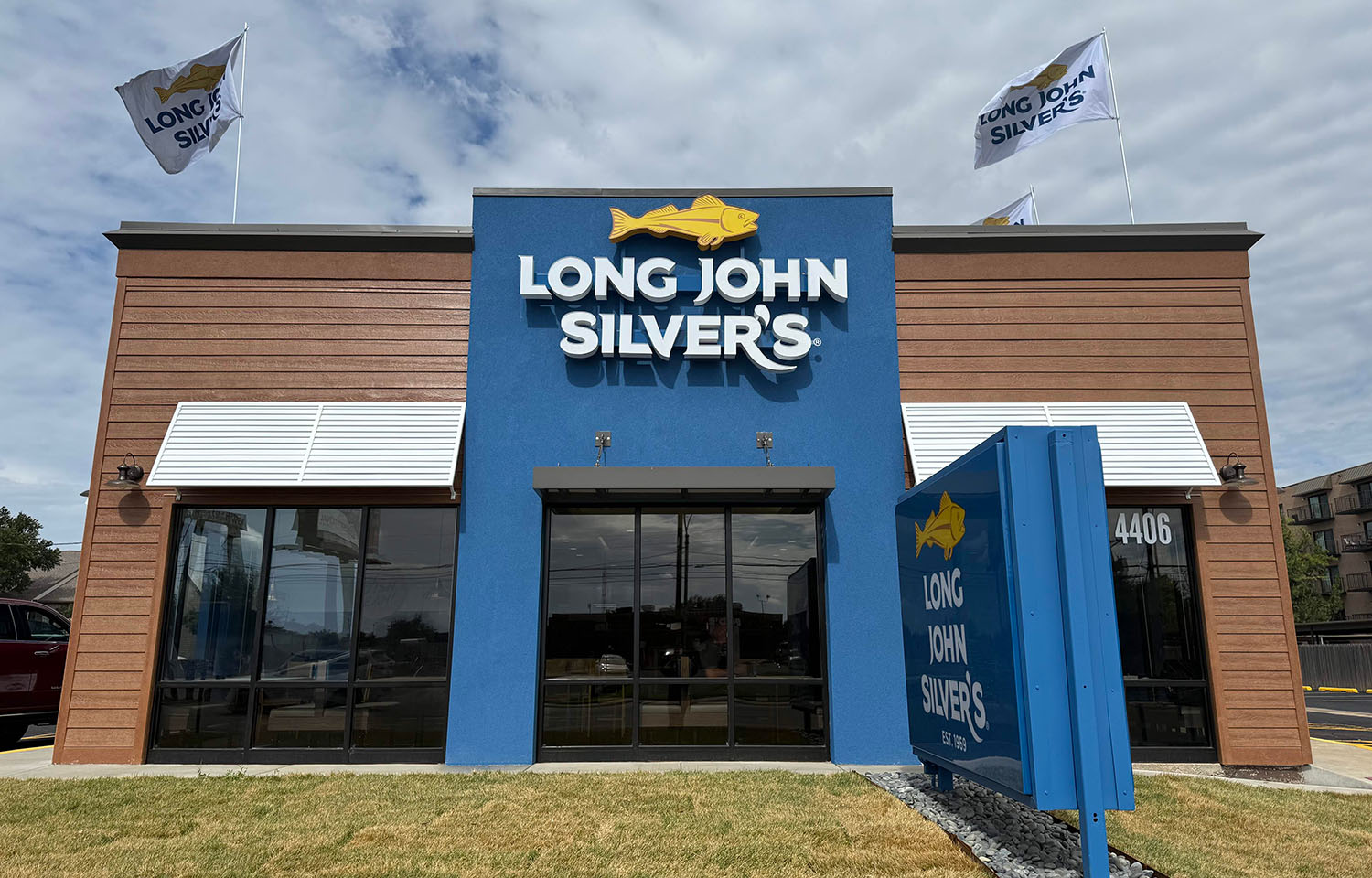
U.S. restaurant chain Long John Silver’s has steadily closed locations each year over the past decade, dropping from over 1,000 units in 2015 to fewer than 500 currently, per research from food and beverage data firm Datassential.
However, company executives told SeafoodSource that recent reports on the closures do not paint the full picture of the chain’s performance.
Tony Ellis, Long John Silver’s senior vice president of general counsel, said that after closing roughly 110 to 120 locations over the past three years, the company now operates 214 company-owned restaurants and around 262 franchised units. That total, he said, is around 100 more locations than recent reports have claimed.
Additionally, Long John Silver’s Chief Marketing Officer Laura Ellis explained that not all closures were strictly related to poor financial performance, as some closures stemmed from leases that were not renewed and some were temporary shutdowns to allow for remodeling.
“We want our in-restaurant experience to be as positive as the taste of our food, so we’ve spent a ton of time remodeling our footprint,” Laura said. "As you can imagine, our brand has been around since 1969, so some of our restaurants were in dire need of a facelift. This means some of those restaurants are temporary closures, and some are a departure from historical strategy.”
Tony further explained nearly 70 locations shutting down were the result of departures from co-branded arrangements with other quick-service brands that included Taco Bell, KFC, and A&W, aligning with a broader industry trend of major chains increasingly preferring single-brand locations.
As for closures that directly related to poor financial performance, John Gordon, who is the founder of restaurant consulting firm Pacific Management Consulting Group, told SeafoodSource there are too many quick-service restaurants in the U.S. overall, exceeding current demand, and Long John Silver’s core consumer demographic is struggling during challenging economic times.
Darren Tristano, the CEO of restaurant consulting firm FoodserviceResults, agreed.
“The difficult current economy has had particular impact on lower-income consumers, near whom many Long John Silver’s are located,” he said. "With limited consumer discretionary income due to higher gas prices and inflation, the weakest stores are not going to survive the current economy. Traffic is slowing to fast food as families are forced to eat more meals prepared at home.”
While tough to make, according to both Laura and Tony, these decisions have resulted in improved financial performance for the chain overall and opened the door to possible growth in the future.
“The good news is that we are not struggling,” Laura told SeafoodSource.
She explained that the company just celebrated 16 consecutive quarters of comparable sales growth, marking a milestone “we are very proud of as a brand.” Tony added that the chain’s sales increased from approximately USD 400 million (EUR 345 million) at the end of 2022 to nearly USD 430 million (EUR 371 million) at the end of 2025.
In the same time frame, which coincides with when restaurant investment firm Four Oaks Partners acquired the chain, 40 new locations have been built or are in development, Laura said.
Further praising the guidance Four Oaks has offered the chain, Tony said he is “thrilled” with the direction the company is heading.
"I was the second person hired at Four Oaks," Tony said. "I have witnessed the change from when we took over – the commitment to rebuilding Long John Silver's to the status it occupied for most of our childhoods as the go-to place for birthdays and special occasions. That commitment runs across the entire executive leadership team and is starting to radiate through the system.”
Besides the commitment toward enhancing the status of the chain, Laura said it has also realized success through its persistent prioritization of value, making it a consistent cornerstone of its promise to consumers in an era of inflation on food, fuel, and other items.
"I have worked in the quick-service restaurant industry for quite some time, and I know how hard it is to make an affordable meal," Laura said. "We made a decision to keep our USD 6.00 (EUR 5.17) basket available for 2026. It gives consumers a ‘huge value’ with a full meal, and seafood is not usually the easiest thing to provide at that price point.”
Laura acknowledged that the chain has seen cost pressures across various inputs but has so far managed to hold the line.
"We have seen several items go up in cost, but none have stayed up," she said. "We watch everything closely, and so far, we have been able to hold our meals. It’s not easy work. We balance the economics of our menu every single day.”
The ability to hold the line largely stems from the chain’s supplier partnerships, which are central to the chain's operational resilience, Tony said. Seattle, Washington, U.S.A.-based Trident Seafoods and Channel Fish Processing in Braintree, Massachusetts, U.S.A., are the company’s primary seafood suppliers.
"I cannot speak highly enough about our suppliers. They ensure we have constant and consistent product,” he said.
