






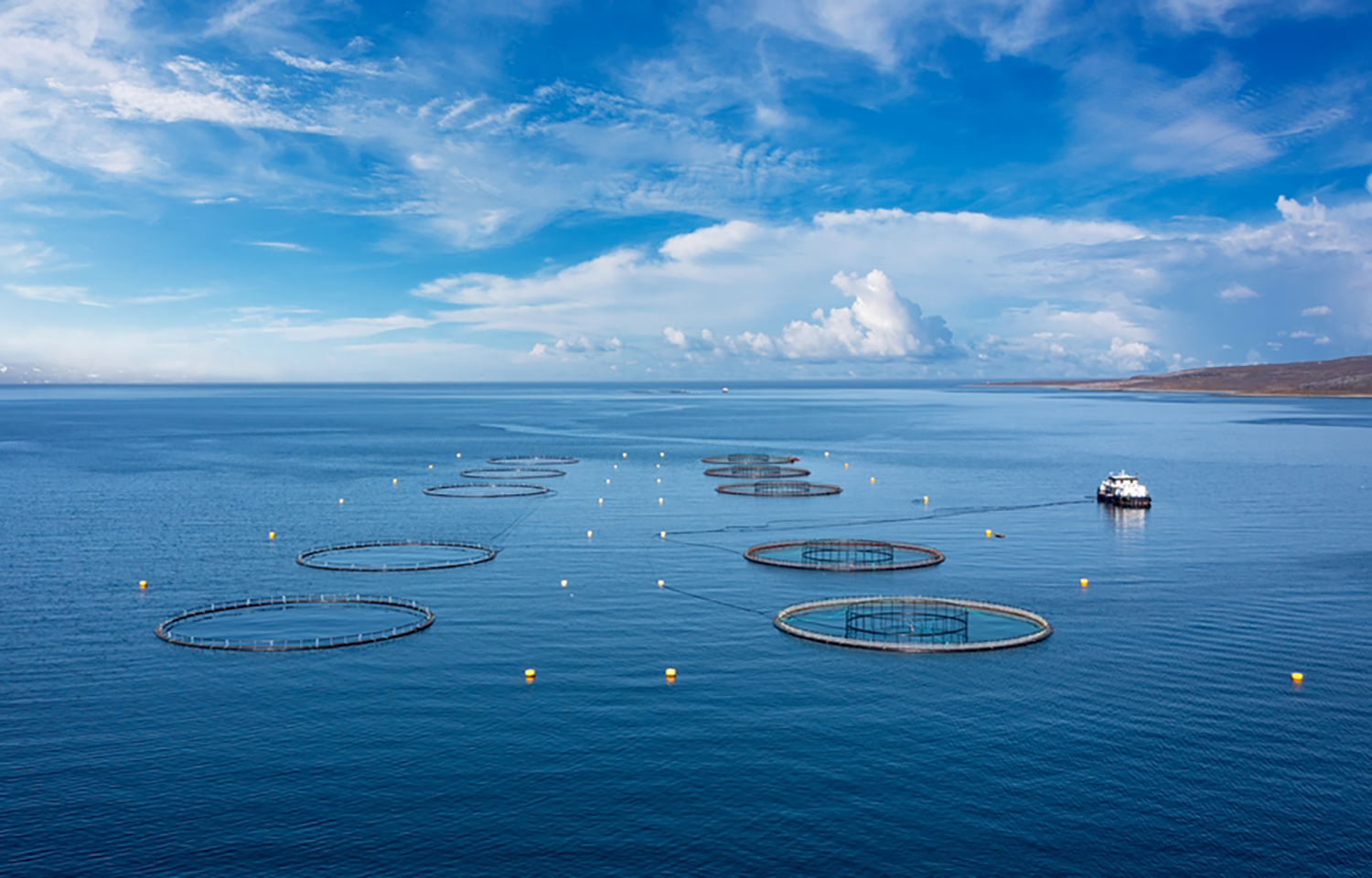
According to the Global Salmon Initiative’s (GSI) latest Sustainability Report, the worldwide salmon-farming industry has made substantial progress on reducing the use of antibiotics, medicinal sea lice treatments, and fishmeal and fish oil.
According to the report, which covered the operations of 11 GSI farming members across Canada, Chile, Norway, and Tasmania, average antibiotic use among these producers has fallen by 68 percent since 2013, including a 22 percent reduction over the past five years. Meanwhile, medicinal sea lice treatments have declined by 79 percent over the same period, and due to optimizations in feed formulation and ingredient utilization, average fishmeal use has fallen by 64 percent and by 31 percent for fish oil in that 13-year time frame.
GSI CEO Sophie Ryan told SeafoodSource the scale of the reductions reflects sustained industry collaboration and transparent reporting.
“Treatment reduction has moved the fastest, reducing antibiotic use by 68 percent and medicinal sea lice treatments by nearly 80 percent,” she said. “Most people would have called that unrealistic back in 2013. Thirteen years of transparent, aligned data show it's achievable when an industry commits to sharing knowledge instead of competing on it.”
The report introduced three new feed metrics for measuring progress, covering marine ingredients derived from trimmings, the inclusion of novel ingredients, and the percentage of low-risk soy used in feed. GSI established these metrics to set a common baseline for monitoring how salmon feed sourcing evolves.
Though the results were largely positive, Ryan cautioned against interpreting the decline in marine ingredients simply as an environmental improvement.
“Reducing marine ingredients doesn’t automatically signal greater environmental benefits,” she said. “Ingredient supply chains are highly complex and often require specific context to determine what is the ‘better’ option.”
GSI is, therefore, continuing to evaluate the role of its ESG Feed Tool as a means of assessing the broader environmental, social, and governance impacts of feed ingredients, aiming to help producers make sourcing decisions.
For Ryan, the immediate significance of the reductions is they show there’s “measurable innovation happening in feed,” whereby the use of marine ingredients can be reduced while maintaining the “nutritional integrity of feed and fish,” but because the three new metrics currently provide only a one-year baseline, they cannot yet demonstrate a trend.
“By agreeing on these definitions and reporting on them, it shows the intent of how we see feed changing and gives us the ability to show real evolution over time rather than just talking about improvement in general terms,” Ryan said.
Measuring the reduction in medicinal sea lice treatments, meanwhile, was supplemented by an expanded GSI metric designed to provide greater visibility into the industry's use of non-medicinal approaches.
Ryan said all GSI members are investing in non-medicinal innovation across a high proportion of their farms, but there’s no single technology responsible for the reduction. Instead, she pointed to a combination of approaches, including post-smolt production to reduce the time fish spend exposed to sea lice in seawater, physical barriers such as skirts around pens, new non-pharmaceutical products, and predictive digital tools that allow farmers to respond before lice pressure increases.
Ryan also linked the reduction in treatments to a broader shift toward prevention in fish health management.
“When you need fewer interventions, it's usually because prevention is working,” she said, pointing toward better vaccines, improved diagnostics, and proactive health management that are enabling producers to identify and address risks earlier.
“The numbers show we are heading in the right direction, but more work is still needed to improve overall biological performance and further improve survivability,” she said.
Elsewhere in the report, 65 percent of GSI members’ production is now Aquaculture Stewardship Council (ASC)-certified, with the organization describing the certification as its standard for responsible aquaculture.
Ryan said GSI was proud of this achievement, though acknowledged that reaching 100 percent across all sites would be difficult.
“Every farm operates in a different regulatory and environmental context and faces different challenges, and some sites face genuine site-specific challenges to certification,” she said, adding that where barriers related to technical knowledge, GSI's network of global experts could help members address them. “ASC is still the gold standard for responsible aquaculture, and we continue to use it as a benchmark for progress.”
As salmon farming progresses, mortality remains the biggest challenge to overcome, Ryan said.
“Even as approaches improve, we continue to face biological challenges and have new emerging risks each year – rising sea temperatures, more algal blooms, jellyfish,” she said. “Our focus now is on continuing to build our knowledge base so we can adapt, mitigate, and innovate at a continued pace to bring these numbers down.”
