



Despite continual fluctuations in Alaskan crab harvests over the last few years, seafood boil restaurant chain Angry Crab Shack said it has not had to change prices for three consecutive menus, spanning two years.
The company told SeafoodSource it has a built in a five- to six-month buffer that helps it weather fluctuating supply.
So, when the Alaska Department of Fish and Game (ADF&G) recently released total allowable catch (TAC) numbers for king, Tanner, and snow crab for the 2026-27 season, with snow crab seeing a noticeable cut from 9.3 million pounds to 5.1 million pounds, Angry Crab Shack is able to adjust and keep prices flat.
Angry Crab Shack President and CEO Andy Diamond said it’s important to the company to remain consistent in pricing, especially in a turbulent global economy.
"We've been able [to do this] now for three straight menus ... almost two years of seafood boil prices not changing,” Diamond said.
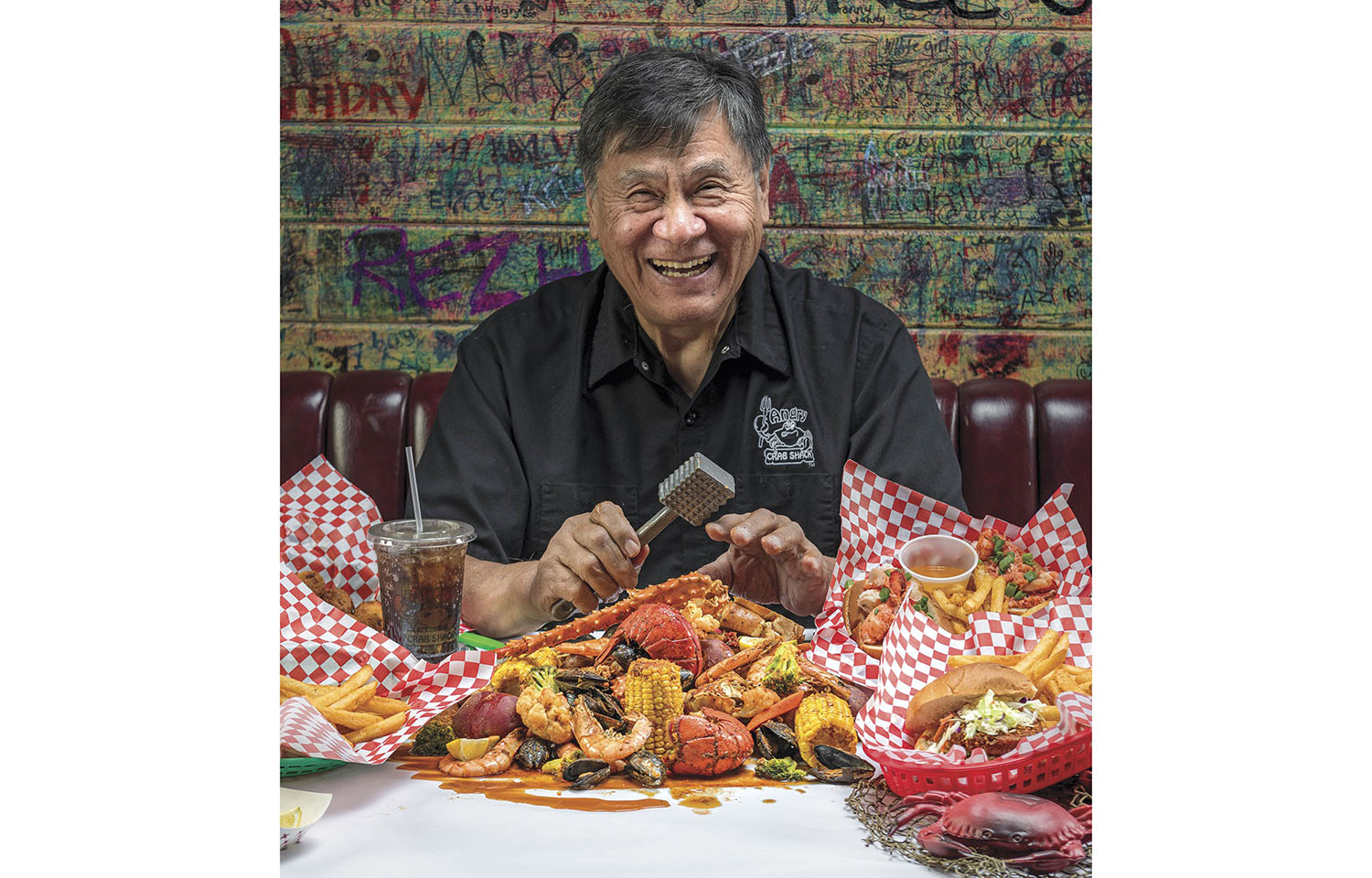
Diamond joined the company in 2014 as a partner to Founder Ron Lou, who opened the Arizona-based seafood boil chain in 2013.
“A mutual friend introduced us,” Diamond said. “He didn't really have an accountant and wasn't keeping financial statements, so when I asked to see them, he showed me a bunch of boxes of receipts. I spent about the first five or six months going through and creating balance sheets from the build out and getting financials going, making sure there was enough adequate liability, liquor insurance, and for lack of a better word, corporate structuring that sort of needed to be done.”
Diamond said his educational and professional background in accounting – both inside and outside of the restaurant sector – gave him the foresight to manage a multi-establishment franchise’s financials through ebbs and flows like changing TAC limits.
"The business is a restaurant, but you treat it like any other business,” Diamond said. “You have to financial model; you have to forecast. I've created and had spreadsheets all my life that make them easier in programs where they're formula-based, where you just change a couple variables and see how those react. It's a lot of planning ahead.”
Companies ranging in size and location rely on a multitude of financial forecasting methods – from a simple Excel spreadsheet to a fully integrated AI-based software system like RELEX, which recently announced a partnership with Mowi. By running price analysis schemes and cross-comparing to different markets, Diamond said he’s able to determine what the price on a menu item should be, no matter what the market supplies. So, when TAC totals came out for the season, Angry Crab Shack’s prices aren’t affected until March 2027 at the earliest – if at all.
“Obviously, for the bigger companies, the people in there are probably economic majors and finance majors and accounting majors, but it's really the mom-and-pop places or the [establishments with] one and two or three locations that may not have the same advantages we have,” Diamond said.
Though numbers for snow crab look different in Alaska this upcoming season, Diamond said it’s not entirely unexpected, as numerous closures have affected the fisheries since 2021. In 2022, for instance, Bering Sea snow crabs were designated as “overfished,” prompting a two-year closure for the fishery.
Though now reopened, the shifts in Alaska’s snow crab fisheries led Angry Crab Shack to turn to snow crab fisheries in Newfoundland, Canada, which operate under an entirely different fishing season from Alaska, beginning in April instead of October. In 2026, Diamond said the Canadian fisheries caught 61,000 tons, or 134 million pounds of snow crab, which helped Angry Crab Shack secure supply and lock in prices until February 2027.
“Even in April, if the Newfoundland snow crab fisheries’ quotas go down, I think there'll be enough, plus the Tanner [crab], that I think as long as you're giving yourself options and you're planning ahead, I think the people that do that are going to be OK,” Diamond said.
The TAC in one fishery affects the global network of fisheries, no matter the location, Diamond said, because buyers will turn to different areas with lower prices and higher supply in low periods. He said that’s why it’s important to lock in prices ahead of time in an effort to avoid the surge of transitioning buyers.
"When we do prices on our menu, we look at every item and put in the frequency that's bought,” Diamond said. “There are a few items on our menu we know aren't great costs, and we're OK with that because of the way that we've done our menu. There's a lot of thought and planning going into it, whether it's forecasting or trying to make deals into the future."
Diamond said as the financial lead for the chain, which operates around 25 locations, he asks himself frequently during the planning process whether little hits are sustainable to insulate the company from skyrocketing prices. When pricing menus in new locations, Diamond said the first thing he’ll do is run a break-even analysis to test different assumptions based on rent, historical food costs, labor costs, and salaries. That allows him to see if a certain level of sales will be sustainable in that specific location for the market, instead of chancing it.
“You may have a high cost of food in some items, but if the frequency of those being bought isn't very high, it won't affect your menu as much as the high-volume items,” Diamond said.
Another way Diamond said the company controls prices is by utilizing master sales agreements (MSAs) with the firm's main supplier and distributor: Houston, Texas, U.S.A.-based wholesale distributor Sysco. That allows a sort of royalty, Diamond said, because numbers are based on margin percentages with a markup on everything bought. That helps, he said, because as Angry Crab Shack expanded and purchases increased, Sysco’s markup did not go down and the distributor made more money as purchases increased.
“It's something we sell to our potential franchise partners, as when you franchise, you're paying a royalty, not just because you're getting the recipes and a model for success but you're buying down your risk,” Diamond said. “Part of buying down that risk is being able to get the purchasing power of a three-location restaurant chain versus just your own restaurant. That's a huge selling point, and it's a selling point because ... we have the next three or four months to really plan for what's going to happen in March because we're fine.”
Another key component is education.
Diamond said servers, other staff members, managers, and executives are all up to date on the crab being sold so that guests can ask questions about taste and preference and compare familiar seafood flavor profiles with new menu items, especially when limited-time offerings hit menus throughout the year
“We're a very interactive environment, so we want our guests to ask us questions,” Diamond said.
