


Norwegian seafood exports for August were up NOK 1.9 billion (USD 0.20 billion, EUR 0.18 billion), or 14 percent, year-over-year (YoY), the Norwegian Seafood Council (NSC) reported.
According to the industry advocacy group, the total value of the month's exports was NOK 16 billion (USD 1.71 billion, EUR 1.48 billion).
"Despite the Norwegian krone being significantly stronger than in the same month last year, the value of seafood exports in August reached a historic high. This is primarily due to increased salmon volumes at higher prices and price rises for cod, mackerel, herring and saithe,” NSC CEO Christian Chramer said.
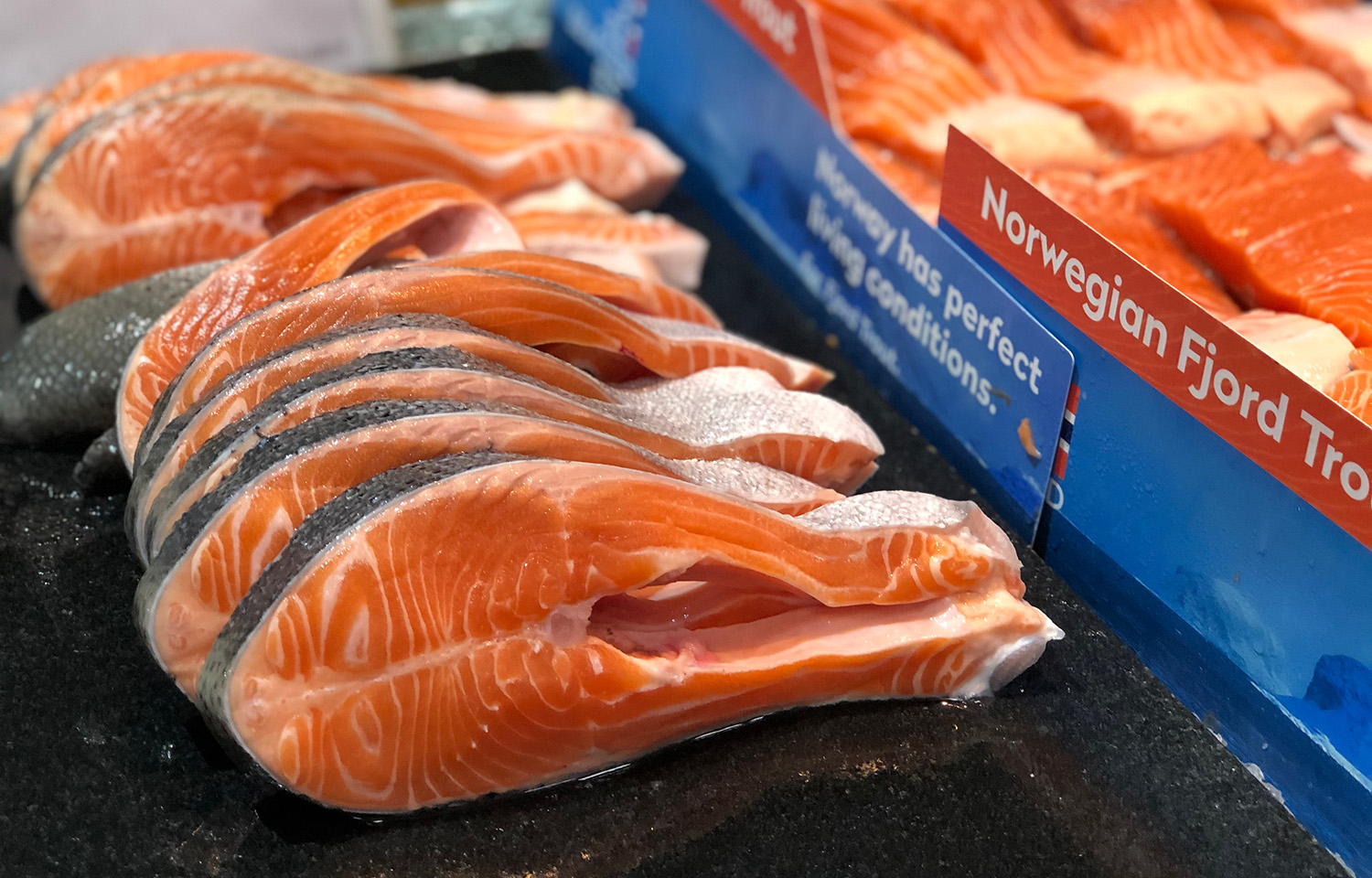
The Norwegian salmon sector had a record-breaking month in August, setting the highest ever one-month export value for the category, NOK 12.3 billion (USD 1.32 billion, EUR 1.14 billion), NOK 19 million (USD 2.03 million, EUR 1.76 million) more than the previous record, set in October 2025. 153,602 MT of Norwegian salmon was exported globally in August. August’s numbers represented a NOK 2 billion (USD 0.21 billion, EUR 0.19 billion), or 19 percent, value increase YoY, and a 7 percent YoY increase in volume.
That demand powered the year's first value growth for exports to the U.S. in 2026, a year which has seen the U.S. market contract in response to tariff pressure.
"Although Norway has been subject to less favorable tariff conditions than several of our competitor nations, we have seen growth in salmon exports to the U.S. for two months running," Chramer said.
The growth was partly driven by the strength of the U.S. sushi sector, Chramer said.
"Favorable biological conditions this summer have given us access to large quantities of high-quality fish, which is in high demand in the lucrative sushi segment, including in the U.S.," Chramer said.
Chramer attributed the growth in other large markets to new consumer behavior.
"Poland and the Netherlands are traditionally regarded as purely processing markets, but we are now seeing that growth in domestic salmon consumption is strongest in precisely these two countries, as well as in Slovakia and the Czech Republic. This is a trend we have been observing for some time," Chramer said.
While the nation's biggest export markets for salmon year to date are Poland, China, and the Netherlands (in that order), August saw the Netherlands importing more salmon than China.
The Polish salmon market grew the most in August, with an export value reaching NOK 487 million (USD 52.16 million, EUR 45.05 million), a 32 percent YoY increase, and a volume total of 28,800 MT, a 21 percent YoY increase. The Netherlands market also grew by NOK 293 million (USD 31.38 million, EUR 27.10 million), or 40 percent, YoY.
Despite the growth in U.S. export value for salmon, Chramer noted that the U.S. is no longer one of Norway’s top three export markets for seafood generally. The Netherlands pushed the U.S. out of the number three position in August, with a total value of NOK 1.16 billion (USD 0.12 billion, EUR 0.11 billion), a 31 percent YoY increase.
Top markets for all categories of Norwegian seafood are now Poland, China, The Netherlands, the U.S., and the United Kingdom, in that order.

August value was also driven by the strength of the fresh cod market, which exported 1,934 MT globally, worth NOK 165 million (USD 17.67 million, EUR 15.26 million), a YoY value increase of NOK 32 million (USD 3.43 million, EUR 2.96 million), or 24 percent.
The export market for cod was dominated by farm-raised fish, the export volume of which rose to 1,388 MT in August, a 69 percent increase YoY. By contrast, the export volume of fresh wild cod fell in August to 546 MT, a decline of 45 percent YoY, while the export value fell to NOK 47 million (USD 5.03 million, EUR 4.35 million), a 36 percent decline YoY.
"This is the highest proportion of farmed cod ever. [August] is also the second month in a row that over 70 per cent of fresh cod exports have been farmed cod," NSC market analyst Eivind Hestvik Brækkan said.
Norway exported 1,996 MT of frozen cod in August, worth NOK 205 million (USD 21.96 million, EUR 18.96 million), a NOK 25 million (USD 2.68 million, EUR 2.31 million), or 14 percent, value increase YoY. The largest markets for this category were China, the United Kingdom, and Vietnam.
"Both Vietnam and China are processing and re-exporting increasing quantities of frozen cod to the US, which has an import ban on cod of Russian origin. This has contributed to increased demand for non-Russian raw materials in both China and Vietnam," Brækkan said.
August saw volume growth for the export of Norwegian salted fish (cod), with 677 MT exported, worth NOK 85 million (USD 9.1 million, EUR 7.86 million). That number represented a value increase of NOK 54 million (USD 5.78 million, EUR 5.00 million), or 177 percent YoY, and a 122 percent volume increase YoY. The largest markets for the category were Portugal, Canada, and Spain.
Exports of clipfish reached 5,277 MT, down by 2 percent YoY in August, while value increased by NOK 147 million (USD 15.74 million, EUR 13.60 million), or 29 percent, YoY, to reach a total of NOK 658 million (USD 70.47 million, EUR 60.87 million). Portugal, Brazil, and Congo-Brazzaville were the largest markets for the category in August.
Export volumes for clipfish made from saithe, however, fell to 2,387 MT, down 22 percent YoY, while export value fell to NOK 188 million (USD 20.13 million, EUR 17.39 million), down 3 percent YoY. Brækkan attributed this to "very low pollock landings" in Norway, which has meant the industry has had "little raw material" to work with.
Dried cod, however, saw exports of 2,008 MT, up 19 percent YoY, with value reaching NOK 385 million (USD 41.23 million, EUR 35.61 million), up 43 percent YoY. Most of this value increase was thanks to the Portuguese market, which imported 80 percent of the month's volume. Despite the strength of the market in August, year to date volumes are down by 12 percent for dried cod, thanks to what the NSC called "record high prices and limited availability of cod [which] have, over time, affected sales to [Portuguese] consumers."
NSC Representative in Portugal Gudfinna Traustadottir, said that "the fact that export volumes to Portugal are now rising for the second month in a row is… a positive sign of a gradual stabilization in our most important clipfish market."
Norwegian trout saw declines in August in both volume and value, exporting 6,337 MT, a drop of 28 percent YoY, worth NOK 551 million (USD 59.01 million, EUR 50.97 million), a decline of 13 percent YoY. The largest markets were Poland, the U.S., and Ukraine.
August saw Norway export 8,814 MT of herring, down 38 percent YoY, worth NOK 228 million (USD 24.42 million, EUR 21.09 million), down NOK 70 million (USD 7.50 million, EUR 6.47 million), or 23 percent, YoY. Poland, Denmark, and the Netherlands were the largest markets. Export volume to Ukraine grew the most in August, with Aandahl noting that volumes were almost back to the level they were at before Russia's 2022 invasion of the nation.
August mackerel exports amounted to 4,926 MT, a 60 percent YoY volume decline, worth NOK 236 million (USD 25.28 million, EUR 21.83 million), a drop of NOK 230 million (USD 24.63 million, EUR 21.27 million), or 49 percent, YoY. China, Vietnam, and Japan were the largest export markets.
Aandahl attributed the nearly fifty percent value decline to "the combination of a significant quota reduction and a later start to the mackerel fishing season compared with last year." These pressures also contributed to record high prices for frozen whole mackerel under 600 grams, which reached NOK 46.46 (USD 4.98, EUR 4.30) per kg in August.
King crab exports totaled 149 MT, down 21 percent YoY, worth NOK 75 million (USD 8.03 million, EUR 6.94 million), a NOK 39 million (USD 4.18 million, EUR 3.61 million), or 34 percent, value decline YoY. The U.S., Canada, and China were the top markets.
NSC Market Analyst Lars Olai Flydal Rorgemoen attributed the decline to "lower volumes available and a more cautious U.S. market."
Norway exported 95 MT of snow crab in August, down 65 percent YoY, worth NOK 17 million (USD 1.82 million, EUR 1.57 million), a decline of NOK 36 million (USD 3.86 million, EUR 3.33 million), or 68 percent, YoY. The U.S., Hong Kong, and the Netherlands were the biggest markets.
Rorgemoen said the decline had to be understood "in the context of the fishery being in a closed season," rather than to other market pressures.
Finally, Norway exported 2,889 MT of prawns in August, a 1 percent YoY increase in volume, worth NOK 198 million (USD 21.21 million, EUR 18.32 million), a value increase of NOK 48 million (USD 5.14 million, EUR 4.44 million), or 32 percent, YoY. Iceland, China, and Denmark were the largest markets.
"Despite lower landings of cold-water prawns in Norway so far this year, export volumes remained stable in August compared with the same month last year," Rorgemoen said.
Frozen peeled prawns saw an export value of NOK 65 million (USD 6.96 million, EUR 6.01 million) in August, a 24 percent YoY increase. Export volume fell by 8 percent YoY.
Frozen raw prawns for consumption in China reached an export value of NOK 71 million (USD 7.60 million, EUR 6.57 million) in August, a 77 percent YoY increase, with an export volume increase of 365 MT, or 52 percent, YoY.
Norway exported 1,145 MT of frozen raw industrial prawns to Iceland and Denmark in August, at a value of NOK 41 million (USD 4.39 million, EUR 3.79 million), up NOK 19 million (USD 2.03 million, EUR 1.76 million) YoY. Per kilo, average prices came to NOK 35.77 (USD 3.83, EUR 3.31), a 67 percent YoY increase.
