


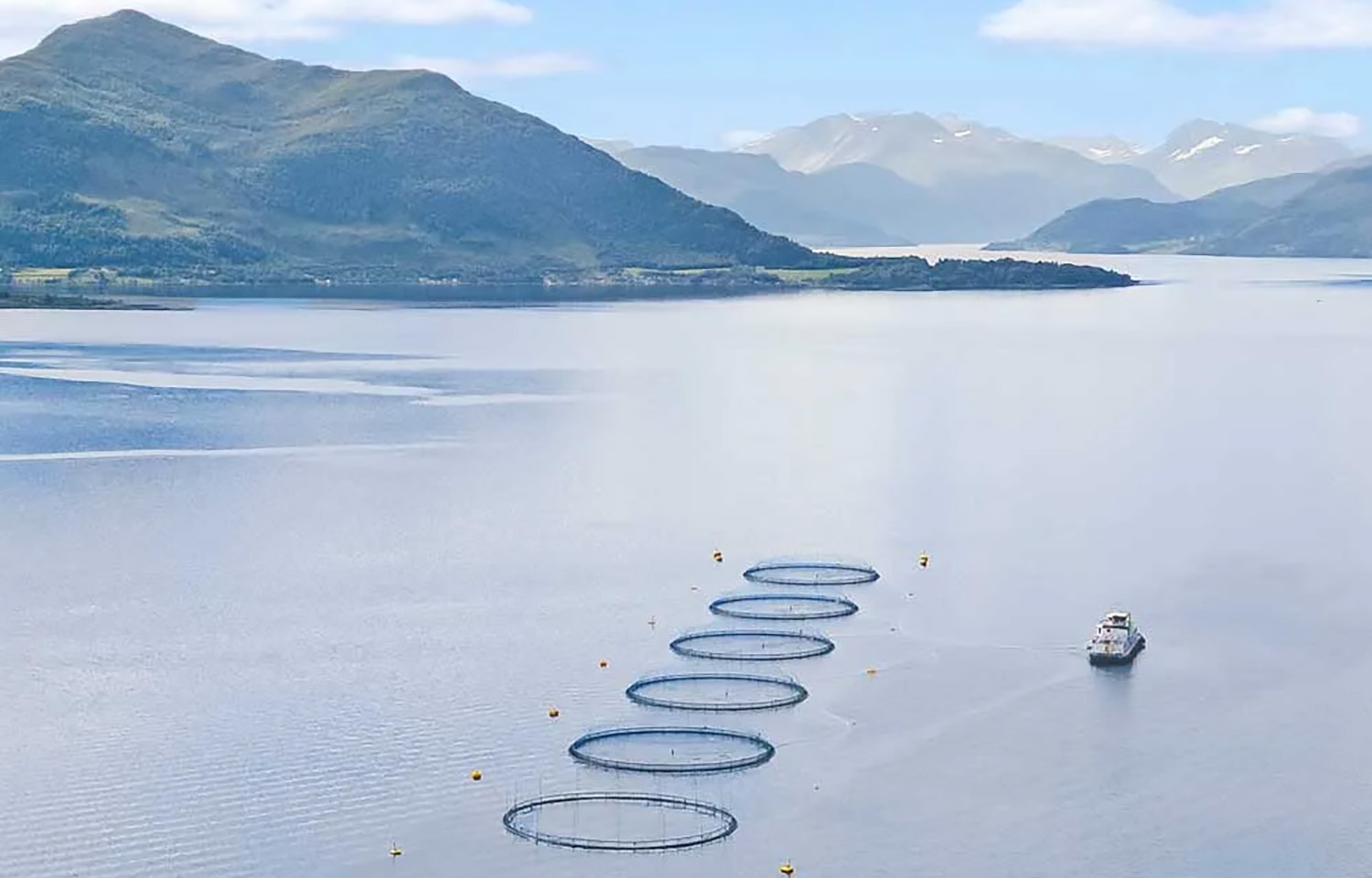
Frøya, Norway-headquartered salmon-farming firm Måsøval recently reported a best-ever second-quarter harvest volume of 9,350 gutted weight tons (GWT), with the total representing an 812-GWT increase on the corresponding three-month period of last year.
This latest harvest total included growth across all primary Måsøval operating sites but a drop in harvest volumes harvested under co-location agreements, dipping to 2,960 GWT from 3,577 GWT in Q2 2025.
In Q2, the firm reported a rise in the share of superior grade fish – up to 91 percent from 78 percent in Q2 2025, with the company attributing this improvement to fewer winter wounds, likely due to higher winter temperatures and vaccinations, as well as the absence of string jellyfish.
Despite higher harvests, Måsøval’s Q2 report states that it achieved revenues of NOK 839.1 million (USD 89.7 million, EUR 77.1 million) in the period, representing a decrease of nearly NOK 30 million (USD 3.2 million, EUR 2.8 million) on the total reported for the same period of 2025 largely due to lower sales prices.
Its loss before tax totaled NOK 75.6 million (USD 8.1 million, EUR 6.9 million), compared to a profit of NOK 157.1 million (USD 16.8 million, EUR 14.4 million) previously.
Its Q2 2026 operational EBIT of NOK 80.3 million (USD 8.6 million, EUR 7.4 million), however, represented a year-over-year increase of NOK 52.3 million (USD 5.6 million, EUR 4.8 million). Operational EBIT per kilogram increased to NOK 8.60 (USD 0.91, EUR 0.78) from NOK 3.30 (USD 0.35, EUR 0.30) in Q2 2025.
Commenting on the results, Måsøval CFO Anders Hagestande said the strong growth at sea, improved fish quality, and the progress of farming operations helped support solid financial performance, at least on the operational side.
"This quarter demonstrates the strength of our organization. Improved biological performance and operational excellence contributed to a stronger financial position,” he said.
After a strong operational first half, the company has upped its full-year harvest guidance by 1,000 GWT to 29,000 GWT.
For Q3 2026, it expects to harvest 8,300 GWT of salmon, including 2,700 GWT from co-location agreements. Cost levels are expected to increase in the period, as is the average price for superior grade salmon.
At full capacity, Måsøval’s current license portfolio has a production potential of approximately 25,400 GWT, with long-term co-location agreements contributing up to an additional 8,600 GWT annually.
The fully integrated producer also holds an exhibition license with a potential for 600 GWT to 1,200 GWT, and the Møre and Romsdal County Council, located on the West Coast of Norway, has granted Måsøval permission to establish a new farming site in Haram municipality, with a maximum biomass of 4,680 GWT.
Regarding SalMar's planned acquisition of a majority stake in Måsøval, the firm’s report merely stated the transaction must meet relevant regulatory approvals. Once complete and announced by SalMar in a stock exchange notice, all minority shareholders can realize their shares in Måsøval based on a price of NOK 39.50 (USD 4.22, EUR 3.62) per share.
