






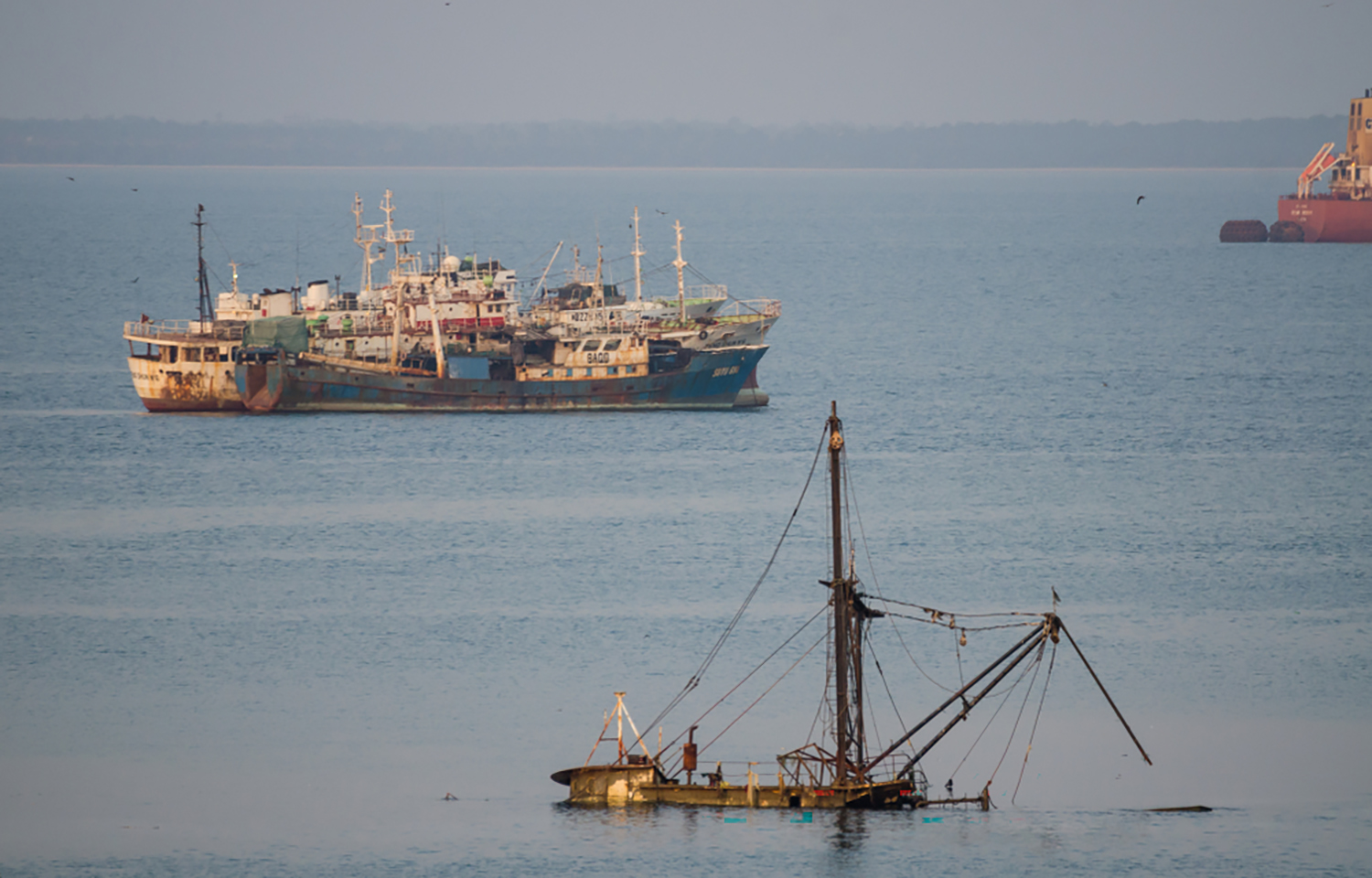
A new peer-reviewed study conducted by scientists from conservation NGO Oceana has found that many countries around the world, including some in West Africa, could benefit from more equitable fishing access agreements that ensure some of the nutrient-rich fish scooped up by bottom-trawling vessels remains in its country of origin.
The study, titled “Impact of distant water bottom trawl fisheries on nutrient supplies of nutritionally vulnerable countries,” found that bottom-trawling vessels haul in marine catch rich in critical nutrients such as vitamin B12, vitamin D, calcium, iodine, iron, selenium, and zinc out of West African waters every year and ship it abroad as the region grapples with one of the world’s highest malnutrition rates.
The study said globally, if bottom-trawl catch, often hauled in by foreign-owned vessels, were kept in the country of origin and consumed, at least 10.6 million people would benefit from these critical seafood nutrients.
Countries such as Guinea-Bissau, Guinea, the Gambia, Sierra Leone, and Côte d'Ivoire could report the largest improvements, according to the study; for instance, in Guinea-Bissau, where nearly the entire population is calcium-deficient, keeping locally caught fish in the country could bring most people up to adequate intake levels.
The study combined reconstructed catch data obtained from the University of British Columbia’s Sea Around Us initiative, which assesses the impact of fisheries on global marine ecosystems and offers “mitigating solutions to a range of stakeholders.” The researchers then combined that data with nutrient composition data for aquatic foods from the Aquatic Food Composition’s database.
“Although some portion of foreign-flagged trawl catch may occasionally be landed or sold locally, such as low-value bycatch, available evidence indicates that in many host countries, particularly in West Africa, foreign bottom-trawl operations primarily land abroad or export their catches, with relatively limited retention within local food systems,” the study said.
David Costalago, a senior marine scientist at Oceana, who was the lead author on the study, told SeafoodSource that shipping marine catch abroad is a critical element in foreign fishing and international seafood trade but emphasized there is also an urgent need to address these deficits.
“Equity does not necessarily mean preventing foreign fishing, but rather, it means ensuring that the benefits generated from a country’s marine resources are shared fairly with the people who own those resources and often depend on them for food security, livelihoods, and economic opportunity,” he said.
To rectify the issue, Costalago called for global fisheries policies to recognize fish as both an economic resource, an ecological asset, and a vital source of nutrition.
"At the international level, fishing access agreements should consider nutritional outcomes alongside resource rents and economic returns that typically drive these negotiations," he said.
He further explained these policies could include provisions that ensure a meaningful share of nutrient-rich catch enters local food systems.
"This is especially relevant in countries facing high rates of micronutrient deficiencies, where agreements could include prioritizing local access to nutrient-rich fish, particularly during seasons when those species provide the greatest nutritional benefits," Costalago said.
He also said public reporting on catch, landing locations, trade, and the final destinations where fish end up would help governments better understand whether marine nutrients are benefiting local populations or being exported elsewhere.
"For international fishing access agreements to be equitable, they should include fair compensation that reflects the full value of the resource, greater transparency in contract terms and catch reporting, and mechanisms that safeguard local food and nutrition security," Costalago said. "Many lower-income coastal states face significant power imbalances when negotiating with nations with large distant water fishing fleets and acknowledging and addressing those inequalities is key to ensuring access agreements generate long-term benefits for everyone.”
