



A new study has found that bottom trawling in European waters not only carries environmental concerns but heavy economic ones, as the practice costs Europe up to EUR 16 billion (USD 18.7 billion) annually once climate and ecological impacts are fully accounted for.
Published in the international journal Ocean & Coastal Management, the National Geographic-backed analysis claims to be the first to quantify the economic value of bottom trawling across Europe, incorporating both industry benefits and wider societal costs. Its central finding is that the catching method generates just EUR 180 million (USD 210.5 million) in annual profits for the fishing industry but imposes costs up to 90 times higher when broader factors are included.
The study draws on data from more than 4,900 European-flagged trawlers operating across E.U., U.K., Norwegian, and Icelandic waters, which collectively log over 5.5 million fishing hours annually.
A key driver of the negative balance is carbon, according to the report. Researchers estimate that bottom trawling in European waters releases around 112 million metric tons (MT) of CO₂ each year, primarily through the disturbance of carbon-rich seabed sediments.
According to National Geographic Pristine Seas Marine Researcher Kat Millage, who is the study’s lead author, the magnitude of emissions from trawling is substantial, and even under conservative assumptions, society is left carrying a significant economic burden as a result.
“Our big finding from this paper is that the overall net value, [where] you add up all of the benefits and then you subtract all of the costs, is negative,” she said upon the report’s launch. “It's negative on a pretty meaningful margin.”
The “social cost” of these emissions – factoring in long-term climate impacts such as sea-level rise and reduced productivity – accounts for the largest share of the estimated EUR 2.25 billion to EUR 16.15 billion (USD 2.6 billion to USD 18.9 billion) annual net loss, mainly due to the CO₂ that’s emitted from disturbed seafloor sediment.
“The costs are actually outweighing the benefits,” Millage said.
Beyond carbon, the study identifies several other direct and indirect costs associated with trawling, including:
- Public subsidies – European governments spend an estimated EUR 1.17 billion (USD 1.4 billion) annually supporting bottom trawling, primarily through fuel subsidies. Without this support, the report argues that fleets in several countries would struggle to remain profitable;
- Discarded catch – Up to 75 percent of bottom trawlers’ catch by volume may be discarded, equating to around EUR 220 million (USD 257.3 million) in lost value annually; and
- Fuel dependency – High fuel consumption remains a structural vulnerability, underscored by recent fleet tie-ups linked to rising diesel prices.
The research also laid out the extent to which bottom trawling overlaps with conservation zones. Around 23 percent of total trawling effort takes place within Europe’s marine protected areas (MPAs), with trawling effort in some countries’ waters exceeding 25 percent. Evidence cited in the study indicates lower populations of sharks, rays, and skates inside some MPAs compared to adjacent waters, with the suggestion that trawling undermines expected “spillover” benefits.
National Geographic Explorer in Residence Enric Sala, who was a co-author on the study, described the practice as “both an environmental disaster and an economic failure,” arguing that banning trawling in MPAs would be “a critical first step.”
With this understanding, the study looked at what a future with different amounts of bottom trawling could look like. Millage said the findings suggest the optimal reduction in bottom trawling effort to increase overall economic returns for the fishing fleet while cutting emissions and supporting stock recovery is about 50 percent.
“Our hope with this study is really for policymakers and others to be able to look at these numbers and think about what that means for their fishery,” she said.
The findings come amid increasing political and regulatory pressure to restrict bottom trawling, particularly within MPAs. The European Commission has already set a goal of phasing out bottom-contact fishing in protected areas by 2030, while countries including Greece and Sweden have announced national commitments.
Giving an industry perspective at the report’s unveiling, Low Impact Fishers of Europe (LIFE) Senior Advisor Jerry Percy pointed to small-scale fleets as evidence that lower-impact models can deliver both food and employment without comparable ecological costs.
“Speaking as a former fisherman on vessels both big and small, I'd say that not all big is bad or all small [is] beautiful. But clearly, where there is evidence that the economic and/or environmental costs of larger-scale mobile fishing gears outweigh any societal benefits from harvesting the resource, it's right that alternatives are found and such operations are phased out,” Percy said. “Small-scale fisheries in Europe … prove every single day that we can feed communities by catching fish sustainably and without disturbing spawning grounds or kicking up carbon.”
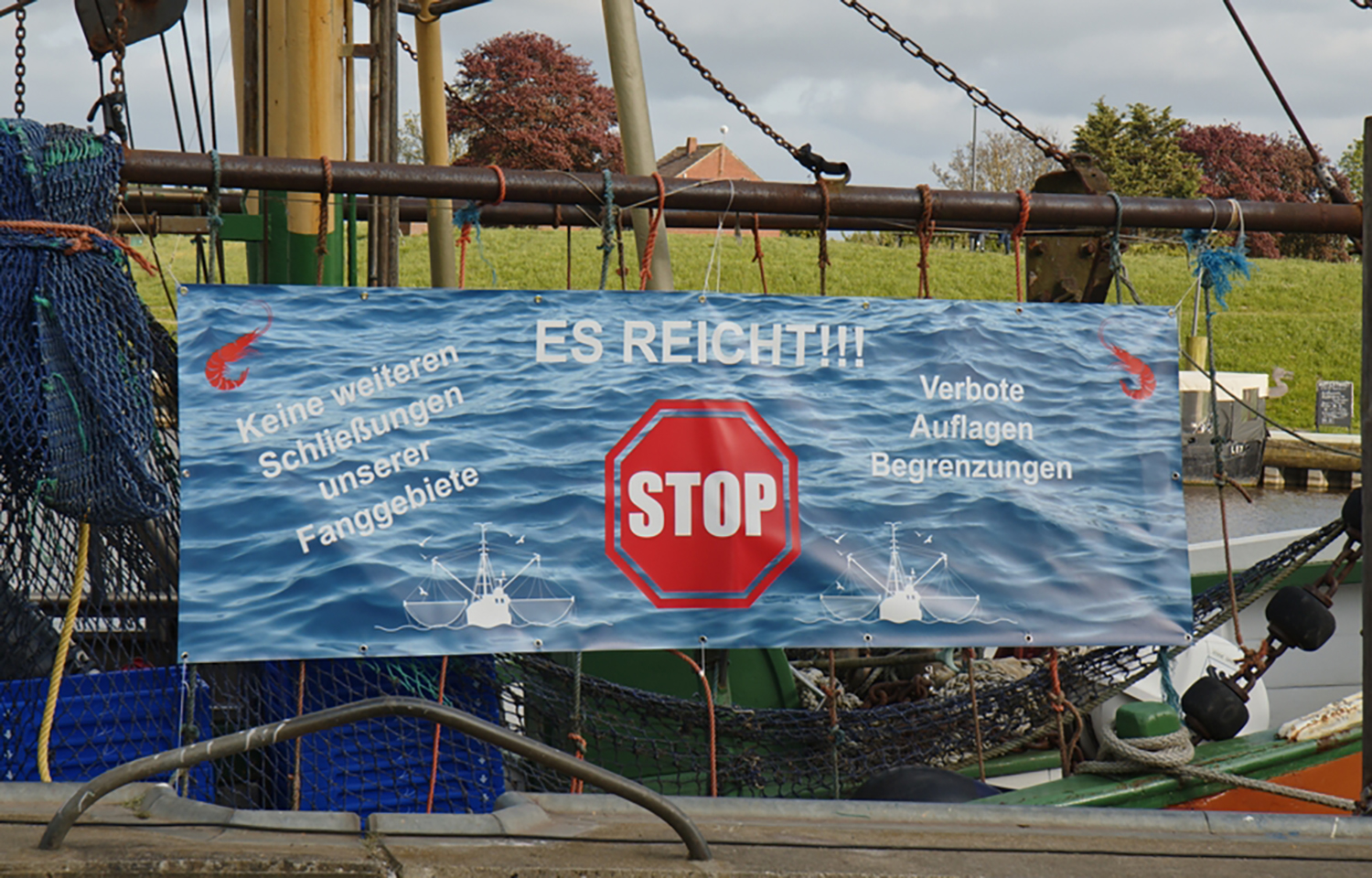
Percy maintains that equal concern should be given to the fishers who may be displaced by restrictions to fishing practices such as bottom trawling.
“It's easy enough to say that they should be banned from fishing in marine protected areas with a carbon issue, but where should they go and how can they make a living for themselves and their families?” he said.
Others took a harsher stance on the report, with an op-ed in The Skipper stating that the claims are “built almost entirely on a single scientific assumption that other researchers have formally challenged in the pages of Nature and one that leading ocean biogeochemists describe as not just wrong, but as astronomically off-base.”
“Policymakers who act on the EUR 16 billion headline without reading the caveats buried in the methods section, or without knowing the scientific history of the methodology beneath it, will not be making science-based decisions,” the article said. “They will be making advocacy-based decisions dressed in the language of science. Irish and British fishermen, and the coastal communities who depend on them, deserve better than that.”
