



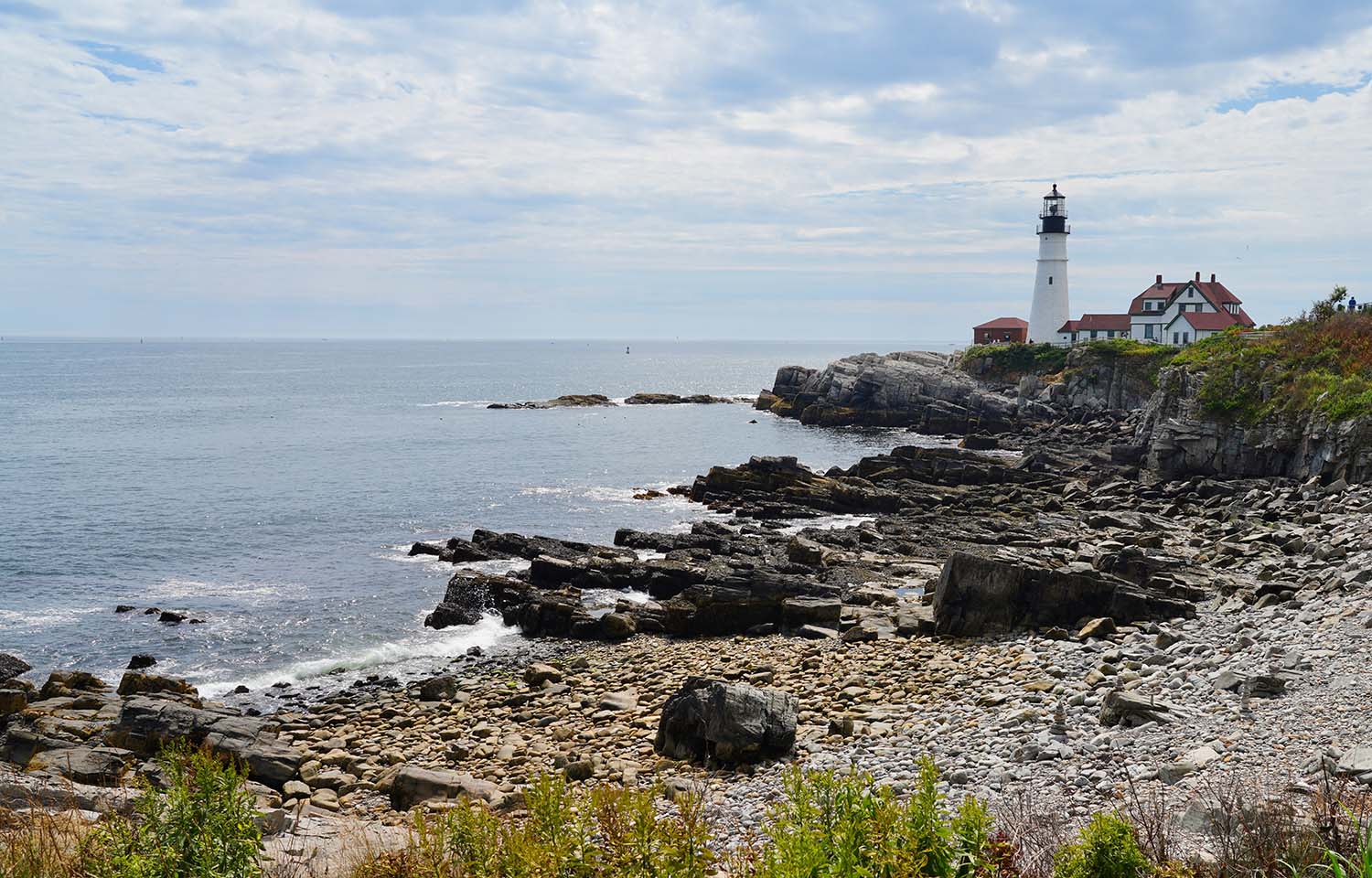
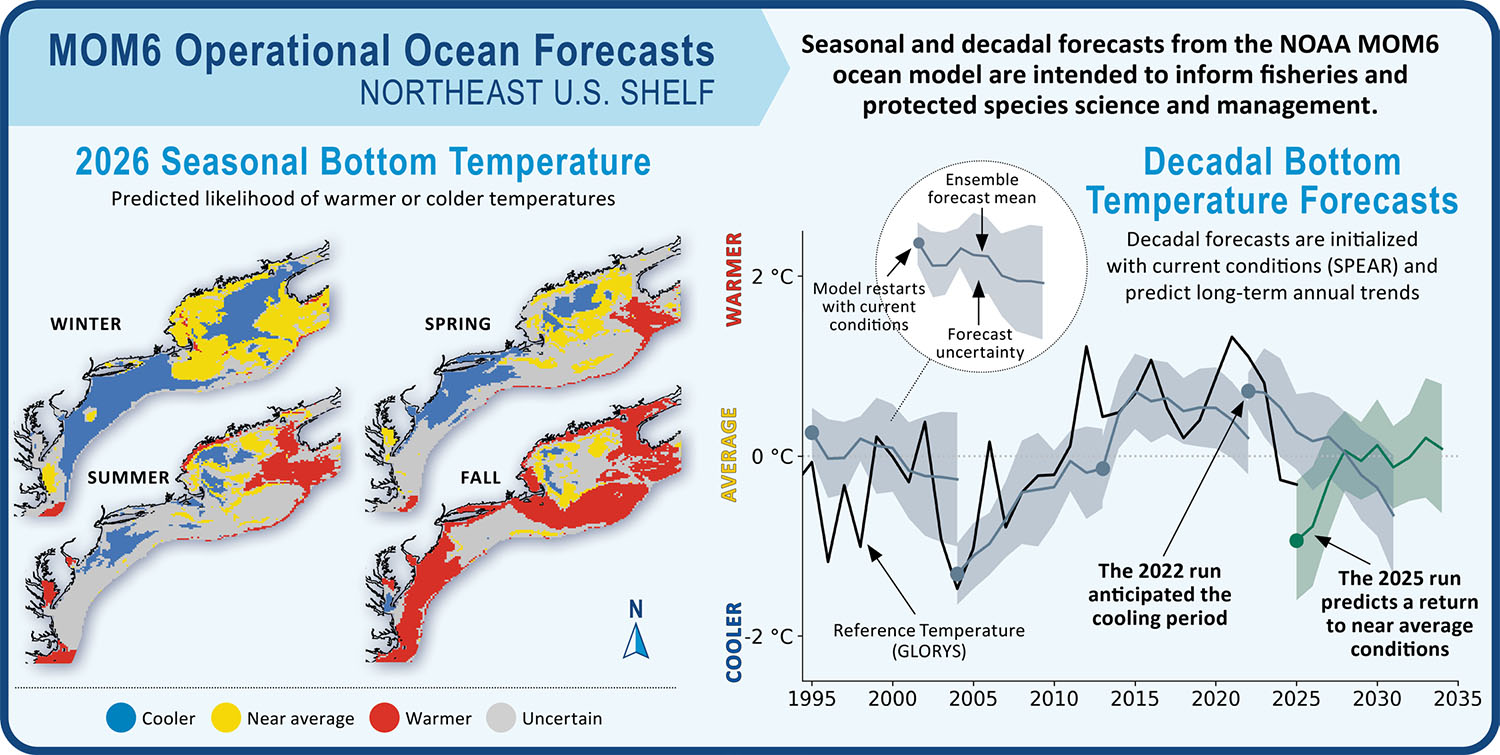
A new report by NOAA Fisheries found that the Northeast U.S. region saw colder than average ocean temperatures in most seasons in 2025.
NOAA Fisheries’ State of the Ecosystem report on the New England region found the Gulf of Maine experienced a rare reprieve for an ocean region that has been warming faster than the world’s oceans. It also predicted similar cooler conditions were likely for portions of the gulf throughout 2026, though it also said uncertainty would be higher in the spring and summer months and instability is growing.
The report also said fishermen in the region reported record levels of white marlin, billfish, sandlance, squid, and Atlantic mackerel than in recent years. Meanwhile, observations of some species like Atlantic mackerel, striped bass, red drum, bluefish, and other gamefish also showed “shifting distributions and unpredictable timing.”
It also warned seafood production in the Gulf of Maine is on a declining trend and below the long-term average for the area.
The report also covered Georges Bank and found it, too, saw declining commercial and recreational landings and below-average revenue as a result of decreased scallop landings.
“New England fishing communities face moderate risk of environmental shifts impacting economic instability because their revenue depends on species sensitive to environmental change,” the report states.
It also said declining landings, aging crew, and fewer young people entering the fishery – as well as increasing dependence on keystone species like scallop and lobster – all increase reliance on those few species being fished and “reduce capacity to adapt to future change.”
The changing water temperatures and growing instability also mean quotas may be misallocated by fisheries managers, which could result in miscalculated fishing targets or unmet quotas.
“The Northeast U.S. Shelf is one of the most productive marine ecosystems in the world. The ecosystem is changing, and these changes are affecting the ecosystem services it provides,” NOAA Fisheries wrote.
