




New research released by genomics company AquaGen has found Norwegian aquaculture production could be significantly increased through more-selective breeding techniques.
A new paper, titled "The power of genetics" and published in the journal Aquaculture, quantified the benefits of achieving rapid growth in Atlantic salmon. The study used a “common garden experiment” eggs from females representing present-day farmed salmon were fertilized from cryo-preserved milt from males of multiple generations to identify the gains in growth rate over the last few decades.
Males from industry generation “zero,” harvested in the 1970s, was compared to generation “11,” harvested between 2017 and 2019. The study found that modern salmon grow at a significantly higher rate. AquaGen has been breeding salmon for over 40 years and has made genetic progress in terms of growth, health, disease resistance, survival, and quality in every generation, which has helped to optimise production and efficiency.
According to the study, if a similar rate of progress through selective breeding continues, Norway can reach its production goals.
“It is possible to significantly increase Norwegian aquaculture production by genetic improvement, and contribution from genetic selection for growth rate alone can close 77 percent of the gap of the forecasted five million tons in 2050,” the paper’s abstract states.
Lead author and senior researcher Ingun Næve, presenting at the Norwegian aquaculture conference Havbruk 2022 in October 2022, outlined that genetic selection could potentially double production volumes by 2050, to between 2.5 million and 3.2 million metric tons, without the need for any additional space or changes in farming methods.
“When salmon move more rapidly through their life cycle towards food fish size, total production time is reduced, farmers can start the next production more quickly, and the frequency of fallowing will be increased,” she said.
The increasing use of “super smolts” which are grown to a larger size in freshwater before being transferred to sea, means that future production time in seawater is also expected to be reduced by up to 53 percent – from 15.3 months in 2019 to as little as 7.2 months in 2050.
The researchers said there are other benefits to be gained from faster-growing salmon, including less handling, a decreased risk of exposure to infection from diseases and parasites such as sea lice, and less likelihood of infection and mortalities, which they said could be reduced by up to 44 percent through genetic selection.
“These scenarios demonstrate that genetic selection should be included as a central component when predicting future development and growth of aquaculture production, both in Norway and other salmon-producing countries,” the study said.
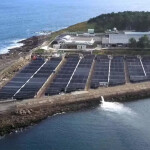
Photo courtesy of Andrey Armyagov/Shutterstock
