

Chile’s Aquaculture Innovation Club is looking to establish an international alliance with countries that have a strong fish-farming tradition in an attempt to drive global innovation in aquaculture.
“We believe there are valuable experiences to share between Norway, Scotland, Ecuador, Spain, and other countries,” Aquaculture Innovation Club Founder and Executive Director Adolfo Alvial told SeafoodSource. “There are a number of international organizations that we’ve invited, and we will be presenting a draft for the adherence to this initiative with contributions from each organization so that we can launch this in a simple, non-bureaucratic way and begin to work together.”
Alvial said the move to incorporate more worldwide players into its efforts stems from the desire to open doors with academia, international research, and international ocean conservation experts while also positioning Chilean innovation services on a global level.
“This is the most important R&D&I [research, development, and innovation] aquaculture ecosystem in the Southern Hemisphere,” he said, noting that a collaborative environment can help to address industry challenges, such as environmental, climate change, and research issues.
Since its founding over three years ago, the club has sought to generate a culture of innovation among partner companies, promoting learning and collaboration while also aligning the needs of those partners with the larger aquaculture innovation ecosystem. It is not a trade organization but rather a collaborative organization seeking to form connections between companies around scientific-technological foundations, Alvial said.
The organization is composed of firms ranging from small companies such as consultancies to large corporations such as MSD and Merck. All of them have the same weighting in the club, which has associated members – those that provide financing and are eligible for holding positions in the organization – as well as collaborating members that simply contribute expertise.
“All of us are suppliers, and we want to maintain that nucleus of suppliers; there are no salmon-producing firms. We have a permanent relationship with producers, and many of us are former producers. But, our institutional reasoning is that the innovation has [traditionally] been driven basically by the suppliers,” he said.
In an effort to drive innovation, the Aquaculture Innovation Club has organized the Innaqua Aquaculture Innovation Conference, which will take place from 26 to 28 September in Puerto Varas, Chile. Alvial said he will call for the formation of the international alliance at the conference.
“We want the conference to focus on the innovation needed to [achieve] more diversified, efficient, and sustainable aquaculture. We believe that’s fundamental for the future of aquaculture, and innovation is what is behind those three characteristics,” he said. “Innovation doesn’t leave out research and technology; without them, you can’t innovate. If we don’t innovate in what we’re doing, then we won’t have the capacity to respond to important issues.”
The main challenges the conference aims to address include climate change as well as climate variability – such as an extended El Niño weather pattern that has hurt South American fishing seasons – and how to adjust accordingly. That adjustment may entail defining strategies to face change effectively by reviewing models, predictive appraisals, and management systems based on multifactor models, supported by artificial intelligence, Alvial said.
Efficient and sustainable feeding will be another major issue examined at the conference.
“The source of feed is very relevant – not just in terms of the raw materials but also in the nutritional factors required to satisfy the farmed organism’s needs and efficient use of those raw materials, which are scarce,” Alvial said.
Along similar lines, Alvial said he wants his club to embrace potentially disruptive technology instead of avoiding it altogether, as it could help the industry avoid the problem of scarce materials in the future.
“We’ll review cellular seafood farming – not as a threat to aquaculture, which is how many people see it, but as complementary to aquaculture,” he added. “This won’t happen from one day to the next, nor will it replace aquaculture. There could be some very interesting synergies between those technologies, taking advantage of the industry’s experience in the value chain and markets.”
The challenge of environmentally friendly disease prevention and control will also be a relevant topic at the conference, specifically regarding how to anticipate the propagation of an illness, reduce the use of antibiotics, and predict the behavior of illness according to the place and time of year, making use of existing data to define the best responses, Alvial said.
Alvial said the industry will face many challenges in the future, but that global collaboration will be key to solving these issues in an efficient manner.
“The future has so many challenges, and no one has the solution by themselves; we need to collaborate,” he noted.
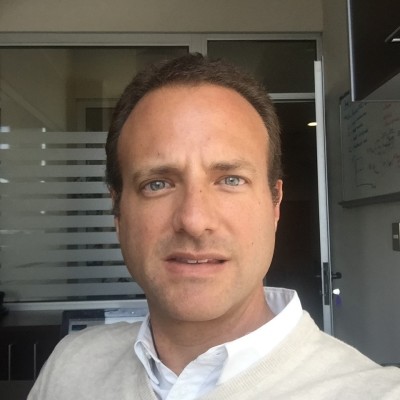
Photo courtesy of Adolfo Alvial/LinkedIn
