




Tokyo, Japan-based General Oyster Corporation has developed an innovative purification system that aims to eliminate instances of vibrio and norovirus in its products on a mass scale, as instances of both have resulted in recent recalls and general wariness among consumers.
Consumer anxiety around the safety of oysters is particularly prevalent in Japan, where diners rarely eat oysters raw due to the country’s warm, subtropical waters that can lead to higher instances of vibrio and norovirus. Instead, oysters are often cooked in a hotpot or are served fried and breaded.
General Oyster – a pioneer of raw oyster bars in Japan – is on a mission to change Japanese perceptions around consuming the mollusk.
The company opened its first outlet in 2001 and is now the country’s largest operator of oyster bars; however, several incidents of norovirus that made headlines in Japan in 2006 caused reputational damage to raw oyster bars and have resulted in companies like General Oyster needing to get creative to combat those impressions.
That ingenuity has resulted in the development of a unique method of purifying oysters to avoid instances of vibrio and norovirus.
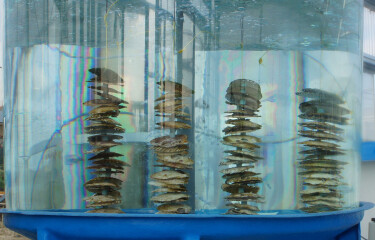
Conventionally, oysters go through a process known as depuration that involves the mollusks being held in tanks of filtered, purified water at facilities for up to 20 hours. This allows oysters to get rid of most of their harmful bacteria before they end up on the market. The process, though, is not guaranteed to eliminate instances of harmful bacteria or viruses.
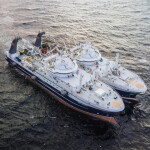
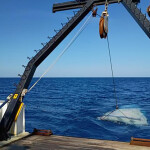
What General Oysters does differently is that it purifies its oysters in deep-sea water – or water taken from a depth of over 200 meters – for 48 hours in tanks that possess a flow-through system to promote effective water exchange.
Deep-sea water is particularly effective in eliminating instances of vibrio and norovirus because little light penetrates such depths in the ocean, resulting in minimal bacterial activity and making the water ideal as pure water for depuration.
Furthermore, the company is working with the University of Tokyo to conduct experiments on the production of microalgae for use in aquaculture feed containing the abundant nutrients that deep-sea water offers.
The consistent temperature and plentiful nutrients that deep-sea water provides to a land-based facility have an added benefit besides minimizing the risks of vibrio and norovirus. While oysters grown in the ocean typically take two years to reach harvest size, General Oyster aims for harvest at one year.
The company promotes its product with the slogan Atarani kaki, which literally translates to “Oysters that do not hit,” meaning that diners who consume General Oyster products will not be hit with gastrointestinal distress that often comes as a result of an oyster carrying vibrio or norovirus.
“This summer, we succeeded in the world's first land-based aquaculture of oysters using deep-sea water, which we have been researching since 2014 in Kumejima, Okinawa Prefecture, and the norovirus-free oyster '8th Sea Oyster-2.0' was born,” the company said in November 2023. “In the future, we are preparing for mass production and market sales.”
If successful on a mass scale, the unique depuration process could help global oyster producers ensure their products remain free from vibrio and norovirus, which continue to plague seafood consumers and companies alike around the world.
Recently, oysters from Fanny Bay Oysters in British Columbia, Canada, were under a voluntary recall after test results indicated the presence of the bacteria Vibrio parahaemolyticus, which can cause severe gastrointestinal distress in humans and even lead to death.
Albeit rare, that fatal outcome played out multiple times across the U.S. last summer.
Officials in the states of Connecticut and New York issued vibrio warnings after several people became infected with the bacteria and later died from the infection. A few of the deceased ingested water while swimming in areas that contained the bacteria, while another contracted the bacteria directly from consuming a raw oyster.
Another instance of raw oyster consumption leading to a deadly outcome occurred in the U.S. state of Missouri in June 2023, when a man ate a tainted oyster and passed away soon after. The particular strain of the bacteria that led to each of the U.S. deaths was Vibrio vulnificus.
Photo courtesy of General Oyster Corporation
