






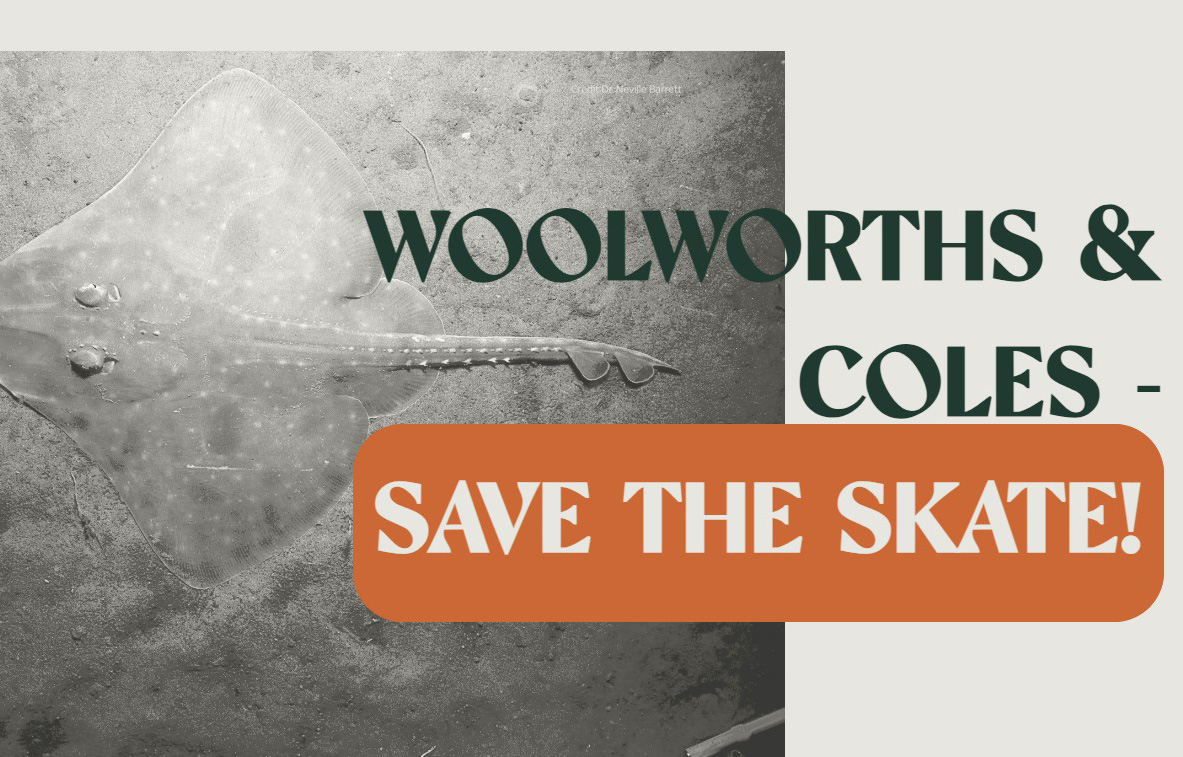
The salmon-farming industry in Tasmania, Australia, is facing increasing opposition to its operations in Macquarie Harbour, with an activist shareholder activism campaign pushing major retailers to stop buying Tasmanian salmon.
Environmental groups blame the industry for the decline of the endangered Maugean skate, a type of ray. The Maugean skate is endemic to the harbor, and scientists found the population of the species has dropped by 50 percent in the past seven years. Scientists say it could be one bad weather event away from extinction.
In response to the criticism, the Tasmanian government created a new Skate Conservation Action Plan, which the Tasmanian Department of Natural Resource and Environment said is designed to set out objections and actions designed to support recovery of the Maugean skate in a way that complements existing conservation-planning documents for the species.
Environmentalist group Neighbors of Fish Farming (NOFF), however, claimed the plan is more oriented around “protecting the interests of multinational Atlantic salmon companies” than protecting the skate.
“The misnamed ‘Conservation Action Plan’ is essentially a proposal to monitor the Maugean skate into extinction while protecting the profits of foreign-owned companies and propping up unsustainable jobs for a short while longer,” NOFF Campaigner Jess Coughlan said.
Just under a month after the launch of the plan, the Sustainable Investment Exchange (SIX) launched a new platform to “combine activism with investing.” Its “Save the Skate!” campaign is devoted to pressuring Australian retailers Woolworths and Coles to stop purchasing domestic farmed salmon.
"All shareholders and stakeholders should have the ability to hold companies accountable, not just billionaires and big institutions," SIX Co-Founder Adam Verwey said.
SIX said it is working with The Reichstein Foundation, Ethinvest, and Ethical Investment Advisers, as well as NGOS including NOFF, Environment Tasmania, and the Bob Brown Foundation, on two separate shareholder campaigns. SIX said its supporter base represents over two million potential shareholders.
“Australian trusts and foundations are uniquely well-placed to contribute to high-impact shareholder advocacy,” Reichstein Foundation CEO Rachel Ball said.
The opposition from environmental groups comes as the Tasmanian salmon industry approaches AUD 1 billion (USD 653 million, EUR 605 million) in exports and a total value of AUD 1.36 billion (USD 888 million, EUR 823 million), per a report from Deloitte.
Salmon industry advocates like Salmon Tasmania, meanwhile, continue to assert that the industry is operating responsibly in the harbor.
“We are very confident the industry is operating in the harbor at an environmentally responsible and commercially sustainable level,” Salmon Tasmania said.
Salmon Tasmania said it is also working to find solutions for dissolved oxygen issues in the bay that could cause issues for the Maugean skate – regardless of the cause.
One such effort is a partnership with the Australian government’s Fisheries Research and Development Corporation, which is planning to use an oxygenator to inject high concentrations of dissolved oxygen into the ocean depths through the use of nano and micro bubbles.
The Tasmanian Liberal Government has also signaled its support of the salmon industry. Premier Jeremy Rockliff wrote a letter to Australia Prime Minister Anthony Albanese saying Tasmania's government is behind the salmon industry.
“My Government’s position is clear: We 100 per cent back the continuation of salmon farming in Macquarie Harbour, and we stand side by side with the almost 400 workers, their families and wider community,” Rockliff wrote.
Rockliff called on the prime minister and Australia Minister for the Environment and Water Tanya Plibersek to make a decision on the industry quickly to end uncertainty.
“By providing a decision date, one that is sooner rather than later, they will be providing some much-needed certainty to a community and industry that both needs and deserves it," Rockliff said.
Image courtesy of the Sustainable Investment Exchange
