


Santiago, Chile-based salmon farmer Camanchaca, which has been impacted by algae blooms and the resulting mass mortality at its farming centers in the southern part of the country’s Los Lagos region, said that it now estimates the events will create a direct financial loss of USD 7.5 million (EUR 6.2 million), net of estimated compensation by its insurance policies.
At the beginning of the month, the company said the impact of the algae bloom would cost the company an estimated USD 4.1 million (EUR 3.5 million). At the time, Salmones Camanchaca adjusted its 2021 estimate for its Atlantic salmon harvest downward by 6,000 metric tons (MT), to a range of 47,000 MT to 49,000 MT. In the latest statement, the company said it now expects to harvest 41,000 MT to 44,000 MT.
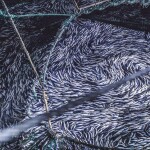
The emergence of harmful algae in the Los Lagos region’s Comau fjord affected the Leptepu, Porcelana, Loncochalgua, and Marilmó farming centers – which previously had 3.2 million Atlantic salmon. Fully half of the fish died, equivalent to 2,700 MT of biomass.
“This unforeseen natural phenomenon was great in scope, which required more time, resources, and logistical and human efforts than those initially foreseen for the work of containing mortality through the transfer of surviving fish, and the removal and disposal of those that did not survive,” Camanchaca General Manager Manuel Arriagada said in a statement to the Santiago bourse, also mentioning the COVID-19 pandemic “with the restrictions and limitations that this entails.”
“However, to this date, the total removal of mortality from all affected centers has concluded, which has been and will be disposed of in specialized plants duly authorized for this purpose,” Arriagada said.
Greenpeace has said that it will file a criminal complaint with Chile’s Public Ministry after reviewing what the environmental NGO called “shocking images of dead salmon” in the Comau Fjord, calling into question the efforts to withdraw mortality from the pens and the subsequent discharge directly into the sea of untreated, contaminated water. Greenpeace said the situation is “recurrent in the salmon industry… [with] marine ecosystems once again being used as industrial landfills by companies” and called for a halt to salmon farming in Chile.
The National Fisheries and Aquaculture Service (Sernapesca) has insisted that it has strictly monitored the entire mortality handling process.
Photo courtesy of Sernapesca
