






Financial problems are slowing China’s planned expansion into Antarctica’s krill fishery.
Rising costs are among the reasons for the shelving of plans for krill trawlers by various Chinese fishery firms. At one point, 15 Chinese companies had plans to build krill trawlers, among them Pingtan Marine, which later canceled its plan for a krill vessel.
Dmitri Sclabos, director of Chile-based krill consultancy Tharos, is doubtful any new Chinese krill-fishing vessels will be built. In particular, he singled out two newly announced projects from Fujian Zhengguan Fishery Development Co. and from Shanghai Chong He Industry Group as having tenuous futures.
In October 2022, Fujian Zhengguan Fishery Development announced plans for the 132-meter-long Fu Yuan Yu 9199, slated to be China’s largest krill-fishing vessel, at a cost of CNY 690 million (USD 96.6 million, EUR 92.7 million).
“If the boat [is built], it will not be at sea for at least the coming five years. There is no final confirmation who will build the trawler, from where the money will come from, [who] the designer [is], and if they [will] get high quality processing equipment,” Sclabos said. “Processing remains their Achilles heel.”
In 2019, Shanghai Chong He Industry Group – also known as Chong He Marine Heavy Industries – launched the 120-meter-long Shen Lan, which completed its maiden voyage in May 2020. In March 2020, Wärtsilä was commissioned to design a second, even bigger, krill processing vessel for the company. But Sclabos said due to technical issues, the Shen Lan is “still struggling to make it.” According to Sclabos, the Shen Lan has not yet completed a fishing expedition to the Antarctic.
“This is almost three years after completion,” he said.
Sclabos said Chinese fishing companies prefer to use locally sourced technology, which he said is a major disadvantage in the krill fishery. The new trawler being built by Zhengguan – to replace an older, Japanese-made vessel – will run a standard fishmeal line, according to Sclabos.
“[That’s] something that can be done by local equipment suppliers. Nothing else so far,” he said. “Their product will go for frozen krill and dry meal, the latter as feed-ingredient, and on-land oil extraction in one of their many oil extraction facilities, of which several are idle.”
While krill has become a strategic target in recent years for Chinese companies, and while Chinese demand for krill is booming and may potentially reach 4.5 times current global krill oil production and four times current krill meal production, Sclabos said his contacts in China have told him there are doubts among the country’s krill industry players “about how much krill resources will ultimately be out there.”
“They expect more TAC [total allowed catch] restrictions” as a result of a movement toward environmental protection and conservation at the Commission for the Conservation of Antarctic Marine Living Resources (CCAMLR), which regulates the fishery. CCAMLR plans to hold a special meeting in 2023 to discuss a proposal to create more marine protected areas in the region, though the establishment of new marine protected areas in the Antarctic was previously vetoed by China and Russia at CCAMLR’s most recent meeting.
China’s expansionistic agenda for the fishery has been further complicated, at least in the short-term, by a scandal involving several krill oil brands sold in South Korea being blended with vegetable oil. Sclabos said the scandal made “a big mess” that harmed that market.
But long-term, China’s demand will return and grow, Sclabos said.
“China shows oil sales keep moving, as 76 percent of products in Asia claimed either EPA or DHA content on the label, krill oil one of them,” he said.
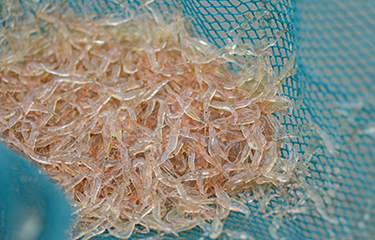
Photo courtesy of TRR/Shutterstock
