





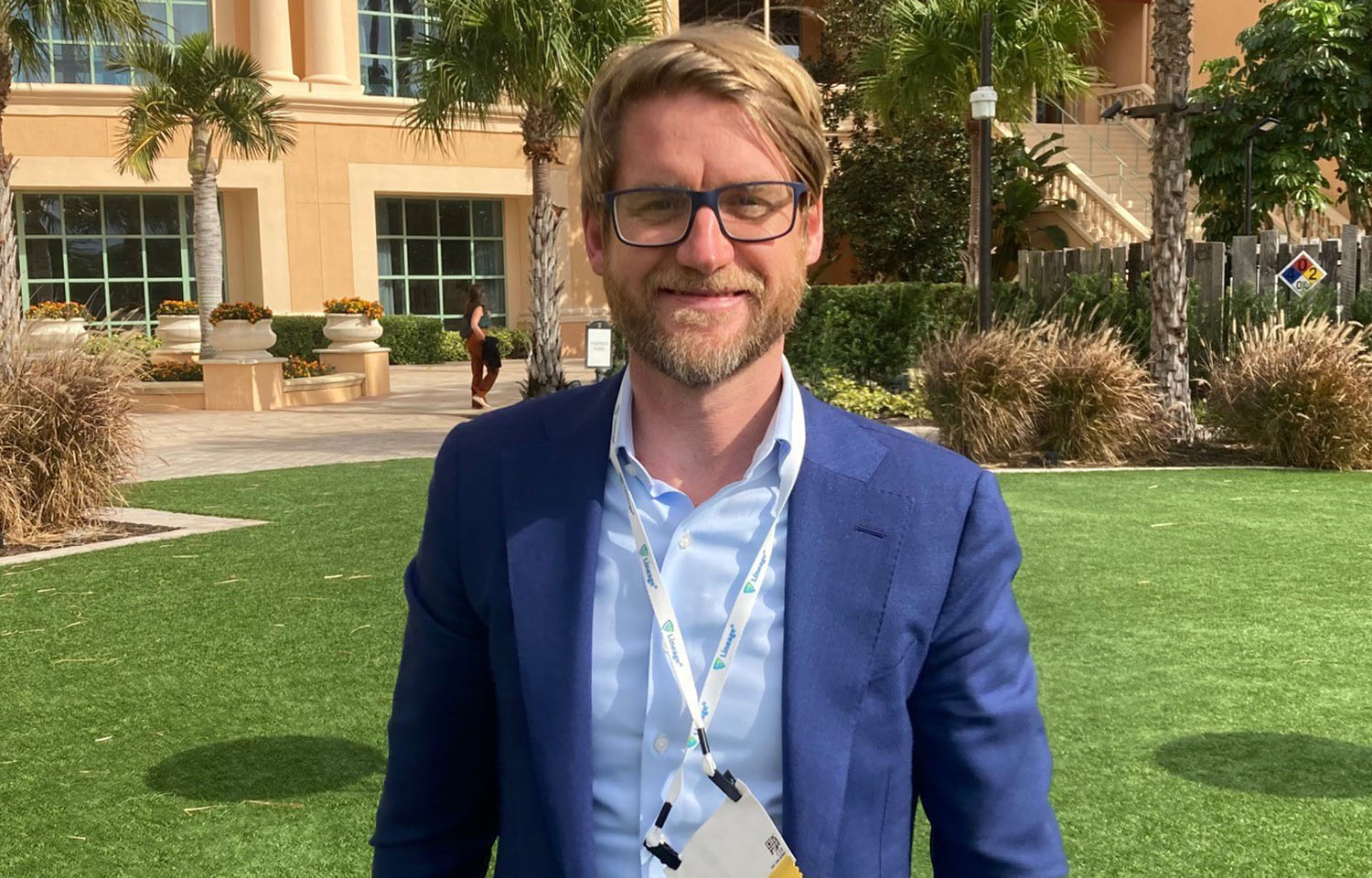
Isaak Hurst thinks the seafood industry is crazy for not paying more attention to harmonized tariff schedule (HTS) codes.
“I think there is an overlooked opportunity for the seafood industry to save billions of dollars through HTS codes. Really, it's unbelievable,” he said. “Companies could literally be saving millions of dollars a year.”
Hurst runs the International Maritime Group, PLLC – a Seattle, Washington, U.S.A.-based boutique maritime law firm that focuses on international trade and fisheries-related projects.
“Our primary task is helping clients to further their own operational goals, which usually includes mitigating risks or helping them overcome regulatory challenges unique to our industry,” he told SeafoodSource at the 2024 Global Seafood Market Conference in Orlando, Florida, in January.
Between the ongoing China-U.S. trade war and U.S. sanctions on Russian seafood, including the recently enacted ban on products processed in third countries, tariffs – and avoiding them if possible – have become a major focus for Hurst’s practice.
“Tariff engineering is legal under U.S. law and has been since 1881 when the Supreme Court recognized the value of having importers fashion their products in a way that seeks to lower their import duties. But, nobody is looking at that stuff in the seafood industry,” Hurst said. “In certain circumstances, all these seafood importers would need to do is reclassify their imports from one HTS code to another in order to mitigate their tariffs, and the definitions, if you look at them, have differences of just two or three words sometimes. It's billions of dollars in tariffs the industry is paying that it doesn’t need to.”
Hurst pointed to the lobbying done by the Genuine Alaska Pollock Producers to expand U.S. President Joe Biden’s executive order to include more HTS codes for pollock as evidence there is plenty of room for maneuvering when it comes to HTS codes.
“Not many seafood CEOs know what their tariff codes are or how it's impacting the industry,” he said. “It's just chalked up to the cost of doing business. Really? Oh, man. It seems like you could save so much money and get such a competitive advantage by paying some attention to this.”
If Hurst sounds passionate, it’s because he has always had a personal stake in the seafood industry. Born and raised in Alaska, Hurst is the son of a commercial fisherman. His father was a longliner and shrimp fisherman in Prince William Sound until the Exxon Valdez oil spill in 1989.
“That really threw a wrench in my childhood and my dad's fishing business,” Hurst said. “He was actually fishing in Prince William Sound when the Exxon Valdez went on the rocks, and then from there, my dad was hit with a series of commercial and regulatory challenges. Someone stole his vessel and then tried to scuttle it outside Valdez to hide the evidence; insurance didn’t respond to that claim. The Coast Guard then condemned his vessel because it was contaminated with Exxon’s oil. Shortly after that, all the quota management programs started up for black cod and halibut, which forced countless small vessel owners to sell off what little quota they had in order to put food on their family’s table. ”
After witnessing his father’s struggles, Hurst vowed to avoid the seafood industry as he plotted his career path.
“I hated to see how the industry changed my dad's life and my life as a kid. It was pretty ruinous,” he said.
Instead, Hurst took to the mountains, joining the Atomic International Ski Team, competing in the X-Games and the World Ski and Snowboarding Championships.
“I skied professionally for about five years and got to do a ton of international travel during that time, but the real value was just getting exposure to the global arena. It certainly got me out of Alaska,” Hurst said.
Once Hurst decided to end his ski career, he returned to school, completing a triple major in economics, international studies, and political science at the University of Utah in two years. That distinction caught the eye of the U.S. State Department. After graduation, Hurst was accepted into the U.S. Foreign Service and served at the U.S. embassy in Kazakhstan for two years.
“U.S. Ambassador John Ordway, along with other State Department officials, told me if I really wanted to be a career diplomat, I needed to go to law school,” Hurst said. “This was during the Iraq War years, and seeing all these bigtime diplomats and lawyers flying around with Dick Cheney and Condoleezza Rice showed me what was going on at a high level. I was pretty cocky at that time, and I thought I could definitely do that.”
When the State Department instituted a hiring freeze in 2009 after the Great Recession, Hurst began reviewing his options.
“This was the exact same time when the Exxon Valdez case finally made its way to the Supreme Court. I started reading about maritime law, and I was like, ‘This is perfect for me; I’ve got to get back in this game. How do you become a maritime lawyer?’” he said. “Maritime law is a super niche specialty; there’s only a couple schools in the world that offer that kind of legal work.”
Hurst ended up at the prestigious National University of Singapore, where he earned a master of laws degree in admiralty law and then worked at a Singapore-based maritime law firm after graduation.
“I thought I knew a lot about boats and global trade until I got to Singapore,” he said. “I cut my teeth on a lot of blue-water shipping issues – everything from time charters to Somalia piracy claims. It wasn’t until after my first vessel arrest, however, when I realized I was hooked for life. Something about heading to sea on a small dingy with an armed escort of Singapore marshals holding a court order for the lawful seizure of a Russian tanker for failing to pay its bunker bill, I just thought, ‘This is an incredible industry – I'm all in.’”
Hurst soon realized, though, the opportunities for foreign lawyers in Singapore are limited, and he and his wife began thinking about moving back to the U.S. They ended up in Seattle, a hub of maritime commerce, where Hurst worked in Wells Fargo's marine insurance practice group for two years. In 2013, he felt confident enough to start his own practice.
“I haven’t looked back. Being from Alaska has given me a lot of credibility. My father was a very honest and hardworking fisherman, and his honesty and hard work in turn gave me a lot of credibility among other Alaskan vessel owners,” he said. “This industry is pretty insular. You’re dealing with multigenerational fishing families and seafood companies, and to some extent, you do run off of the credibility of your family. That’s not necessarily a bad thing. It makes people think strategically about the bigger picture and forces people to take ownership of their actions.”
Nevertheless, Hurst said the industry has changed over his lifetime as it has grown bigger and more global.
“My father's fishing industry was just about getting better prices for catches at the dock. Now, it's way beyond that,” he said. “I’m working on so many different issues that help my clients get the most for their buck: custom processing agreements, crew contracts, tender agreements, insurance contracts, import duties, asset purchase agreements, mergers, loan agreements, and morend – and that is just on the transactional side of the seafood business. Indeed, it takes a ton of legal work to keep a vessel owner in the black these days. Unfortunately, it's just really complicated.”
Hurst said he designed his law firm to help seafood companies – both large and small – so they can navigate the legal and regulatory complications of doing business in today’s global marketplace.
“The lawyers at IMG act like virtual in-house counsel for vessel owners and seafood processors. We do everything from entity formation to creating purchase and sale agreements for vessels or assets. Whatever our clients’ need, we deliver. Sometimes, that requires us to design, draft, and negotiate a commercial contract; other times, that requires us to defend our client’s rights in federal court or arbitration. In either setting, IMG has a long line of successes,” Hurst said. “On the litigation front, we’re admitted to the U.S. Court of International Trade, which is where customs rulings get appealed, as well as the Ninth Circuit Court of Appeals, all federal and state courts in Alaska and Washington, and the U.S. Supreme Court. When it comes to seafood litigation, we are often asked to help resolve disputes on truly short notice –especially if the matter involves a regulatory issue at the state or federal level. In other cases, our day is spent trying to help our clients find solutions to their transactional projects.”
Hurst said having legal representation should not have to be a prerequisite to doing business in the seafood industry these days, but unfortunately, that’s just reality.
“It's just the honest reality. There's so much paper moving across CEOs’ or vessel owners' desks that there's no way these decision-makers can give these documents – let alone time for strategic planning and business development – all the attention they deserve. At a bare minimum, we provide these business owners with a second set of eyes so they don’t end up signing some contract they shouldn’t have. I really wish it wasn't like this, but an ounce of prevention is worth a pound of cure – especially when it comes to legal documents,” he said.
In a move that reveals the trust and respect Hurst has built up in the industry, he was appointed to the National Fisheries Institute’s board of directors in November 2023.
“I bring a unique perspective to NFI’s board. Being a maritime and international trade attorney who grew up fishing in Alaska is one thing, but the fact that my firm also represents some of the biggest seafood companies in the world and dozens of small commercial fishing vessel owners is another. Indeed, because of the diverse set of clients we have, coupled with the myriad legal issues we face as their legal counsel, I’m able to offer NFI a solid perspective on the wide variety of backgrounds and interests that makes this industry so incredible,” Hurst said. “That helps me toe a central line on most issues. I come at most things with a balanced approach, which helps as NFI decides on how to spread its efforts between domestic interests versus importer interests. It’s a delicate dance, but I’ve never seen a seafood or fisheries problem that didn’t have a commercial opportunity.”
Photo by Cliff White/SeafoodSource
