


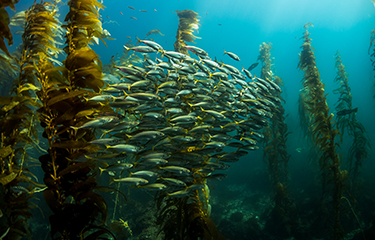
Wild kelp forests help generate an annual average of USD 500 billion (EUR 456 billion) in global fisheries production, a study published in Nature Communications has found.
The study, “The value of ecosystem services in global marine kelp forests,” aimed to calculate the worth of this historically undervalued resource and emphasize its economic and ecosystem benefits.
“[The study is] meant to bring attention to an ecosystem that in the past has not received a lot of focus, interest, or funding because it’s not very well known, or if it is known, it’s not perceived as valuable,” Kelp Forest Alliance Program Director Aaron Eger, the lead author of the study, said.
Wild kelp forests cover over one-third of the world’s coastlines, meaning that about 10 percent of the world’s population lives within 50 kilometers of a kelp forest, according to Eger. The study focused on six different genera of kelp in eight ocean regions in the Pacific, Atlantic, and Southern oceans and referenced over 1,300 fish or invertebrate surveys.
Of the three categories studied to calculate kelp’s global worth – fisheries production, nutrient cycling, and carbon removal – the former comprises the largest share of annual earnings by far. The study estimates global fisheries production hauls in USD 29.9 million annually (EUR 27.3 million) per kilogram per hectare within areas that are environmentally healthy due to the presence of kelp.
Specifically, abalone, lobster, reef fish, and other species use kelp forests as nursery areas and habitats to protect them from predators and adverse weather.
Besides attempting to foster general awareness of kelp’s value, Eger said the study shows the need for better research, restoration, and protection of wild kelp forests. Only 2 percent to 4 percent of these habitats are under protection, and a meager 15,000 hectares of kelp forest have undergone successful restoration projects over the past 60 years.
“What we’ve demonstrated here is that kelp forests are incredibly valuable and they need to be managed in better ways to ensure that people can continue to benefit from that value into the future,” Eger said.
That emphasis on kelp’s value is mainly targeted toward Western audiences, as markets in Asia and elsewhere have long understood and taken advantage of kelp as a food resource, Eger said. Asia accounts for more than 95 percent of the world’s current farmed seaweed production.
Eastern markets often use kelp in snacks and food products such as sauce, yogurt, frozen desserts, and beverages, as well as in personal care products like soaps and body creams and as sustainable substitutes for ingredients in animal feed and fertilizer.
There are several factors, however, that are also leading North American markets to recognize and act upon kelp’s value.
With a warming climate, average sea temperatures are likely to continue rising, increasing the severity of marine heat waves.
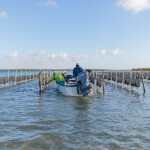
Some fish farmers who are starting to feel the negative effects of climate change on their stocks are turning toward farmed kelp to supplement or directly provide income. They’re accomplishing this by taking a page out of Asian farmers’ playbooks, farming kelp directly and processing it into food products, fertilizer, supplements, and more, as well as using it to help protect shellfish farms, as kelp mitigates ocean acidification and sequesters carbon.
Ecology Action Centre (EAC) Marine Programs Associate Director Shannon Arnold emphasized that kelp farming is a growing market within the sustainable seafood industry. According to the EAC, the North American kelp market is likely to haul in around USD 200 million (EUR 183 million) annually in the next few years.
“I think there’s been a growth in people, in markets, that are thinking about products that have a low carbon footprint – climate-friendly products [and ones] that are adding to biodiversity with low pesticide inputs, for example,” Arnold said.
The U.S. state of Maine is an example of an oceanside community steadily increasing its appreciation of kelp. Shellfish farmers in the state are growing both kelp and bivalves together to ensure a more complete ecosystem that can survive warming Gulf of Maine water temperatures.
“There are a lot of oyster growers in Maine, and it is very risky sometimes because you could lose your haul crops in a big storm. [Growing kelp] is a way of diversifying your income and advancing some positives from a regenerative or healthy ocean approach,” Mitchell Lench, the CEO of Biddeford, Maine-based seaweed processing firm Ocean’s Balance, said.
In Canada, the EAC notes that Nova Scotia also has a burgeoning farmed and processed kelp industry, but said governmental policies have made it difficult for farmers to fully take advantage of the resource.
“Our biggest barriers [in Nova Scotia] certainly lie in our regulations and policy. It takes a long time for folks to get out on the water and get farming,” Arnold said. “The province is reviewing those regulations and has announced that they are committed to ‘right sizing’ to make it easier for marine plant farming, and we hope that happens soon. It can’t continue to take two or three years to get out in the water for a small farm, or we will be left behind as this sector grows.”
Nova Scotia will be able to produce 5.4 million kilograms of harvested kelp in the next three to five years, according to EAC estimates.
“One, [kelp farming] is a good hedge [bet], and two, it’s a way they [farmers] can supplement their income right now,” Lench said. “For some, it could turn into their main source of income where it keeps people on the working waterfront – people who have generational fishing families.”
Photo courtesy of Kirk Wester/Shutterstock
