

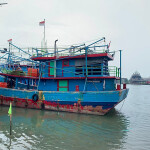

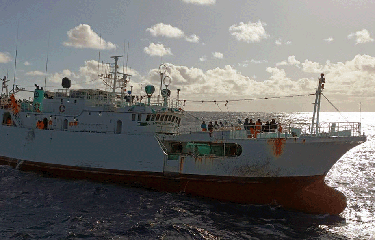
Ocean Outcomes, a Portland, Oregon, U.S.A.-based nonprofit, recently established a fisheries improvement project (FIP) with Taiwan-based Fue Shin Fishery (FSF) that aims to improve environmental and labor standards on 10 longline tuna vessels in the Indian Ocean.
The wider goal of the FIP is “to improve fishery management strategies, environmental oversight, fishing practices, and crew welfare” on the 10 vessels, which net an annual tuna catch of 1,600 metric tons (MT) according to Ocean Outcomes.
The FIP covers Indian Ocean albacore, skipjack, bigeye, and yellowfin tuna, with the latter two species having “significant concerns about [their] stock status,” according to the Ocean Outcomes website.
“A FIP is by far the most comprehensive strategy to address our environmental, social, and governance needs. Some tuna stocks in the Indian Ocean are severely depleted, human rights at sea require more transparency, and RFMOs [regional fisheries management organizations] need to take precautionary measures to preserve marine biodiversity,” FSF CEO David Huang said.
The FIP is part of a shake-up in the Taiwanese tuna fishing industry – an industry that has faced accusations of rampant IUU fishing, falsified sustainable tracing claims, and injurious labor practices. A 2022 Greenpeace report, “Fake My Catch”, outlines accusations against leading Taiwanese canned tuna company Fong Chun Formosa Fishing Company (FCF), which purchased Bumble Bee Foods in January 2020. Two of the 10 vessels involved in the FIP were named in the report as having engaged in questionable activity.
The report accuses Bumble Bee of sourcing from vessels that employed forced labor practices and then disseminating false or skewed tracing information. The report also found that some vessels supplying Bumble Bee had reportedly engaged in shark-finning and other illegal fishing practices.
Pointing out the “unreliable traceability in cans,” the report found that over 10 percent of 119 sampled Taiwanese-flagged vessels that supplied Bumble Bee had previously violated Taiwan Fishery Agency (TFA) regulations and were on its IUU list.
Shifting some of the blame toward buyers, the report also suggested that major Western brands weren’t doing enough to prevent seafood produced with poor environmental and labor practices from reaching consumers in the U.S.
Separately, a coalition of NGOs fighting for better work conditions has called for a downgrade in status for Taiwan in a key ranking of countries’ actions against human trafficking. The Seafood Working Group (SWG), which includes Greenpeace U.S.A. and Global Labor Justice – International Labor Rights Forum (GLJ – ILRF), wanted Taiwan downgraded from Tier 1 of the Trafficking in Human Persons (TIP) report published by the U.S. Department of State each summer. However, the most recent TIP report has left Taiwan’s ranking unchanged.
“During the [TIP] reporting period, the Taiwanese government made efforts to improve the working conditions in its distant water fishing industry; however, these have not been appreciable,” Ahmed Mudzakir, chairman of the Indonesian Seafarers’ Gathering Forum (FOSPI), said in a statement.
Taiwan maintaining its top-tier ranking is even more frustrating, according to Mudzakir, as he believes the country has not made progress on the majority of the prioritized recommendations in the 2022 TIP.
Taiwan Tuna Association Manager Tony Lin refuted that viewpoint, telling SeafoodSource that his members are making efforts to improve human rights standards on vessels.
“This cannot be done in one day; it must be done step by step, with the assistance of many people,” he said.
Yuton Lee, an oceans campaigner at Greenpeace East Asia based in Taipei, told SeafoodSource that the FIP was one such step along the path toward sustainability.
“We believe it is a good start for traders and fishing companies to realize their responsibilities to environmental sustainability and human rights, and we encourage more stakeholders to take action,” Lee said.
Precise actions on working conditions under the new FIP have yet to materialize, according to Perry Roderick, a spokesman for Ocean Outcomes. He told SeafoodSource that FIP partners will conduct a social risk assessment, “which will include on-vessel interviews and discussion with crew and captains.”
“Their input will help drive specific social actions – things like getting Wi-Fi on board for crew access, establishing grievance mechanisms, etcetera are certainly plausible and likely social improvements but specific improvement actions have yet to be prescribed,” Roderick said.
Although Yuton Lee believes this is the right move, she also said “FIPs shouldn’t be treated as a cure-all.”
“Seafood trading companies must be more transparent about their supplying vessels and rigorously enforce purchasing policy in line with human rights standards,” she said.
Photo courtesy of Ocean Outcomes
