


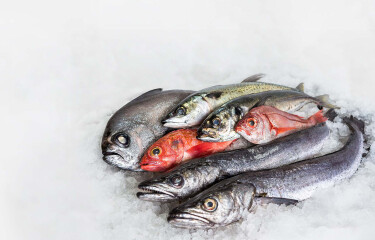
Namibia has partnered with the World Economic Forum (WEF) to address food loss and waste in the country’s fisheries sector by adding value to fish byproducts – including heads, internal organs, skins, and frames.
The partnership, which was established under the Namibia Ocean Cluster – an initiative modeled on Iceland’s Ocean Cluster – aims to connect entrepreneurs, businesses, and fishers to develop shared expertise within the southwest African country’s marine industry.
“The mission of the Cluster is to bring together the Namibian seafood sector and allied stakeholders in a noncompetitive, collaborative forum, which collectively believes in working toward maximizing viable utilization of all seafood post-harvest, leading to new product development and the promotion of new economic models, research methods, and markets,” the WEF said.
That work is already underway, as several companies within the Namibian hake fishery are now exploring how post-harvest fish byproducts at sea could be “captured, landed, and processed into products that add value to each fish harvested,” according to the WEF.
The project’s objective is to extend that work countrywide and increase investment in startups that can reprocess fish byproducts such as heads, gonads, and livers into other high-value products, including use in the pharmaceutical and cosmetic industries, for fishmeal and fish oil purposes, as well as repurposing particular byproducts – specifically fish heads and hake livers – for human consumption.
“In this project, policymakers, business leaders, and civil society organizations are brought together to create an aligned approach to maximizing byproduct utilization, thereby both capturing more nutrition and economic value,” the WEF said.
Though the reduction of seafood loss and waste has obvious environmental and social benefits, the WEF stressed that the project’s financial viability is the key challenge it faces.
Ricardo Romero, the general manager of Nueva Pescanova’s Namibian subsidiary NovaNam, agrees that this is the primary issue, explaining that the 100 percent fish concept is a great idea for “we should leave zero waste” in the seafood value chain but that Namibia needs “to be ready to intensify [investment in] logistics and processing of all products” – a task that requires the involvement of all industry players.
Few details have emerged regarding the mode of financing these envisaged investments, but it is expected the financing model would be similar to that of the Iceland Ocean Cluster – a privately financed community of over 70 companies and entrepreneurs aiming to improve the northern European country’s blue economy.
The parties to Namibia Ocean Cluster are working on a model that can be applied globally in the campaign to entrench the 100 percent fish campaign.
Globally, more than one-third of seafood is lost or wasted, according to the Food and Agriculture Organization (FAO).
In Namibia, the WEF said citing previous research, an estimated 33 percent of seafood caught was lost in 2018, “and approximately 71,000 metric tons of product were removed off boats due to heading and eviscerating processes – a practice commonly employed by industrial fisheries.”
“Not all the fish is utilized and the project wants to explore the possibility of utilizing fish by-products or waste to ease pressure from fish stock that are currently being fished and address the issue of food security,” Victoria Erasmus, the operational manager at the Namibian Ministry of Fisheries and Marine Resources’ (MFMR) Fisheries Observer Agency, said.
Although Namibia’s fisheries are considered well-managed thanks to an effective total allowable catch system and the Marine Stewardship Council certification its primary fishery has earned, Erasmus said a large portion of the country’s population “is undernourished, and there is [an ongoing] issue of food insecurity; but, if we repurpose fish byproducts, we will be able to contribute to food insecurity and employment opportunities.”
Both Namibian government agencies and private seafood companies have pledged to work together to achieve the 100 percent fish goal of eliminating waste, according to a recent wide-ranging interview of the stakeholders sponsored by World Research Institute – a global research NGO.
“Namibia is a member of the high-level panel for a sustainable ocean economy and one of the areas is sustainable ocean food,” Paulus Kainge, the chief fisheries scientist in the MFMR, said.
Kirsten Manasterny, the systems manager of Namibian fish-processing company Merlus Group, also added that establishing a viable market would entice fishers who otherwise have no reason to hold onto fish byproducts.
“These byproducts have value; all we need is for us to look for a good way to bring them to shore,” she said.
Some of Namibia’s seafood companies taking part in the initiative include Embwinda Fishing, Hangana Seafood, Merlus Seafood Processors, NovaNam, Pereira Seafood Company, and Seawork.
Photo courtesy of Seawork Fish Processors
