


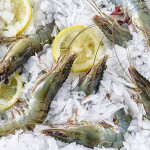

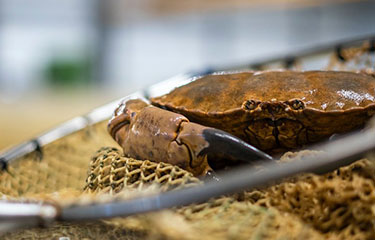
Each year, 420 million individual prawns, shrimps, lobster, langoustine, and crab are caught in the United Kingdom and a further five billion are imported, worth a combined GBP 670 million (USD 797 million, EUR 754 million).
With the sentience of decapod crustaceans recently recognized in U.K. law through the 2021 Animal Welfare (Sentience) Act, the non-governmental organization Crustacean Compassion has taken the lead in pushing to use the law to improve the welfare of decapod crustaceans, including crayfish, crab, lobster, and shrimp throughout the food supply chain.
The inclusion of crustaceans as having protection under the law came following a government-commissioned review by the London School of Economics of 300 scientific studies, which concluded cephalopods and decapods are sentient and feel pain.
However, according to Crustacean Compassion Director of Development Claire Howard, despite the law, crustaceans in the U.K. still have little to no protection during capture, storage, handling, and slaughter. Howard’s organization is fighting against nontherapeutic procedures performed on crustaceans, such as eyestalk ablation to improve egg production in female prawns, declawing in crabs, nicking or notching of lobster tails, and live de-tailing and boiling.
A new study from the organization, titled “The Snapshot,” found many U.K. companies dealing in seafood did not have any formal policy related to crustacean welfare, and for those that did, their scope was often limited and prioritized farmed species such as warm-water prawns over wild-caught animals.
The study evaluated 30 U.K. seafood companies to assess their management and reporting practices and found that half had developed formal policies on some aspect of decapod crustacean welfare. However, of those, just 30 percent of the measures were deemed sufficient to ensure the policies were consistently and effectively implemented. Only two companies had universal decapod welfare policies that apply to all geographies, species, and products. And only one company was promoting its practices.
Howard acknowledged the issue of applying humane treatment to crustaceans is still a new concept to most of those working professionally in seafood, though she said it would benefit them to address mounting consumer concern over animal welfare issues. She said she was encouraged after seeing some companies investing in innovative research and development projects on welfare improvement and finding many companies, even those not taking any action on the issue, to be at least willing to report publicly on their performance.
One project in particular has promise to push the issue forward, according to Howard. Seafish, the Shellfish Association of Great Britain, and the industry-led Crab and Lobster Management Group are jointly working to develop codes of practice, with the intention of producing one for each section of the supply chain, including fishermen, wholesalers, retailers, and caterers, plus guidance notes for consumers. Focus groups and experts are providing input and feedback on the content of each code to ensure they are comprehensive and effective, Howard said.
“The aim of the codes is to demonstrate awareness of the welfare needs of sentient creatures and responsible practice by all sectors, in the hope that welfare legislation will not need to be introduced for crustaceans, under the auspices of the Sentients Act,” Shellfish Association of Great Britain CEO David Jarrad said.
Howard said she hoped her group’s benchmark report creates a baseline for producers, processors, retailers, wholesalers and processors in their work on the issue, and that they use it as a tool to help them define key welfare expectations, ensure best practices in crustacean management, and provide a means of communicating these improvements to consumers.
Howard said her group understands that making changes to working practices is not always easy, due to financial, cultural, and logistical challenges. But she said this should not override or excuse the need to maintain high animal welfare standards.
Moving forward, Howard said Crustacean Compassion aims to ensure that decapod crustacean welfare becomes an integral part of food companies’ procurement policies; to define key expectations of food companies on welfare issues; to drive transparency on welfare through regular reporting; to continuously improve welfare while eliminating inhumane practices from the supply chain; and to measure and report annually on decapod welfare issues so that consumers and other stakeholders can make informed purchasing choices based on best practice.
Photo courtesy of Crustacean Compassion
