






Restaurant operators across Japan, many still working to recover from the effects of the Covid-19 pandemic, are now facing new financial difficulties as the country’s zero-zero loans come due.
Japan’s zero-zero loans were loans the government handed out during the pandemic to prevent mass closures of small- and medium-sized businesses (SMEs). The purpose of the zero-zero loans, most of which came with zero interest and zero guaranteed fees attached, was to help businesses across the country pay their rent and avoid laying off staff members amid Covid restrictions the government implemented that made it extremely difficult to conduct business.
Small businesses that suffered a drop in sales of at least 5 percent and medium-sized businesses that experienced a drop of at least 15 percent received the full benefit of the program. In comparison, the government sliced the guarantee fee in half and maintained zero interest for medium-sized businesses that saw a drop of 5 percent but less than 15 percent.
The maximum payment that a single zero-zero loan granted was JPY 30 million (USD 205,290, EUR 190,290). The program deferred repayment of the principal for five years, but the interest was only subsidized for three years; consequently, loans that have hit the three-year mark of issuance have now started accruing interest.
Hence, zero-zero loans are coming due, and a surge in bankruptcies illustrates the difficulty some businesses are likely to have in repaying the loans, raising the possibility of widespread defaults.
Thanks to the zero-zero program and other emergency grants and lending, the number of corporate bankruptcies in Japan involving debts of over JPY 10 million (USD 68,240, EUR 63,070) fell to a 50-year low in 2021. However, the figure rose again sharply from the spring of 2022 onward, when some of the programs ended.
Tokyo Shoko Research reported in August of this year that restaurant industry bankruptcies increased in July for the ninth consecutive month, reaching 495 for the year so far – up 78 percent year over year.
“Bankruptcies in the restaurant industry had remained at a low level due to coronavirus-related support such as sustainability benefits and zero-zero loans, but the situation changed completely in 2023,” the report stated. “The rate of increase has exceeded one and a half times that of the same month of the previous year for seven consecutive months since January. It is certain that restaurant industry bankruptcies through August of 2023 will exceed the 522 bankruptcies of the previous year.”
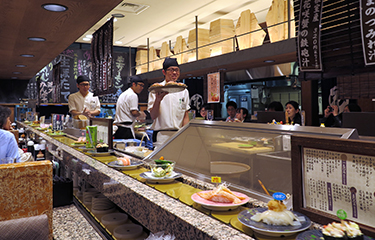
Some restaurant categories, such as sushi – which actually saw decreased numbers of bankruptcies throughout the first half of 2023 – fared better than others, but the industry largely suffered, with the report also highlighting that diminished governmental support has exacerbated the issue.
The Japanese government granted about 2.34 million loans valued at around JPY 42 trillion (USD 287.4 billion, EUR 264.8 billion), according to the Japanese Small and Medium Enterprise Agency. Repayments began in the spring of 2023, but concerns on whether businesses would be able to eventually fulfill these payments were present at the program’s outset.
A report from Tokyo-based Teikoku Data Bank in March 2022 found that 52.6 percent of Japanese companies had taken advantage of some type of Covid-19-related loan and that approximately 10 percent were concerned about their ability to fulfill future repayment.
Hospitality businesses were the top borrowers. Among inns and hotels, 72.3 percent had borrowed from the government, while 72.1 percent of bars and restaurants had done so. These business categories were also the ones in the survey most worried about repayment: 51.5 percent of inns and hotels and 28.6 percent of restaurants reported concerns.
A similar survey released a year later, in March 2023, highlighted some improvement: 49.6 percent of companies still had zero-zero loans on the books, which was a 3 percent decrease year over year. The situation of hotels and inns improved greatly with the return of tourists, as only 39.3 percent remained worried about future repayment; the situation for bars and restaurants, however, had worsened, as 31.7 percent of these establishments were worried at their ability to repay loans.
In response to possible defaults, the Japanese government has rolled out the Corona Refinancing Guarantee, which significantly reduces credit guarantee fees at the time of borrowing on the condition that SMEs meet certain requirements such as a 5 percent decline in sales, prepare a “management action plan” through dialogue with a financial institution, and receive continuous support from the financial institution. However, these loans are not as interest-free as the original zero-zero loans were.
Photo courtesy of bluehand/Shutterstock
