






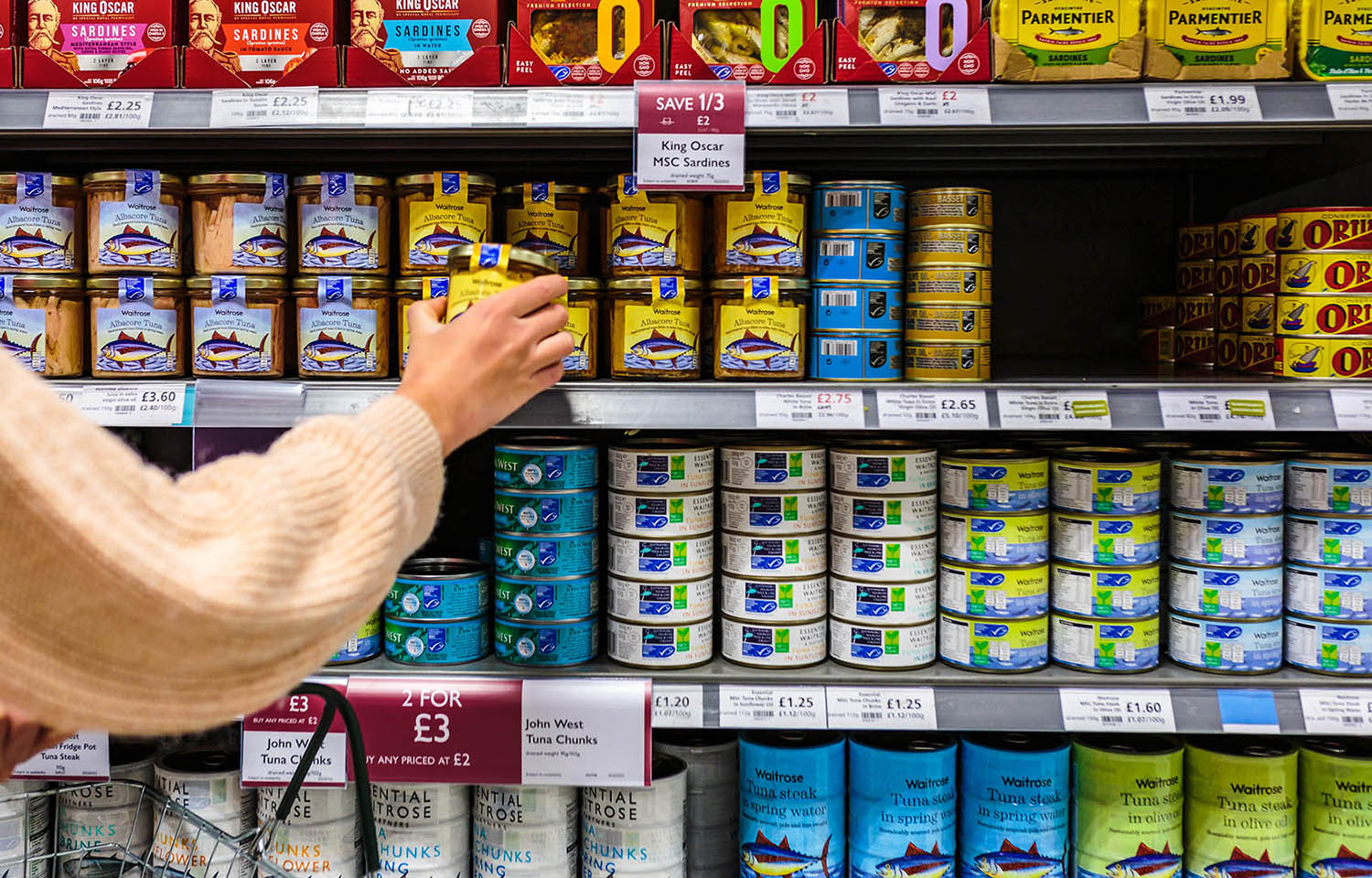
Seafood consumption in the U.K. has dwindled over the past few decades, and that rate of decline has been accelerating in recent years, according to a new report from U.K. non-departmental public body Seafish.
“Fish as Food 2024,” a Seafish review of seafood consumption trends, found that between 2006 and 2022, seafood consumption in the U.K. fell 22 percent, with that level of decline increasing to 30 percent since the Covid-19 pandemic, currently registering at just over one portion per person per week.
These trends will continue over the next five years if the industry doesn't improve its marketing and promotional strategies, the report warned.
“The concern is that relying on the pathway of the last 15 years will produce the same challenges in the next 15 years,” the report said. “A different pathway is required, where the industry is presented differently, with a positive emphasis.”
In the U.K.'s foodservice sector, seafood servings dished out to consumers have been hovering around 20 percent less than pre-pandemic levels. Within the U.K. grocery sector, Seafish said only the least expensive seafood sectors, segments, and species showed volume growth in 2023, led by frozen seafood.
Value continues to drive the buying decisions of British consumers selecting which proteins to consume, and continued high prices for seafood have resulted in consumers changing their purchasing habits and trading down, with some ceasing all seafood purchases.
“In retail, we can expect continued consumer sensitivity to high seafood prices, as the retail price gap between seafood, meats, and non-meats is maintained,” the report said. “In foodservice, high seafood prices, combined with fewer consumers eating out, could see declining seafood sales. These impacts may aggravate declines in overall per capita seafood consumption."
U.K. consumers are also growing increasingly worried about climate change, and those concerns are impacting their seafood purchasing decisions. Their top global warming-related concerns in regard to seafood include warming waters around the globe, the potential to exacerbate rising illegal, unreported, and unregulated (IUU) fishing practices as species distributions shift, and blue carbon loss.
Additionally, consumer concerns have grown more suspicious of corporate greenwashing and backtracking on sustainability commitments.
“From what we have seen over the last 12 months, we have an emerging world where financial pressure vies with climate ambition and regulatory appetite to produce backlash,” the report said. “[This has created] a food world where market actors’ aspirations amid social constraints add to this tension … and a seafood world where seafood actors, facing structural damage to businesses and livelihoods, have pushed back on the ‘worst excesses’ of these ambitions.”
These factors will accelerate profound changes already underway in the food industry, Seafish said. Consumers are continuing to adjust to cost-of-living pressures, and retailers and foodservice businesses are going to need to carefully balance their costs and prices with changes in consumer behavior.
"Seafood is not ‘recruiting’ enough new consumers to compensate for the loss of consumers for whom seafood has more relevance," the report said.
Global geopolitics are also accelerating changes in seafood supply chains and consumption trends. The U.K. has shifted away from sourcing from China, driving further price increases and inflation, the report found.
Seafish quoted industry experts who described market conditions as challenging and unpredictable. But they also said there’s an opportunity for an industry to drive up the frequency of seafood consumption closer to meat, which is eaten on average 15 times per week by the typical Briton.
The report suggested messages about the health benefits of seafood and specifically omega-3 and omega-6 oils, and seafood's unique flavor profiles, can drive more seafood consumption among British consumers.
“There remains optimism that showcasing seafood aspects currently undersold and positive actions quietly underway will result in seafood being in a good place longer term,” the report said.
