



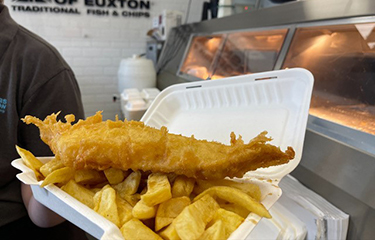
U.K. restaurants – including fish-and-chip shops – are facing unprecedented energy, food, and other costs, and say they are battling back against the government’s recommendation not to further raise their prices.
Hospitality trade group UKHospitality is criticizing Bank of England Governor Andrew Bailey’s suggestion that businesses should not raise prices above the rate of inflation, even though energy bills are double what they were last year and food price input inflation is more than 20 percent, the organization said in a press release.
Businesses face another catastrophic hit this month as the U.K. government scales back its energy subsidies, which hospitality businesses expect to cause an 82 percent spike in costs, according to UKHospitality.
"[Hospitality businesses] had no choice but to reluctantly raise prices, in order to stay in business and save jobs,” UKHospitality Chief Executive Kate Nicholls said.
In addition to soaring expenses, interest rate rises are compounding restaurants’ problems by increasing debt repayment costs for businesses and hampering customers’ disposable income, according to Nicholls.
“To suggest that the sector should stomach these staggering cost increases ignores the real and stark situation facing venues across the country. It is simply impossible if we want to have a viable hospitality sector left in a year’s time,” Nicholls said. “No business wants to raise its prices, for fear of losing sales. We all want prices to be as low as possible for consumers, and it is a minor miracle that many have held off increases for as long as they have.”
Inflation in food and energy costs has driven 12 percent price increases for customers – the highest in 30 years, according to Nicholls.
The increasing costs have forced some restaurants, such as pop-up Cornwall-based seafood shop Bait Shed, to close their doors. Those left open are facing steep drops in customers; Visits to fish and chip shops plummeted 9.2 percent in the fourth quarter of 2022, according to the most recent data from trade organization Seafish. Part of that decline can be attributed to the cost-of-living crisis, which is causing many consumers to curtail how frequently they dine out, it said.
In addition to restaurant price inflation, the overall U.K. Consumer Prices Index Including Housing (CPIH) jumped up 9.2 percent in the 12 months to February 2023, an increase from 8.8 percent in January, the U.K. Office of National Statistics said.
The largest upward contributions to the annual CPIH inflation rate in February 2023 came from housing and household services (principally from electricity, gas, and other fuels), and food and non-alcoholic beverages, ONS noted. And the largest upward contributions to the monthly change in both the CPIH and CPI rates came from restaurants and cafes, food, and clothing.
Grocery price inflation also reached a record 17.5 percent in February, according to new data from research firm Kantar.
“The fish-and-chip sector is obviously still being affected by such things as rising costs of key ingredients, rising utility costs, [and] shortages of labor,” Seafish Trade Marketing Manager Andy Gray told SeafoodSource.
Traffic to all types of foodservice outlets grew in the fourth quarter, except for fish-and-chip shops and travel and leisure, according to Gray. Full-service restaurant traffic soared 9 percent, while visits to pubs improved 12.8 percent.
“Restaurants and pubs had the best festive trading season since pre-pandemic times, further boosted by the World Cup, but train strikes did have a negative impact on traffic,” Gray said.
In an effort to surmount the numerous challenges they face – including the U.K.’s sanctions on Russian seafood – many restaurants have begun serving different types of fish and have adapted menu pricing, including price promotions and smaller portion sizes, according to Gray.
To that end, the National Federation of Fish Friers is partnering with Pacific NorthWest Seafood – a collaboration between the Oregon Department of Agriculture and Western United States Agricultural Trade Association (WUSATA) – to encourage fish-and-chip shops to try using Pacific hake.
The U.S. organizations recently collaborated with five key fish-and-chip shops, offering customers the chance to sample battered Pacific hake, NFFF President Andrew Crook said in a blog post.
“Following the taste-test, customers were asked to fill out a survey – the results of which speak for themselves,” Crook said.
The survey found that almost all of the customers rated the fish very positively, and well over half said they would buy it if it was on the menu.
The NFFF also hosted a workshop on 27 March so fish-and-chip operators can try Pacific hake, “a new source of fish for the industry,” Crook said.
Photo courtesy of National Federation of Fish Friers
