




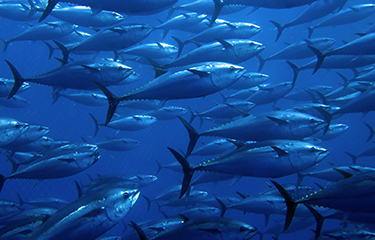
Walmart is updating is seafood sourcing policy to require tuna suppliers to source exclusively from vessels that have 100 percent observer monitoring – either electronic or human observer – by 2027.
The Bentonville, Arkansas, U.S.A.-based operator of more than 10,500 stores globally, including nearly 4,700 Walmart stores and nearly 600 Sam’s Club stores in the U.S., said tuna suppliers must also source from fisheries using zero high seas transshipment, unless the transshipment activity is covered by 100 percent observer monitoring by 2027. The changes apply to Walmart U.S., Walmart Canada, and Sam’s Club stores.
“Our enhanced seafood sourcing standards build on purposeful collaborations and a commitment to systemic change. They are aimed at improving transparency and data gathering in the tuna supply chain to address issues such as accidental catch of non-targeted species, illegal fishing, and abandonment of fishing gear, all of which continue to pose a threat to ocean ecosystems,” Walmart U.S. Senior Vice President of Pantry Melody Richard told SeafoodSource.
The retailer’s updated seafood policy can help lay the foundation “for a more resilient and transparent tuna supply chain that allows people and the planet to thrive,” Richard said.
Along with its goal to have all Walmart and Sam’s Club shelf-stable private and national brand tuna come from a fishery improvement project or Marine Stewardship Council-certified fishery by 2025, the new requirements will “help build transparency, encourage best practices, and drive continuous improvement by helping address systemic issues in the tuna supply chain,” according to Walmart.
The company’s customers and members “count on us to deliver products that are more sustainably sourced, including key seafood commodities that provide protein, nutrition, and income for hundreds of millions of people around the world,” Walmart added.
Walmart prioritized the two changes because systemic issues in seafood supply chains, such as bycatch, illegal fishing, the abandonment of ghost gear and poor standards on fishing vessels, collectively pose a significant threat to the ocean and biodiversity, a Walmart spokesperson told SeafoodSource.
High seas transshipment can also create opportunities for overfishing and illegal activities, the spokesperson said.
"Moving forward, we will work with each supplier to develop a credible and time-bound implementation plan to achieve 100 percent observer monitoring (electronic monitoring or human observer) on any fishing vessels within our tuna product supply chain by 2027,” the spokesperson said “We will also encourage tuna suppliers to report transshipment data alongside other seafood metrics.”
World Wildlife Fund Director of Seafood Markets Michael Griff said Walmart’s move will have both a direct and symbolic impact on the seafood industry.
“As the world’s largest retailer, Walmart’s new commitment sends a signal both to its own value chain and to other retailers that the lack of monitoring on board vessels in some major sectors of the tuna fisheries are critical issues that we are working to improve,” Griff told SeafoodSource.
Even though Walmart is not the first retailer to make a commitment related to observer coverage or transshipment, the global retailer’s “visibility and footprint allow [it] to be a global role model for other retailers,” Griff said.
"We hope this announcement will inspire additional retailers to make similar commitments for their own supply chains,” he said.
Implementing observer programs is a major step in the fight against illegal fishing, Griff said.
“When fishing vessels are not monitored, it is very easy for illegal activity to occur, particularly on the high seas where many tuna fisheries operate,” hesaid. "Observer programs are critical for reducing overfishing, illegal fishing, and human and labor rights abuses at sea.”
The data collected by observer programs on catch – including on tuna species as well as on incidentally caught species like sharks – and fishing activity can be used by scientists and fishery managers to inform better fishery management and enhanced enforcement of regulations where needed, Griff said.
The Nature Conservancy Director of Large-Scale Fisheries Mark Zimring said the changes can help lay the foundation for a more resilient and transparent tuna supply chain.
“The bottom line is that if we want customers to have confidence that seafood products have been harvested ethically, legally and sustainably – harvested without labor abuses or shark finning – we need granular science and compliance monitoring data from aboard vessels," Zimring said.
Mandating n-port transshipment with 100 percent observer monitoring promotes greater transparency and may even provide a range of socio-economic benefits, including local employment and lower costs of goods, according to Conservation International Vice President for Global Fisheries and Aquaculture Jack Kittinger.
“Transshipment at sea is one of the leading contributors to illegal, unreported, and unregulated fishing, and can enable severe human rights and labor violations,” Conservation International Vice President for Global Fisheries and Aquaculture Jack Kittinger said. “We are encouraged to see Walmart taking a leadership role in this space and look forward to supporting both Walmart and their suppliers in making these commitments a reality.”
Kittinger said he hopes Walmart’s efforts will “inspire other businesses to adopt similar measures that help contribute to global conservation priorities and adherence to international standards for human rights.”
Photo courtesy of Walmart
