






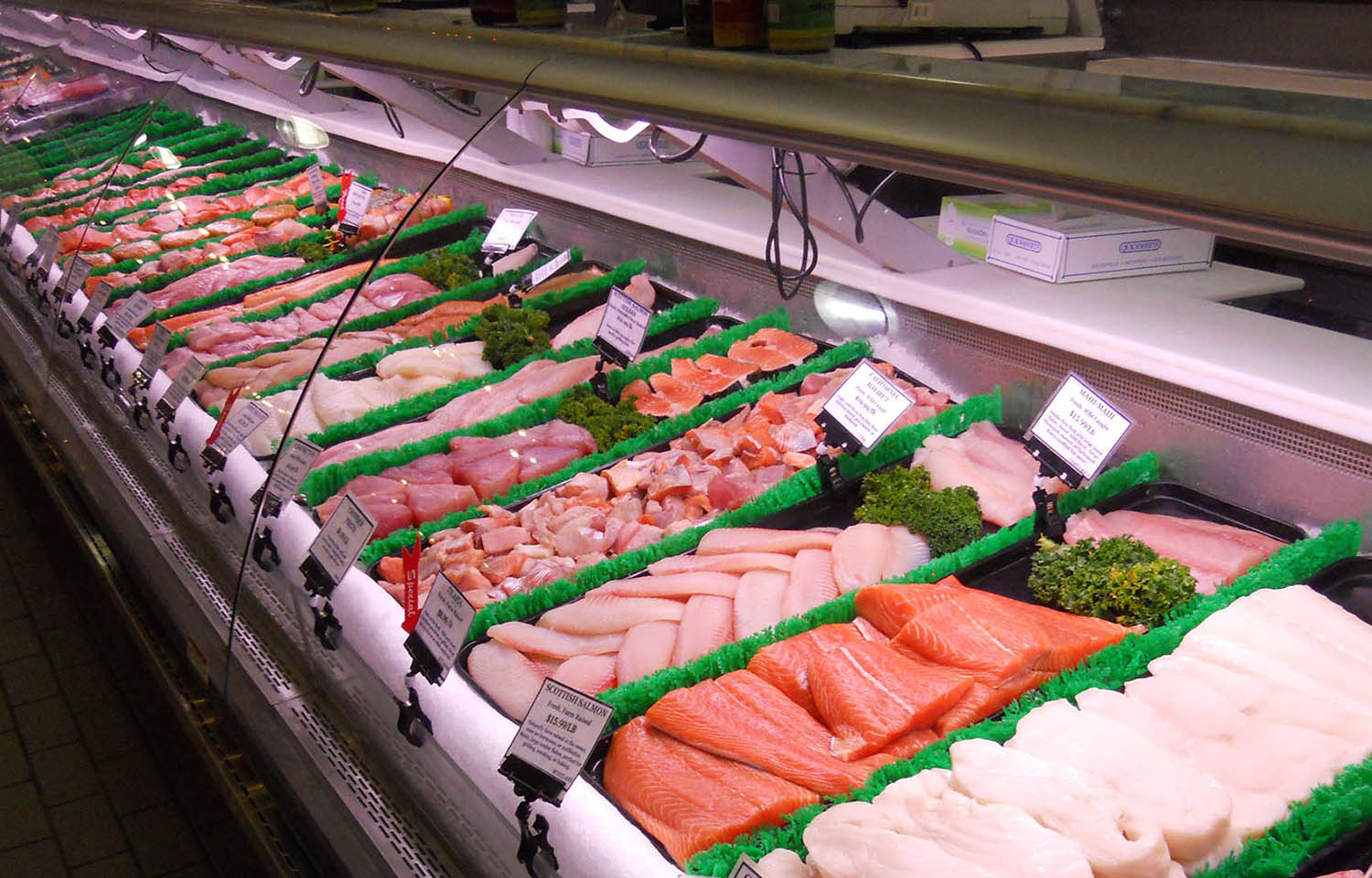
Seafood prices across U.S. grocery stores have been falling for most of 2024, but American consumers continue to buy fewer products in the category.
Seafood prices dropped 1 percent year over year in June 2024, and 0.7 percent from May 2024, according to the U.S. Bureau of Labor Statistics’ Consumer Price Index.
By category, frozen seafood prices dropped 4.5 percent year over year in June, according to data analytics firms Circana and 210 Analytics. Shelf-stable seafood prices declined 2.6 percent, while fresh seafood prices declined 0.7 percent.
Despite the price drops, fresh seafood sales dipped 3 percent in June to USD 666 million (EUR 609 million), while sales by weight fell 2.3 percent. Frozen seafood sales by value also declined 3.8 percent to USD 606 million (EUR 554 million), but sales by weight rose a slight 0.8 percent.
Shelf-stable seafood sales by value, meanwhile, rose 3 percent to USD 257 million (EUR 235 million) in June, with sales measured in pounds jumping 5.7 percent.
By species, fresh cod sales rose 7.6 percent, while sales by weight hiked up 11.5 percent. Fresh catfish sales also rose – 0.2 percent by value and 5.5 percent by pounds.
Sales of most higher-priced shellfish items declined in June. Crab sales dropped significantly – 15.6 percent by value and 11.9 percent by weight. Lobster sales also declined 9.1 percent by value and 17 percent by weight.
Fresh shrimp sales fell 2.9 percent by value but rose 2.7 percent by weight. Salmon sales declined 0.2 percent by value, but sales by pounds in the category rose 0.5 percent.
In frozen seafood, frozen pollock was a bright spot in June, with sales by value rising 7.7 percent and sales by pounds inclining 8.2 percent.
“Whitefish, which offers a more favorable price point but also a very mild flavor profile and versatility for dishes ranging from fish tacos to fish fries, seems to be popular at the moment,” 210 Analytics Principal Anne-Marie Roerink told SeafoodSource in June.
Frozen shrimp sales, though, dropped 5.6 percent, while sales by pounds rose 0.5 percent. Frozen salmon sales declined 6.9 percent, and sales by value decreased 2.1 percent.
Overall economic conditions are likely to blame for consumer wariness, according to Roerink and other retail experts.
While seafood showed deflationary conditions in June, at an average price of USD 9.57 (EUR 8.75) per pound, fresh seafood remained “significantly higher than the average price per pound for the three biggest animal proteins,” Roerink said.
Chicken cost an average of USD 3.05 (EUR 2.79) per pound in June, while pork stood at USD 3.26 (EUR 2.98) per pound and beef at USD 6.86 (EUR 6.27) per pound.
Putting pressure on consumers’ overall grocery budgets, food prices as a whole jumped 2.2 percent in June, led by food-away-from-home inflation jumping 4.1 percent. Food-at-home prices rose 1.1 percent.
Additionally, consumers are concerned about the overall economy, including higher rents or mortgages and gas prices, according to Sally Lyons Wyatt, global executive vice president and chief advisor of consumer goods and foodservice insights for Circana.
Circana Senior Vice President and Food Industry Advisor David Portalatin agreed that overall retail food and beverage sales are being impacted by the “macro pressures” consumers are under.
This has led retailers to shell out sales promotions and coupons, Roerink said.
“Many brands and retailers alike are turning to discounting, increased app investments, and new or improved loyalty programs to retain consumers and increase buying frequency,” she said.
Nevertheless, benefits retailers are seeing from promotions continue to be soft despite their depth and frequency increasing, Roerink said.
"This underscores the importance of targeted promotions to create utmost relevance and impulse conversion,” she said.
Some good news for seafood retailers is that shoppers continue to shift from eating out to cooking more at home. A Circana consumer survey in June found that 22 percent of consumers are cooking from scratch more, and 13 percent of shoppers are looking to save money by limiting restaurant visits. Year-over-year restaurant visits declined 2.5 percent for the year ending 19 May, according to Circana.
