






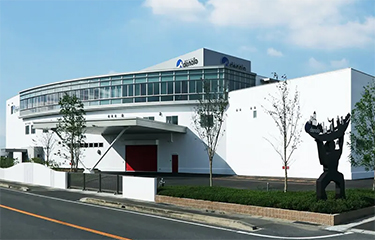
Komaki, Japan-based Fujidenolo Co. is previewing a new device that accurately detects the freshness of fish at the 25th Japan International Seafood and Technology Expo, running from 23 to 25 August at the Tokyo Big Sight convention center.
The device that Fujidenolo – a manufacturer of medical, aerospace, healthcare, and more products – is developing measures the freshness index of fish flesh, or K-value of a fish, by detecting the degradation of enzymes that naturally deteriorate as seafood starts to degrade.
Using K-value as a measure of freshness dates back to 1959 when a Japanese research team first proposed the measurement, and the formula for it relates to the breakdown of adenosine triphosphate (ATP) and the formation of its byproducts. ATP concentration is high in muscle tissue, where it provides the energy for muscle contraction. When animals die, cell respiration and ATP formation stop, and its degradation begins.
K-value compares how far ATP degradation has progressed with the spread of organic compounds typically present in degrading food. A lower K-value indicates fresher fish.
As raw seafood is common in Japan, quantifying the freshness of fish through K-value measurements is used to protect the health and safety of consumers, and along those lines, Fujidenolo envisions companies using the device to ensure that exports are as fresh as possible before shipment.
The technology for the new microchip-based device actually stems from a “Comilu” histamine microchip sensor previously created by Fujidenolo that can quickly and inexpensively measure histamine, the cause of scombroid poisoning, without the use of reagents. The sensor comes with a chip that plugs into a USB port on the device, quickly giving the user a reading on the presence of harmful histamine levels.
The new device employs the same principle as the company’s histamine-sensing technology.
Takeya Yoshioka, chief of the Food Industry Support Group, Research, and Development Department at Hokkaido Industrial Technology Centre, and Tetsuya Kuwahara, the chief engineer of Fujidenolo’s Technology Development Department, highlighted the challenges of adapting the Comilu for measuring K-value.
“Several quantification technologies are being developed, including test paper kits, Comilu, odor sensors, and non-destructive fluorescence detection,” they said in a joint statement. “The need to measure the freshness of seafood products is high, and we are working on measurement by enzymatic methods, test papers, and odor in parallel. Because measurements are expected to be made in a variety of situations, we are developing multiple technologies with features such as measurement accuracy, speed, and simplicity.”
As part of a grant-funded research consortium, the company – in collaboration with the Japan Fisheries Research and Education Agency and the Kanagawa Institute of Technology – is exhibiting its histamine-sensing technology at its own booth during the expo, but also will display the new freshness-detecting device at the booth of the Consortium for Demonstration of Freshness Distribution Technology.
Fujidenolo will display two separate freshness-detecting test methods: the Comilu sensor, and a test paper kit developed by the National Institute of Advanced Industrial Science and Technology (AIST) – a research facility with headquarters in both Tokyo and Tsukuba.
A smartphone application reads and displays the test paper kit result, which measures both K-value and umami, allowing for easy capture and digital processing of the data.
The booth will also display the results of K-value tests over a number of days for 13 species of fish that underwent chilling at minus-2 degrees Celsius. The fish species tested include mackerel; yellowtail, both farmed and wild; red sea bream; and salmonids, such as rainbow trout and coho salmon. Each fish species loses freshness at a different rate.
The consortium aims to reference each species’s K-value to objectively demonstrate the ability to maintain marine products’ freshness by chilling products in the temperature range of zero to minus-5 degrees Celsius using slurry ice. By maintaining the freshness and quality of marine products over time, companies can export fresh marine products from Japan to distant import partners.
Japan, typically a bigger importer of seafood than an exporter, is aiming to balance out its import-export ratio, and ensuring the freshness of its products could be a key step to doing so.
The freshness-detecting Fujidenolo technology being previewed at the trade show is currently under development, and the company said its release for commercial use is likely still two to three years away.
Photo courtesy of Fujidenolo
