


Premium prices being paid by Chinese consumers for krill-based health products suggest strong revenue growth for Oslo, Norway-based Aker BioMarine, which increased its krill meal output by 13 percent to 39,000 metric tons in the first half of 2022.
Imported jars of Aker’s Superba brand krill oil capsules – each with 60 capsules and English-language labeling – are selling for CNY 772 (USD 110.92, EUR 111.06) on JD.com, one of China’s leading e-commerce sites. On the same site, jars of 60 krill oil gel capsules under the VIK brand sell for CNY 199 (USD 28.59, EUR 28.62) on JD.com, promising to “protect the heart and brain.” The VIK brand is owned by a Qingdao, China-based firm of the same name, which buys product from Aker.
Aker Vice President for Human Health and Nutrition Simon Seward said the product was priced so high in China due to a partner company having to pay higher costs for third-party import fees.
Likely drawn by the high prices being paid for krill-based consumer health products, a series of Chinese firms have announced plans to launch krill vessels, though some of these projects have been left in limbo by rising construction costs over the past two years.
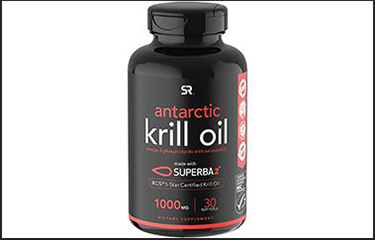
The link is for Sports Research 1000-milligram Superba 2 product which is manufactured in California by Los Angelese, California, U.S.A.-based Sports Research, [which buys] Superba 2 oil from us. The product is up for sale at USD 33.49 [EUR 33.54] for a 60-cap bottle on the Sports Research website. [The] same product is available on iHerb in the U.S. at USD 39.95 [EUR 40.01],” Seward said. “We think what is going on is that the Sports Research product is not manufactured in China and sold in China. As this product is well-known and marketed in the U.S., where consumers in China can verify it on JD.com, it is [being sold] by a company called Jiahuang Health Products Store. [That company] probably buys it in the U.S., sends it to China, pays the duty and local shipping, and charges an extra premium to get the same-quality product.
Branded krill oil capsules are more lucrative than other forms of processed krill. Numerous Chinese brands sell dried krill health snacks, with a 300-gram jar selling for CNY 49 (USD 7.04, EUR 7.05) on JD.com.
“There is strong demand amongst Chinese consumers for well-documented, international branded ingredients and Superba really fits that profile. Chinese consumers are health-conscious and look for nutritional products with proven health benefits,” Seward told SeafoodSource. “Chinese consumers have high demand for quality nutra products from the U.S. and Europe and are prepared to pay a premium for it.”
Seward said that while “it has been challenging to navigate through the pandemic restrictions especially earlier this year in their lockdown,” Aker has a “good set-up of locally based sales and marketing teams, which has been on the road attending trade shows and customer events.
“We will grow our business in China this year and have a good pipeline to work on for future growth,” he said. “Our decision to open local offices in Beijing and Shanghai has proven to be the right one, with a capable team and an experienced leader.”
Seward called for Chinese companies entering the market for krill products to behave responsibly.
“Antarctic krill is managed wisely and in a future-minded way, the resource can sustain a growing industry and growing demand,” he said. “It is absolutely key to us that any new entrants to the fishery wants to get it right from the start, that they adhere to the high industry standards and contribute significantly to biomass monitoring and data collection to feed into the new management regime in CCAMLR [Commission for the Conservation of Antarctic Marine Living Resources].”
Photo courtesy of Amazon
