


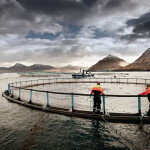


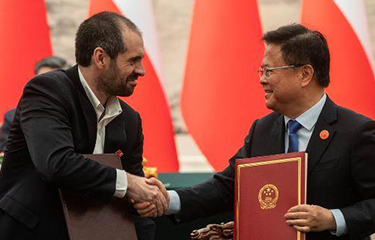
The Chilean and Chinese governments signed an agreement in mid-October that will result in an increase exports of Chilean aquaculture products, including fresh coho salmon, to China.
The Chilean National Fisheries and Aquaculture Service (Sernapesca) celebrated the agreement, while Chile's largest coho farmers have been more reserved in their reactions.
“I want to highlight the protocol where the Chinese Customs Authority will recognize the certification performed by Sernapesca – in charge of inspection in our country – allowing some products that were not possible to export to China [before] to enter the said country – in particular coho salmon, which as of this agreement will be able to be exported fresh to China, strongly increasing the value of the export,” Chile Economy Minister Nicolás Grau said.
The agreement will facilitate exports of fresh oysters, trout, and coho salmon from Chile to China, which has been seeking trade partnerships with several countries to drive imports of seafood for the first time. The agreement is also expected to expedite exports of Chilean mussels; China already receives the product, but the agreement is likely to improve trade efficiency.
Sernapesca National Director Soledad Tapia Almonacid said the signing validated her organization’s efforts that led to the advancement of the deal.
“It is a recognition of the work of our institution, which through its control, inspection, and health and safety certification systems for fishing and aquaculture resources, provides full guarantees that the products exported are suitable for consumption in a market as important as China,” she said.
According to the Chilean Salmon Council, Chile exported 3,822 metric tons (MT) of coho – all frozen – to China during the first nine months of the year, jumping 166 percent compared to shipments sent in the same period of 2022. At the same time, coho salmon represents only 11 percent of the total salmonids that Chile exported to China, with Atlantic salmon taking up the lion’s share in the category at 86 percent.
As such, China represents a significant growth opportunity for fresh Chilean-farmed coho salmon, according to Jorge Guzmán, the commercial manager at Salmones Aysén, Chile’s sole 100 percent coho producer.
“When the agreement was signed, Sernapesca notified us via a document in which it outlined seven stages that needed to be met,” Guzmán said. “That’s what they are doing now, and once those seven stages are completed, the agreement will be enacted for us to export coho salmon to China.”
To finalize the agreement, which is now in a documentary review process, Sernapesca and its Chinese counterpart, CIQ, need to define regulatory guidelines such as those involving sanitary controls.
“We’re standing by waiting for this issue to be resolved to be able to send fresh coho to China,” Guzmán said. “There are a lot of expectations; we’ve received a number of requests from Chinese clients. It all depends on how fast Sernapesca and CIQ can resolve this administrative issue. We estimate that we’ll be free to export during the first week or so of December, which is a good season because it comes before the Chinese New Year [in February 2024] to be able to really promote fresh coho. The timing would really favor the commercialization of our product.”
Following the signing ceremony in China, Sady Delgado, the CEO of AquaChile, Chile’s largest salmon farmer, said this was “an aspiration of more than 20 years.”
“The work has been enormous of the Economy Ministry, Sernapesca, the Undersecretary of Fisheries, and the Agriculture Ministry to support Chile as a food power in foreign trade,” he said in a LinkedIn post. “The public-private alliance to support Chile’s food exports to the world is bearing fruit today.”
AquaChile is the largest Chilean frozen coho exporter to China, coming in at 2,279 metric tons (MT) for the first half of 2023, according to information from Datasalmon. Salmones Aysén comes next, registering 630 MT during the same time, followed by Marine Farm at 440 MT, Salmones Austral at 174 MT, and Blumar at 156 MT.
When contacted by SeafoodSource, a spokesperson for Salmones Camanchaca said there had been no concrete advancement on the agreement. The company recently slowed coho production and has previously expressed wariness at diving deeper into the Chinese market.
In a previous interview with SeafoodSource, Salmones Camanchaca Vice President Ricardo García admitted that the company’s interest in China had cooled ever since the Covid-19 pandemic and the implementation of its zero-Covid policy, which placed sharp restrictions on imports.
Chile produces nearly 90 percent of coho salmon in the world, according to Pablo Barahona, the Chilean Salmon Council’s director of international commerce.
"Coho salmon could become the flagship brand of Chilean salmon,” he told local publication SalmonExpert.
As of September, almost 50 percent of coho salmon produced in Chile was exported to Japan, while 3.4 percent went to China, he said, with the latter percentage likely to rise once the agreement goes into effect.
Photo courtesy of Sernapesca
