


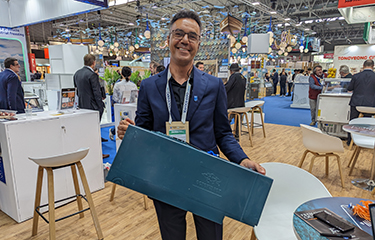
Australia-based Fremantle Octopus is working to expand its Marine Stewardship Council-certified octopus fishery, one of just two octopus fisheries in the world that has achieved the MSC standard.
The company fishes for octopus along 3,000 kilometers of Australia’s coastline and catches an ever-increasing amount of octopus. Fremantle Octopus General Manager Emma Davison told SeafoodSource during Seafood Expo Global – running from 25 to 27 April in Barcelona, Spain – that the octopus fishery currently catches 1,000 metric tons (MT) annually but that productivity increases by 15 to 25 percent each year.
The company’s patented trigger-trap fishing method is the secret to the octopus fishery’s sustainability, Fremantle Octopus Sales Manager Jose Bento told SeafoodSource.
The traps contain a piece of bait that octopus pull on when entering the trap. When pulled hard enough, a door at the back of the trap seals the octopus inside and prevents other fish from going in.
The bait is under tension, Bento said, so that other species cannot pull on the bait in a way that closes the trap.
“Only a large octopus is strong enough to pull the crab,” Bento said. “If it is small, it is not strong enough to pull it.”
The trap’s simple design means that the fishery has virtually no bycatch because other fish species cannot pull on the bait hard enough to cause the trap to close, and smaller younger octopus are unable to pull on it hard enough. The trap also results in the quality of the fishery being high, as only larger, more-desirable octopus can pull the triggers.
The trap has been in use for over 15 years, but the method for fishing caught on in 2016, when 90 percent of the fishery decided to move to the trap design.
Davison said the sustainability of the fishery is central to its marketing and philosophy. She acknowledged that there is growing sentiment against octopus fishing. Organized advocacy groups have vocally opposed the commercialization of octopus, especially since the release of the 2020 documentary “My Octopus Teacher.”
Bento said his company uses an “Ikejime” inspired method for instantly euthanizing the octopus after it is brought onboard inside the trap.
“The octopus is killed immediately; We make sure there is no suffering,” he said.
Davison said the company is continually reviewing its practices so that it remains at the forefront of sustainable fisheries. The company has used multiple iterations of traps and ropes to avoid issues like whale interactions – Fremantle has invested in sinking ropes to help avoid entanglements.
“Because we’re a bottom-line fishery and it’s very unique, it really hasn’t been researched enough in regards to the gear we have, so we’re very adaptive in regards to change,” she said.
The company also removes the head of the octopus and discards it at sea to avoid additional food waste. If they kept the head, Davison said, “nine times out of 10,” the chefs requesting the head to be left on won’t use it, and those who do see relatively low yields.
The company also cares about the social sustainability of the fishery, Davison said. Ensuring fishermen can have a livelihood and encouraging future generations to become fishers is key, she said.
“The social sustainability factor is definitely huge within the business, and everything we do looks at the impacts, and also providing sustainable growth within regional areas of Western Australia,” she said.
The fishery, she added, has room to grow its catch. The most recent biomass report focused on samples from two locations five kilometers apart – despite the fishery covering over 3,000 kilometers. Even that narrow view offered positive news.
“Our belief is our fishery will grow to 10,000 to 15,000 MT as a sustainable catch,” Davison said.
The company is continuing to increase its catch per license and plans to purchase more licenses to grow and evolve.
As it grows, Davison said the company wants to make inroads into the Chinese market. It currently supplies its octopus – which comes in frozen packages of precooked product including a bagged variety that offers more convenience – to Whole Foods in the U.S.
Davison said she expects the company to continue to increase its productivity and, in turn, generate more interest in its sustainable octopus.
“As a future protein, it’s definitely up there,” she said.
Photo by Chris Chase/SeafoodSource
