






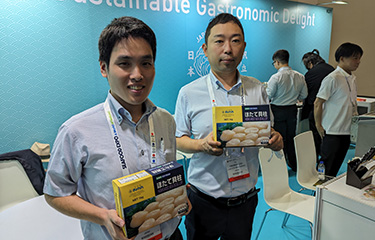
Japan’s furusato nozei – the country’s hometown tax program – is coming to the aid of scallop producers hit hard by China’s ban on Japanese seafood.
Under the program, a taxpayer who designates a portion of their taxes toward an area in which they don’t live can receive a gift valued at around 30 percent of the tax amount. The program aims to promote local products, and seafood has proven to be a popular item many participants choose to receive as a gift. Many Japanese citizens have used the program as an opportunity to splurge on luxury food products they would not normally buy, such as crab, sea urchin roe, caviar, or oysters, and to stock up on more popular seafood products like scallops.
Total donations in fiscal-year 2022, which ended March of 2023, amounted to JPY 965.4 billion (USD 6.5 billion, EUR 6.1 billion), and – as promised – about 30 percent of that amount came back to donors as return gifts, much of it comprising seafood.
The success of the program has been lending a helping hand to Japanese seafood producers that are facing an import ban in China and other countries in response to the controversial release of treated cooling water from the Fukushima Daiichi nuclear reactor.
The water release plan received approval from the International Atomic Energy Agency (IAEA), and Japan has protested China’s ban to the World Trade Organization (WTO) on that basis. Additionally, Japan made a request to initiate discussions on emergency measures based on the Regional Comprehensive Economic Partnership Agreement, of which both Japan and China are members.
However, such appeals may take years to resolve, and in the meantime, the ban, which has created a supply glut and a price crash for several seafood products, has left Japan’s exporters in the lurch. Following China’s announcement of its ban, the average price of scallops fell from JPY 195 (USD 1.32, EUR 1.23) per kilogram in July to JPY 173 (USD 1.18, EUR 1.10) in August.
Scallop producers in Hokkaido, looking to find more domestic consumers, have turned to avenues like the hometown tax program to promote sales. The websites that facilitate ordering for the program have gotten on board with their own campaigns and promotions.
“China's ban on seafood imports has put scallop fishermen in a difficult situation," Rakuten, one of the websites facilitating purchases, said on its page for scallops. "As the rules for hometown tax payment become stricter from 10 October [onward], we have announced that the donation amount will be increased, but we have decided to maintain the donation amount for the time being because we want the public to eat a lot of scallops.”
Rakutan said it is aiming to overcome a newly imposed stricter limit on the value of the return gift, which has resulted in a rush from the public to take advantage of the program before its date of implementation.
“Compared to the previous year, [purchases have grown] five to eight times more depending on the day, and we are receiving warm messages at the same time as donations,” Hiroshi Matsumoto, chief of the general policy division in the town of Betsukai, said in an interview with TV Asahi.
Masatoshi Ishigaki, the mayor of Nemuro City in Hokkaido, proposed the prefectural government designate scallops as a “common return good” for the prefecture, which would allow any town in Hokkaido to offer it as a return gift. Normally, towns are limited to only items actually produced in the town. Ishigaki’s scallop proposal would run through March 2024.
Nationally, the marketing initiative seems to be working. On the major purchasing portal site Furusato Choice, the amount of scallop return goods has increased 1.8 times compared to the same period last year since 24 August. Data from another major portal site, Satofuru, reported donations in return for gifts of seafood, including Hokkaido scallops, doubled in the period from 24 to 27 August compared to the same period last year.
Besides the benefits stemming from the hometown tax program, Japanese Prime Minister Fumio Kishida on 4 September announced a JPY 20.7 billion (USD 141 million, EUR 131 million) emergency fund to help exporters hit by the ban that includes various provisions aimed at stablizing Japan's seafood industry.
Photo by Chris Chase/SeafoodSource
