



NOAA Fisheries announced on 14 November it is withdrawing its proposal to expand the Seafood Import Monitoring Program (SIMP), drawing criticism from environmental groups and members of Congress.
NOAA first announced a major expansion proposal on 28 December 2022 that would have more than doubled the number of species that the program targets. The program, created six years ago to block the import of products that had been either mislabeled or harvested through illegal, unreported, or unregulated fishing (IUU), currently covers 13 species groups and includes 1,100 individual species.
NOAA Fisheries’ proposal would have added new species to the program, in addition to more documentation for importation and clarifications on what importers are responsible for. However, the agency said extensive public feedback during the comment period led it to withdraw expansion and instead start a broad program review.
“NOAA Fisheries is committed to ensuring that the program is a robust tool to combat illegal, unreported, and unregulated fishing and help maintain the integrity of U.S. seafood imports,” NOAA Director Office of International Affairs, Trade, and Commerce Director Alexa Cole said in a release.
Sally Yozell, the director of the environmental security program at the Stimson Center, a Washington D.C.-based think-tank, said NOAA has a responsibility to create an effective program that keeps IUU seafood products out of the U.S. market and welcomed the move to review the program more thoroughly.
“Moving forward, the Stimson Center applauds NOAA Fisheries’ inclusive, public-led approach to this program review,” Yozell said. “Our team looks forward to working closely with NOAA Fisheries to achieve a more holistic vision for SIMP that can prevent and deter illegally caught fish from entering U.S. markets.”
Some members of congress and environmental groups blasted the decision. Oceana Campaign Director Max Valentine, who has in the past called for the program’s expansion, called the withdrawal “disappointing” and pushed NOAA to commit to a specific timeline on its actions regarding SIMP.
“We call on NOAA to use this review of the program to ensure that all seafood sold in the United States is safe, legally caught, responsibly sourced, and honestly labeled,” Valentine said.
U.S. Representative Jared Huffman (D-California), who has been a staunch supporter of SIMP expansion, told SeafoodSource that NOAA walking back expansion is “beginning to feel like a pattern.”
“The institutional, cultural, bureaucratic resistance to seriously confronting the scourge of IUU fishing is shameful and inexcusable,” Huffman said.
Huffman said the U.S. Congress has tasked NOAA with expanding SIMP and combating IUU multiple times, and has continued to be rebuffed. Huffman and fellow U.S. Representative Raul Grijalva also recently renewed calls to expand SIMP in the wake of an Outlaw Ocean report identifying Uyghur labor in seafood supply chains. NOAA said it is instead gathering further input on what to do to enhance the program.
“We’ve been going around and around in the very same way with NOAA for years,” Huffman said. “Congress tells them to do something, and they act like they don’t know what to do and they have to do a national listening tour for the next couple of years. It’s deeply disingenuous.”
Representatives of the seafood industry have been critical of SIMP, citing a lack of evidence the program actually does anything to combat IUU. The National Fisheries Institute (NFI) has pointed out that NOAA’s own reports on the program – including a report to Congress in 2022 – acknowledged that SIMP has not stopped illegal products from entering U.S. markets, and has simultaneously complicated business for U.S. seafood importers.
NFI told SeafoodSource it welcomed NOAA's withdrawal announcement.
“We’re pleased to see NOAA withdraw this rule which would have expanded an already flawed program that the agency itself has stated does not stop IUU,” NFI said.
Celeste Leroux, who worked with NOAA and the White House to implement SIMP as the co-founder and CEO of traceability firm Goldfish, told SeafoodSource in October 2023 the program is not functioning as a screening program to combat IUU.
“This was a program I was involved with setting up, and you would be hard-pressed to find someone more critical of it,” she said at the time. “If it were a screening program that was catching all of this information immediately and helping importers avoid making risky purchases, I could see the logic of expanding SIMP, but it has gone through something of a rebrand from trade monitoring and screening products to a deterrent. And its efficacy as a deterrent is pretty unproven, I would say.”
Valentine said NOAA’s move toward reviewing the program and gathering more input should be used to ensuring that it is “a robust tool to combat IUU fishing and seafood fraud.”
“The European Union has required this type of information for seafood imports for more than a decade, and it’s beyond time for the United States to follow that lead to protect workers and consumers alike,” she said.
Huffman, meanwhile, said that if NOAA recognizes SIMP is not combating IUU, then it needs to bring something to the table to change that.
“If SIMP needs to be strengthened and improved, why has NOAA not brought forward some ideas to do that during the last five-plus years that we’ve been talking about this?” he said. “We’ve had witnesses in hearings say SIMP is actually quite effective if NOAA actually wanted to enforce it and implement it. It’s hard to escape the conclusion that NOAA doesn’t regard IUU fishing as its problem, and they don’t want to do anything about it. It’s not that I’m in love with the SIMP program, it’s just the only tool we have right now. There’s been no serious attempt by NOAA to make it work.”
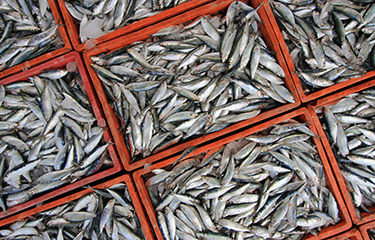
Photo courtesy of AJP/Shutterstock
