






The New England Fishery Management Council (NEFMC) officially granted a quota increase and established new rules for the upcoming 2024 scallop fishing season in the Northeast U.S.
The fishery – one of the most valuable in the U.S. – has experienced decreasing quotas for the past four years after a historically high harvest in 2019 saw the fishery land over 60 million pounds. This year, the council predicts the fishery will catch roughly 27.4 million pounds in the upcoming fishing season, with roughly 24.2 million pounds of that coming from the limited access component of the fishery.
That total – established through Framework Adjustment 38, which NOAA Fisheries still needs to review and implement – is a mild increase over the 25 million pounds predicted for the 2023 scallop fishing year.
While the increase in catch predictions is relatively small year over year, the surveys and closures of certain regions that have resulted in that mild increase bode well for the long-term success of the fishery.
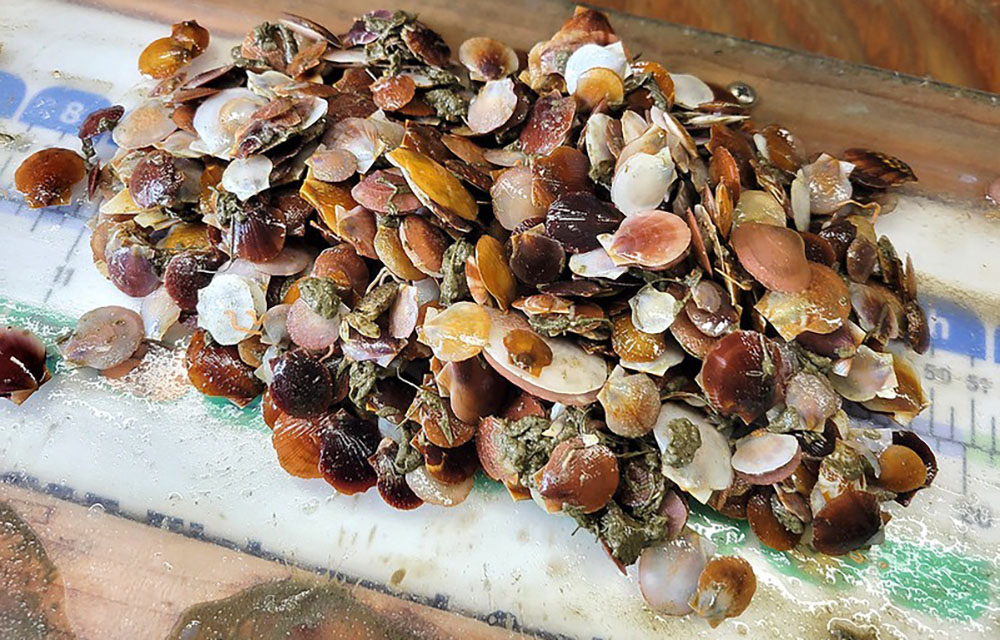
For example, the Nantucket Lightship fishing region will be closed in 2024 – as it had a “potentially strong recruitment event” during the 2023 season – but the scallops were too small to be included in biomass estimates for 2023.
“The growth potential for these juveniles is high should they survive over the next several years,” Framework 38 said. “Closing the Nantucket Lightship region to scallop fishing is intended to support the growth of this cohort of scallops in the absence of fishing pressure.”
Bristol Seafood President and CEO Peter Handy told SeafoodSource the biomass trending positive is more important than the current increase.
“It looks like a pretty nominal increase to me,” he said. “I think the messaging and the trend is important. We’ve had a lot of reductions over the last few years. So, yes, it is a slight increase for next year, but it’s indicative of a potential change in a trend.”
Bristol Seafood regularly publishes a scallop factbook that takes an in-depth look at the upcoming scallop season. In a recent “halftime report” that Handy posted, he highlighted that landings in September 2023 fell sharply as fishers approached landing limits. Scallop size, he added, was bigger in 2023 than in 2022.
The new framework also includes some changes to fishing areas and requirements for scallop vessels, including a one-year closure inside Area 1 called the “Rhombus.” The area allows transit but is closed to fishing due to a scallop-enhancement project that the research foundation Coonamessett Farm Foundation has implemented in the area.
“The closure is intended to allow the transplanted scallops to continue growing without being disturbed by fishing,” an NEFMC release said.
Scallop fishers will also be dealing with new requirements changing how often they update their vessel monitoring system (VMS) ping rates. Currently, the system sends out a “ping” every 30 minutes, but the new rules will require the VMS to have a “ping rate” of just 5 minutes when seaward of the VMS Demarcation line, which covers virtually every single scallop fishing area in federal waters. The new rules are not intended to apply to state-water scallop fisheries and excludes VMS associated with the state-water exemption program.
The goal behind the ping rate, the NEFMC said, is to ensure enforcement in the fishery.
“VMS is also an important source of fishery effort data for the scallop fishery,” Framework 38 said. “Increasing the VMS reporting rate in the scallop fishery will improve data quality by increasing the spatial resolution of the data, which could lead to more effective management and enforcement.”
Looking forward to 2024, Handy said that the time when scallops will be landed in big numbers is largely up to when fishermen decide to hit the water.
“The same boats that were able to land 60 million pounds are now asked to do a harvest that’s half the size,” he said. “What’s going to drive the behavior is more individualized, and that’s harder to predict.”
Fishermen will be trying to plan how to maximize their returns, Handy noted, which means they’re also trying to get a handle on the market.
“It’s not predicting what will happen; it’s predicting what others predict will happen, and that’s a little tricky,” Handy said.
Another factor influencing the scallop market is China’s ban on all seafood imports from Japan in response to the release of cooling water from the Fukushima Daiichi nuclear power plant. That ban has cut off the flow of scallops from the Japanese province of Hokkaido, leaving both Japanese producers and Chinese buyers looking for a new market.
Bristol Seafood, Handy said, was the largest importer of Japanese scallops in the U.S. in 2023. He predicted that while Japan will be seeking new markets and experiencing downward price pressure, China will also be looking for new supply.
“What’s China going to buy as a substitute?” Handy said.
Regardless of how supplies shake out, predicting what the market will look like is also difficult, as the pricing on scallops has largely depended on the demand side of the supply and demand equation. For example, in 2021, there were instances where the supply increased – but prices increased, too.
“I think demand is really the ticket. We started talking about this a couple years ago,” Handy said. “Demand has been so much more volatile than supply.”
Photo courtesy of the Virginia Institute of Marine Science
