





The post-Covid environment has been a complicated one for the seafood industry, and some sectors – like the Alaskan salmon sector – have suffered bankruptcies and the closure of processing plants as a result.
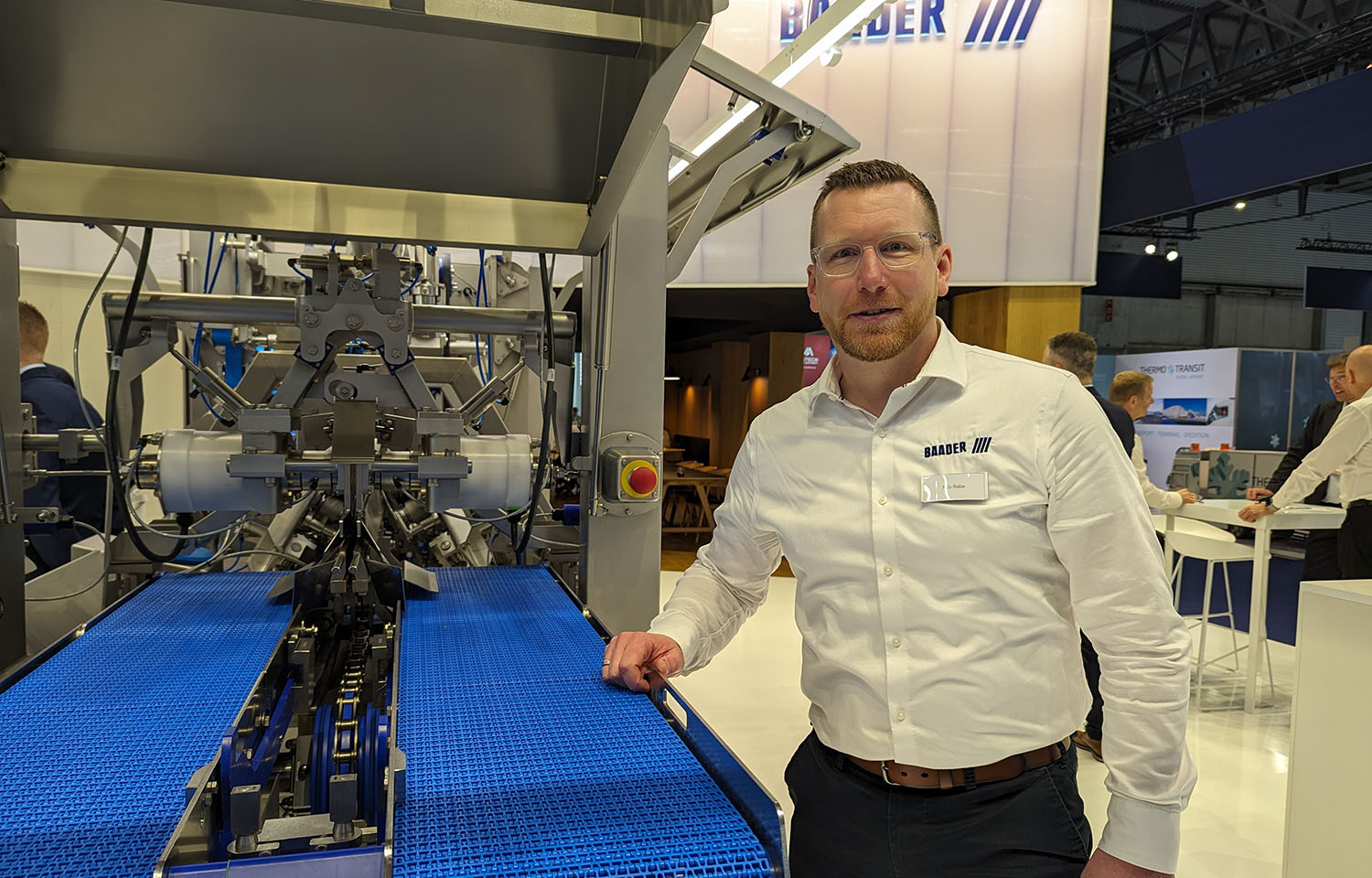
The good news, according to BAADER North America CEO Nils Rabe, is that those complications are starting to ebb.
“We do believe we see the light at the end of the tunnel,” Rabe said during the 2024 Seafood Processing Global, which took place 23 to 25 April in Barcelona, Spain. “It is getting better. Markets will still require some time to settle and to go back to normal – or at least the new normal.”
That “new normal” has forced processors to get creative after the end of Covid-19 restrictions and lockdowns, Rabe said.
“What we carried over from Covid is we still have a lack of the right people in the right positions. All the processors that we are talking to, in particular in the U.S. and Canada, they are all lacking the right labor,” Rabe said. “What changed a bit after Covid is some more labor is available. What did not change is that it’s probably not the right fit for the task.”
Major labor shortages processors faced during the pandemic drove seafood companies to seek more extensive processing automation solutions from companies like BAADER. While the labor crunch has eased somewhat, highly skilled labor needed to do certain tasks remains harder to find.
“That’s why for a lot of the processors, automation is a huge, huge topic,” Rabe said. “That’s why our topic this year is solutions on demand.”
Rabe said BAADER has seen increased interest in customized solutions tailored to individual demands that can reduce the amount of highly skilled labor needed to run a facility.
“There’s a huge demand for automation, with a lot of customers looking into AI and into vision technology supporting their processing technology,” Rabe said.
BAADER is touting modular solutions to customers looking to avoid committing to a complete overhaul of their systems, or for customers looking to address acute pain points in their existing systems.
“Not everyone is willing and capable of going in with a complete fully automated solution for different reasons; it might be financial reasons, but it might also have other reasons that are limiting those approaches,” Rabe said. “We have made it a target to come up with scalable solutions so that even though we start on a smaller scale, we are already prepared for upgrades later on so that it’s easier for our customers to look into this as a long-term vision.”
BAADER is working on a modular processing setup that can handle a variety of species and applications, allowing for individual modules of a processing line to be swapped in and out, targeted for facilities that currently use multiple lines to handle different species during different seasons.
“We believe that this is going to be the future – that more modular setup,” Rabe said.
Rabe said BAADER's equipment is often a significant investment for its customers, and that the modular system is designed to mitigate those costs. But he acknowledged a downturn like the one facing Alaska's seafood sector, can send ripples of fear throughout the entire regional market.
“Having to make major decisions on processing technology, without the certainty of what you get paid for your product in the end, makes those decisions rather difficult,” Rabe said. “We get the feeling from our partners that markets are stabilizing a bit; hopefully they’re going to be stabilizing toward the summer [or] fall, even more. We’re not there yet, but we hope soon that we get some more stability.”
Undaunted by the unstable marketplace, BAADER is developing new equipment for pollock processing, with a plan to conduct prototype testing during the upcoming "B" pollock season with industry partners. The company plans to share more information on this plan later this year.
“It’s still going to take some time before this is actually hitting the market, but we want to give the market the certainty that BAADER is a major equipment supplier – with all our experience in filleting in particular but with fish processing in general – that is looking into this, and we found ways to significantly improve not only how to process but how to significantly improve the flow of information and data collection,” Rabe said.
That data can provide insights into the products that provide the best yields or efficiency within a processing line, and can provide energy consumption and water usage efficiency, Rabe said.
It's also helpful in reducing labor requirements, Rabe said. In some fisheries, like the snow crab fishery in the Canadian Maritimes, older workers are aging into retirement and younger people appear reluctant to take processing jobs, leaving a gap.
“On the shop floor, sometimes it’s difficult to attract young people to take on those responsibilities,” he said. “Our task as an equipment manufacturer is to get further into that and see how we can help swap repetitive tasks into automation and create great equipment that’s taking that away so that the existing labor that’s still going to be required in some applications can focus on the human touch to a certain product.”
