






As sockeye salmon begin their annual return to Alaska’s rivers, two fish-processing startups are having to improvise after running into issues with the deployment of their innovative floating barge concepts.
The Hannah, Northline Seafoods’ freezer barge, suffered an electrical fire under one of its spiral freezers on 30 June and was forced to reduce its capacity.
The Dillingham, Alaska, U.S.A.-based company announced it returned the Hannah to full operations on Wednesday, 17 July.
“Due to the hard work and continued efforts of Northline engineers and our freezer manufacturers, all three spiral freezers are now operational,” Northline said. “In the last week, production onboard the Hannah has ramped up to include a period where more than 1 million pounds of sockeye were purchased, frozen, and boxed in 48 hours. Production capacity onboard the Hannah will continue to increase as Northline’s engineering team works through the systems.”
Northline Seafoods is currently buying salmon in Bristol Bay’s Nushagak, Naknek, and Ugashik districts and will be a late-season buyer, operating until 10 August or later, Northline CEO Ben Blakey said in a press release.
“It is important that we communicate to our fleet and our partners that we are learning from the mechanical challenges so that we may come in even stronger and more competitive next year,” Blakey said.
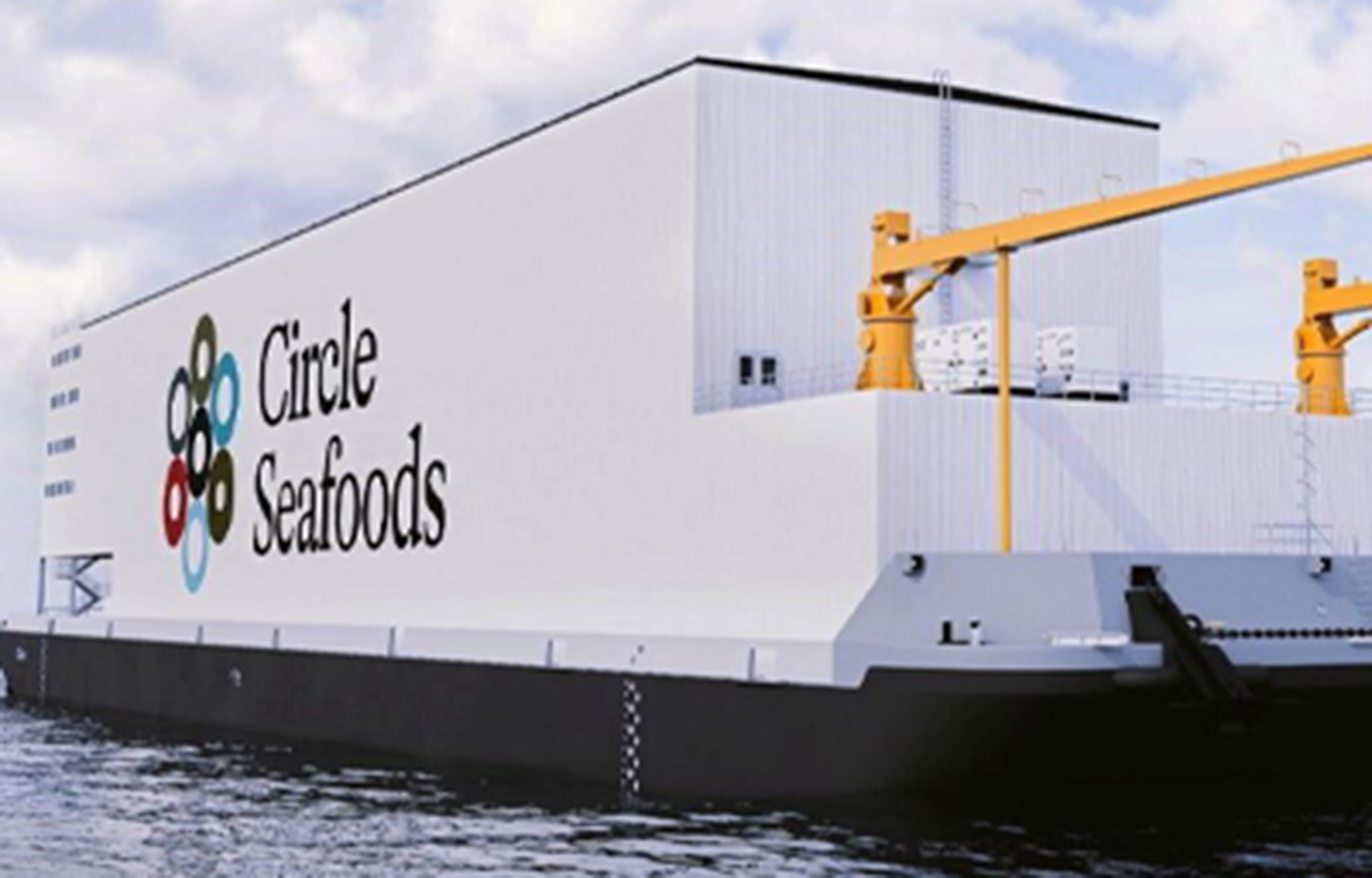
Aberdeen, Washington, U.S.A.-based Circle Seafoods, which had set a goal of sending its own barge to Southeast Alaska for the 2024 season, has pushed its plan back to 2025, according to Circle Co-Founder Charlie Campbell.
“About three months ago, we had to make a decision whether we wanted double down and push really hard to deploy on time or to find an alternative that we could use to get going as a company,” Campbell told SeafoodSource.
Circle soon entered discussions with the Metlakatla Indian Community to partner on operating its Annette Island Packing Company. It signed a two-year agreement to upgrade and operate the plant and is open to extending the contract further, with the eventual goal to hand the facility back over to the community at some point in the future, according to Campbell.
“This opportunity presented itself where in the short term it was total alignment – they had a plant that hadn't been operational since 2019, and we had some capital and expertise but didn’t have a barge,” Campbell said. “It has been a busy past few months as we pursued this, and now we're actually buying and freezing salmon.”
The company is currently buying from three purse-seiners and is open to taking additional inputs, according to Campbell. Meanwhile, the company’s barge is still under construction in Aberdeen, with plans to complete its superstructure in August. Campbell said Circle hopes to dock its barge at the Annette Island facility next year.
“Of course, it would have been nice to have the barge ready. From when we were able to close financing and having a tight window on construction, it was low probability we would get it done,” he said. “But, there’s a huge benefit of doing what we're doing this year, with smaller volumes, really allowing us to iron out our processes and operations. We want to establish ourselves up here, form relationships, and prove what we’re doing to ourselves and the local community. So, I actually think this was a better way for us to get started.”
Circle is trialing “a bunch of R&D,” according to Campbell, including artificial intelligence that uses high-definition cameras to aid in sorting fish.
“The upside of this situation is we have time to design all those learnings to be as optimized as possible for the barge,” he said. “It’s really useful to observe a microcosm of production in action, see the metrics and performance data, and iron out staff responsibilities and the org chart.”
Even with all its experimentation, Circle still has excess capacity this summer, and Campbell invited Alaska salmon fishermen with extra fish on their hands to get in touch.
“If they're looking for a market or want to have a conversation about doing some opportunistic deliveries just to see how we process and how they pay, I just encourage folks to reach out,” he said.
Campbell also expressed condolences to Northline on its fire.
“I wouldn’t wish that on anyone. It sounds like other processors have stepped up to help and it’s fantastic to see that communal approach,” he said. “Things always happen in plants during the season, on land or on the water, and the real test is not whether they’ll happen but how you manage them and how quickly you can solve problems to get back online.”
He said the runs across Alaska have been slow thus far but that Circle getting “as ready as possible” in case it picks up.
“It’s still early – usually 20 percent of the catch is done in July and 80 percent in August. So, as the season ramps up, we want to be ready for it,” he said. “Things can change in a hurry in this industry, and it’s too early to know whether the runs are going to come in below forecast; we’ll start to see if the trend is holding true in early August.”
