
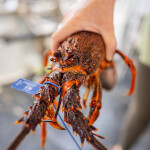

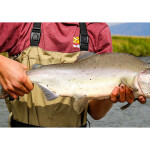



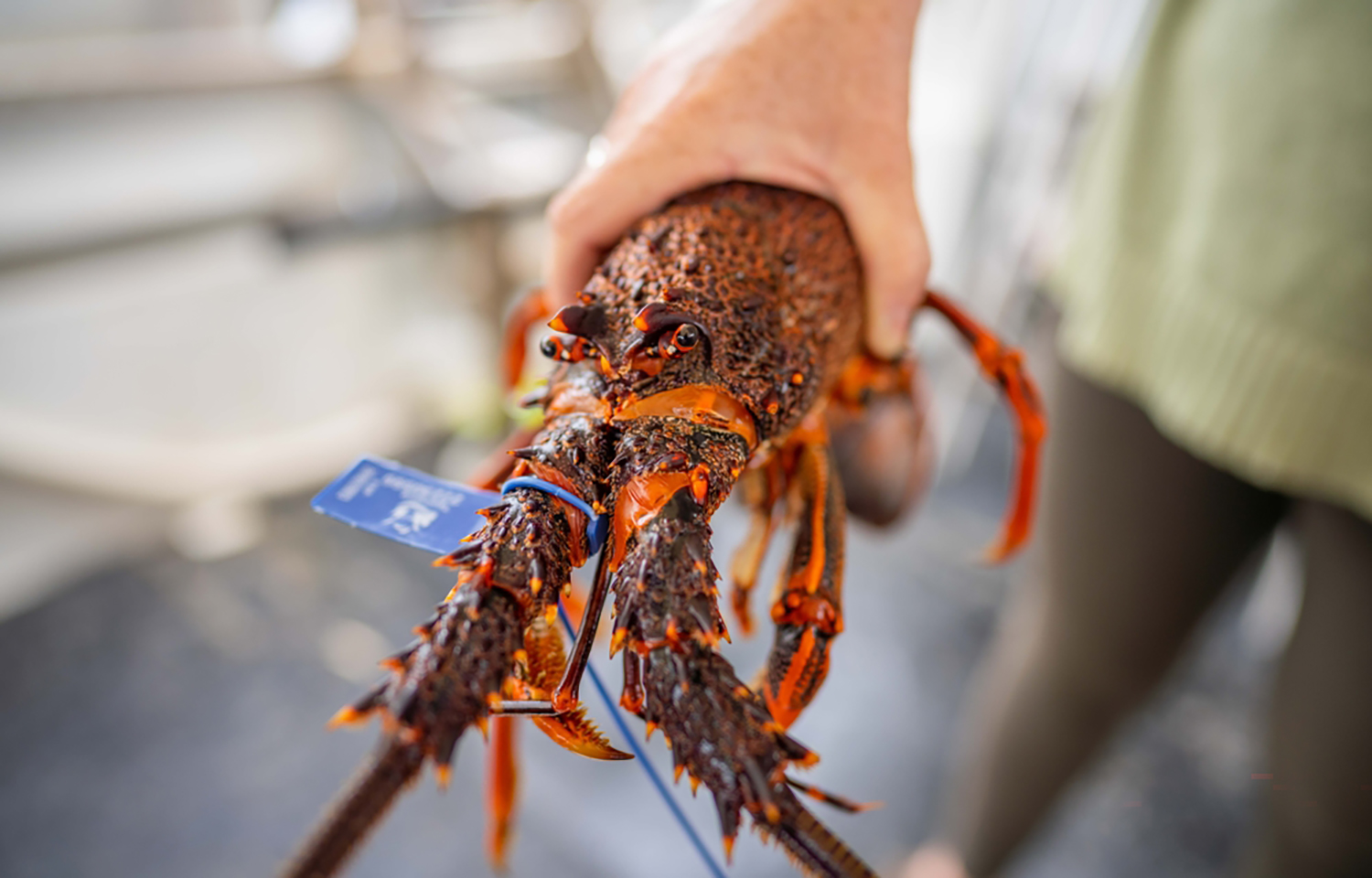
Tasmania has instituted a three-month closure on commercial rock lobster fisheries, as well as dive fisheries targeting other marine invertebrates such as sea urchins, in the southeast of the Australian state, citing antibiotic usage in nearby salmon-farming operations.
The closures, which are set to last from 15 November until 14 February 2027, aim to “mitigate trade risks” associated with the use of an antibiotic called oxytetracycline (OTC), which salmon-farming operations sometimes apply to their fish in an attempt to prevent mass die-off events caused by bacterial outbreaks that typically occur during warmer summer months.
Such incidents at Tasmanian salmon farms have a higher likelihood of occurring as 2026 comes to a close due to the continued strengthening of El Niño.
According to the Australian Marine Conservation Society, the Australian Bureau of Meteorology has predicted strong, severe, or even extreme marine heatwave conditions through January 2027 for much of the ocean surrounding Tasmania, making farmed salmon more vulnerable to disease and salmon-farming firms more likely to seek interventionary treatment measures such as antibiotics to prevent high-mortality events.
Per the Australian Broadcasting Company (ABC), the closures are related to the use of OTC at salmon farms belonging to aquaculture firm Tassal.
The detection of OTC on shipments of wild seafood can trigger export bans in strict regulatory markets like the E.U., China, and elsewhere.However, some levels of OTC use are typically allowed in such markets for farmed products.
Antibiotics used in salmon farming have been found in batches of wild seafood as far as 14 kilometers away from where they were administered.
Environment Tasmania Marine Campaigner Rebecca Howarth called such closures deeply unfair, stating in a release that wild capture fishers are losing access to lucrative export opportunities for a problem they did not create.
“Local wild fisheries are once again being pushed to the back of the queue, while the consequences of antibiotic use by large salmon-farming corporations are passed on to others,” she said. "These closures will also disrupt commercial divers' efforts to remove invasive long-spined sea urchins, which are devastating reefs and giant kelp forests. It's a setback to the real progress being made to control this destructive species, just when we need to be building on that work. We should be preventing these risks at their source, not making local fishing businesses and marine conservation efforts pay the price.”
Per ABC, a Tassal spokesperson said the firm is “working with the wild fisheries sector on appropriate support” and that the area closed represents just 1.6 percent of Tasmania’s annual historical rock lobster catch.
